Key Advantages
- Structured Buyer Journey Orchestration: Guides prospective buyers methodically from initial brand discovery to verified commercial transaction closing.
- Conversion Drop-Off Prevention: Pinpoints operational friction touchpoints to prevent prospective leads from abandoning consideration funnels.
- Multi-Channel Automated Nurturing: Unifies website traffic, advertising touchpoints, and conversational messaging into a 24/7 engagement engine.
- Acquisition Budget Optimization: Maximizes lead-to-deal conversion velocity, ensuring commercial marketing budgets generate measurable recurring revenue.
Commercial enterprises frequently allocate extensive capital toward driving website traffic and digital ad engagement, only to experience stagnant revenue growth. The underlying mistake is pitching high-ticket solutions prematurely to cold prospects who have just discovered your brand. Attempting to close buyers before they understand their operational pain points inevitably leads to sales friction.
Constructing a disciplined sales funnel architecture transitions unfamiliar audiences into committed commercial clients through logical value stages. Aligning your funnel with a centralized lead management platform ensures commercial pipelines remain populated with high-intent buying opportunities.
What Is a Sales Funnel in Modern Business?
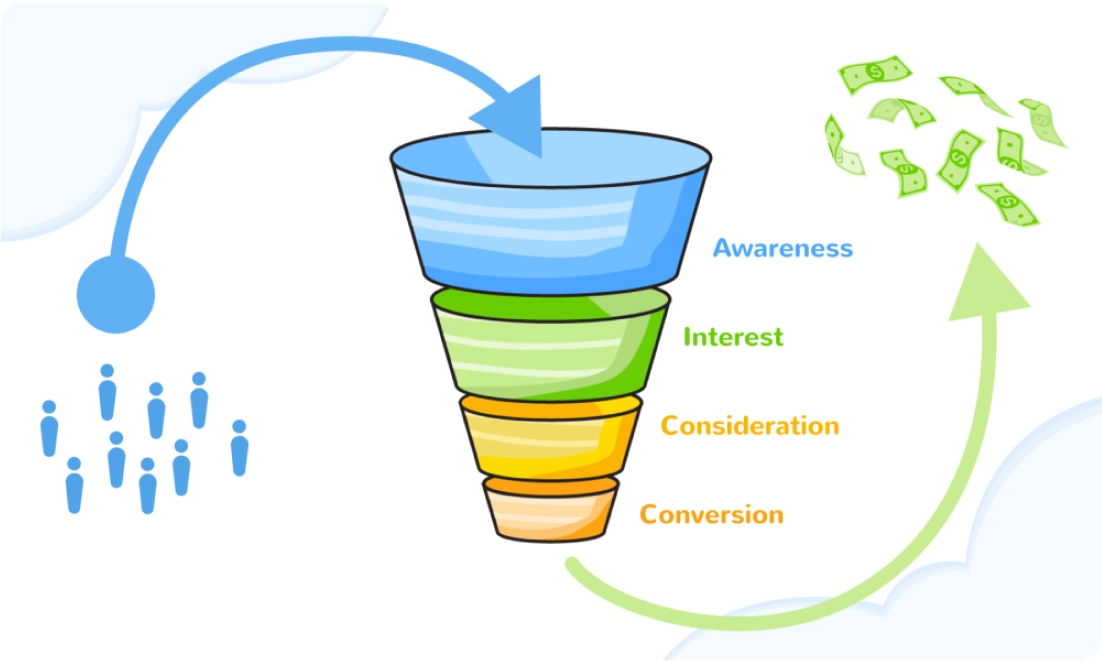
A sales funnel is a visual model that maps the theoretical buying journey a prospective customer traverses from brand discovery to commercial agreement execution.
The framework utilizes a funnel shape because top-of-funnel audience volumes naturally exceed the final count of closed transactions. The primary objective of sales funnel management is optimizing conversion efficiency across each consecutive stage, maximizing the percentage of leads that convert into high-margin revenue.
Key Differences: Sales Funnel vs. Marketing Funnel
While frequently used interchangeably, these funnels govern distinct operational domains across the commercial revenue cycle:
| Operational Dimension | Marketing Funnel | Sales Funnel |
|---|---|---|
| Core Focus | Building brand discovery, capturing traffic, and generating marketing leads. | Triage qualification, objection handling, commercial negotiation, and contract closure. |
| Funnel Alignment | Top of Funnel (TOFU) and Middle of Funnel (MOFU). | Middle of Funnel (MOFU) and Bottom of Funnel (BOFU). |
| Success Telemetry | Impressions, ad click-through rates, site visits, and form submissions. | Win rates, sales cycle velocity, contract size, and closed-won revenue. |
The 4 Core Stages of a Sales Funnel (AIDA Framework)
The standard commercial purchasing journey aligns across four sequential psychological stages:
1. Awareness (Top of Funnel / TOFU)
Prospective buyers discover an operational problem and encounter your brand through educational content, organic search results, or targeted advertising. The strategic objective at this stage is delivering authoritative insight rather than aggressive sales pitches.
2. Interest (Middle of Funnel / MOFU)
Buyers actively research potential solutions and compare market alternatives. They exchange contact details (such as email addresses or WhatsApp numbers) for specialized whitepapers, digital catalogs, or discovery audits. Maintain clean contact records using our guide on organizing your WhatsApp customer database.
3. Decision (Bottom of Funnel / BOFU)
Prospects evaluate solution fit, commercial pricing tiers, and vendor credibility. This phase requires consultative case studies, customer proof points, and transparent implementation roadmaps to eliminate final hesitations.
4. Action (Transaction Closing & Retention)
The buyer executes the purchase agreement, transitions to active onboarding, and becomes an established customer. Revenue teams must nurture the post-purchase relationship to drive repeat transactions using proven repeat order strategies.
B2B Sales Funnel Stages: Navigating Complex Enterprise Cycles
Unlike rapid consumer B2C checkouts, B2B sales funnels involve multi-stakeholder evaluation and longer negotiation lifecycles:
- Lead Ingestion & Discovery: Capturing inbound enterprise inquiries across digital campaigns and direct messaging.
- Lead Qualification: Assessing firmographic criteria and purchasing power using frameworks from our lead scoring guide.
- Solution Demonstration: Demonstrating how product capabilities resolve specific organizational bottlenecks.
- Stakeholder Negotiation: Finalizing contract terms, SLA commitments, and security reviews.
- Deal Closure & Onboarding: Executing agreements and initiating customer success deployment.
How to Build and Optimize a High-Converting Sales Funnel
Constructing a scalable, high-velocity sales funnel requires four structured operational steps:
1. Define Customer Bottlenecks and Target Profiles
Analyze your ideal buyer profiles to understand their primary operational pain points and evaluate how your solution delivers measurable return on investment.
2. Deploy High-Value Lead Capture Magnets
Offer downloadable guides, product audits, or discovery consultations accessible via direct communication links formatted using official wa.me direct link standards.
3. Automate Lead Nurturing and Follow-Up Cadences
Deliver consistent educational insights and customer case studies. Eliminate response latency by applying structured cadences from our guide on effective lead follow-up strategies.
4. Remove Friction from Transaction Checkouts
Streamline the final purchase process by delivering automated digital billing links, payment gateway integrations, and instant transaction receipts directly inside active chat threads.
Automating Sales Funnels with Cekat.ai AI & CRM Infrastructure
Managing prospect progression manually across spreadsheets introduces severe follow-up delays. Migrating your commercial funnel onto the official WhatsApp Business API integrated with an enterprise CRM application provides an automated operational stack:
- Autonomous Lead Qualification: An intelligent WhatsApp AI chatbot engages inbound prospects instantly, verifying requirement criteria 24/7.
- Visual Pipeline Tracking: Monitor active commercial deals from discovery to closing using dedicated pipeline management software.
- Collaborative Human Escalation: High-intent commercial opportunities route seamlessly to senior account executives within a WhatsApp multi-agent workspace.
This automated coordination maximizes funnel conversion velocity, mitigates overall churn rate, and strengthens long-term customer retention.
Frequently Asked Questions (FAQ)
1. What causes conversion drop-offs inside a sales funnel?
2. How do you measure the performance of a sales funnel?
3. Why is conversational messaging essential in modern sales funnels?
Scale Your Sales Funnel Operations with Cekat.ai
Constructing a disciplined, automated sales funnel is essential for driving predictable enterprise revenue growth. Automating each interaction stage ensures your commercial sales force focuses exclusively on closing high-value opportunities.
The enterprise platform at Cekat.ai provides conversational commerce infrastructure combining official WhatsApp Business API endpoints, 24/7 AI Agents, and visual CRM pipeline management. Explore our subscription tiers on our pricing and plans page or schedule a discovery consultation with our solutions engineering team today.
Leave a Reply