Blog

  • AI Agent Trends for Business in Indonesia 2026: What You Need to Prepare

    AI Agent Trends for Business in Indonesia 2026: What You Need to Prepare

    In recent years, businesses in Indonesia have been moving through very fast change. Customers are increasingly used to discovering products on TikTok, asking questions via WhatsApp, comparing prices on a marketplace, checking social proof on Instagram, then coming back to a website or admin chat before finally buying. The customer journey no longer runs in a straight line from awareness to transaction. It jumps between channels, is often interrupted, and becomes harder to control if a business still relies on manual systems.

    This is where the 2026 Indonesia business AI agent trend becomes increasingly important. An AI agent is no longer just an add-on technology for answering customer questions. It is becoming a new operational layer that helps businesses capture intent, read conversation context, run follow-ups, connect customer data, and push the process from chat to transaction faster. For Cekat.AI, 2026 isn’t just the year businesses start “trying out AI” — it’s the year businesses need to start restructuring how they serve, sell, and manage customer relationships with the help of an AI agent.

    This shift isn’t happening just because AI technology is being talked about a lot. It’s happening because business needs have become more concrete. Customer acquisition costs are rising, marketplace competition is getting denser, customers are more selective, and operations teams are increasingly overwhelmed handling conversations across many channels. If every inquiry still has to be read manually, every follow-up still depends on an admin’s memory, and every piece of customer data is still scattered across many places, then the business will keep losing revenue opportunities after a customer shows interest.

    From Chatbot to AI Agent: The Major Shift Businesses Need to Understand

    Until now, many businesses have known conversation automation through chatbots. However, traditional chatbots generally only work based on simple rules. When the customer asks A, the system answers B. If the customer steps outside the predefined flow, the chatbot often fails to understand the context and ends up still needing a human admin to take over the conversation.

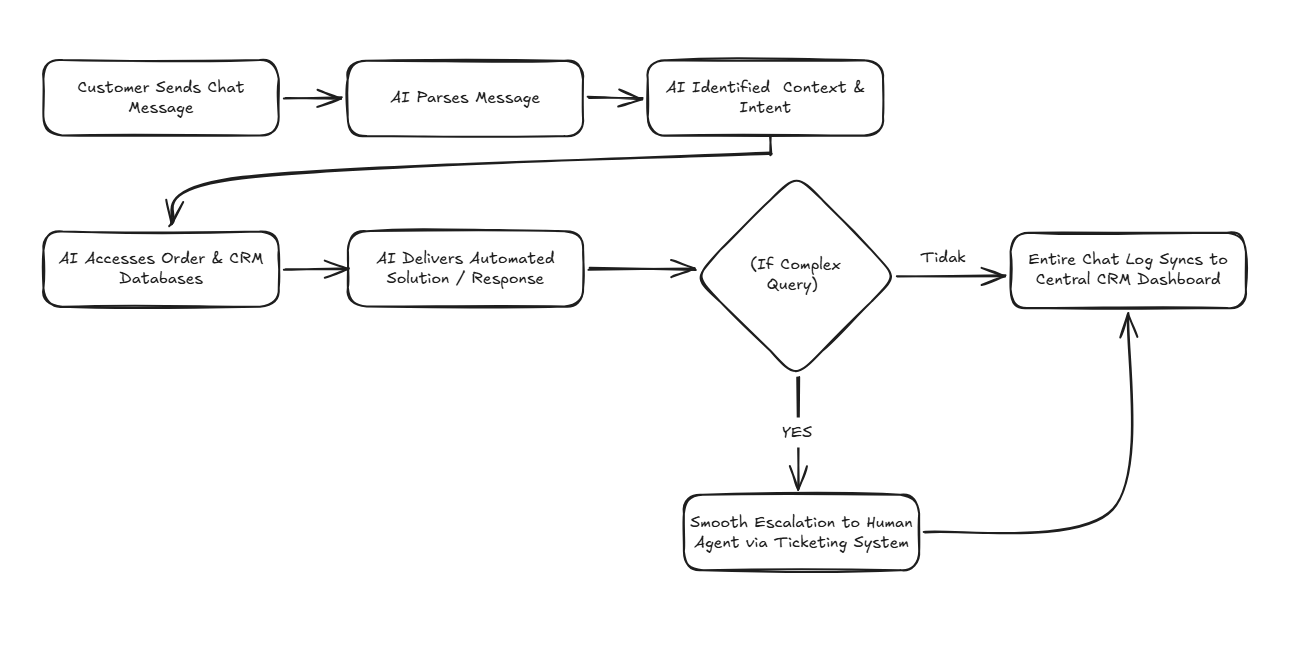
    An AI agent goes much further than that. An AI agent is designed to understand intent, read context, make decisions based on a given workflow, and carry out actions that are more relevant to business needs. In the context of Indonesian businesses, an AI agent can help answer product questions, qualify leads, direct customers to the right admin, remind about follow-ups, update customer status in a CRM, and even help move the customer journey from inquiry to invoice.

    The most important difference isn’t just the ability to answer, but the ability to act. A chatbot helps a business respond. An AI agent helps a business run a process. This is why the future of the business AI agent will move increasingly close to revenue, not just customer service. Businesses no longer just need tools that can answer customer questions, but a system that can make sure every opportunity from a customer doesn’t stall halfway through.

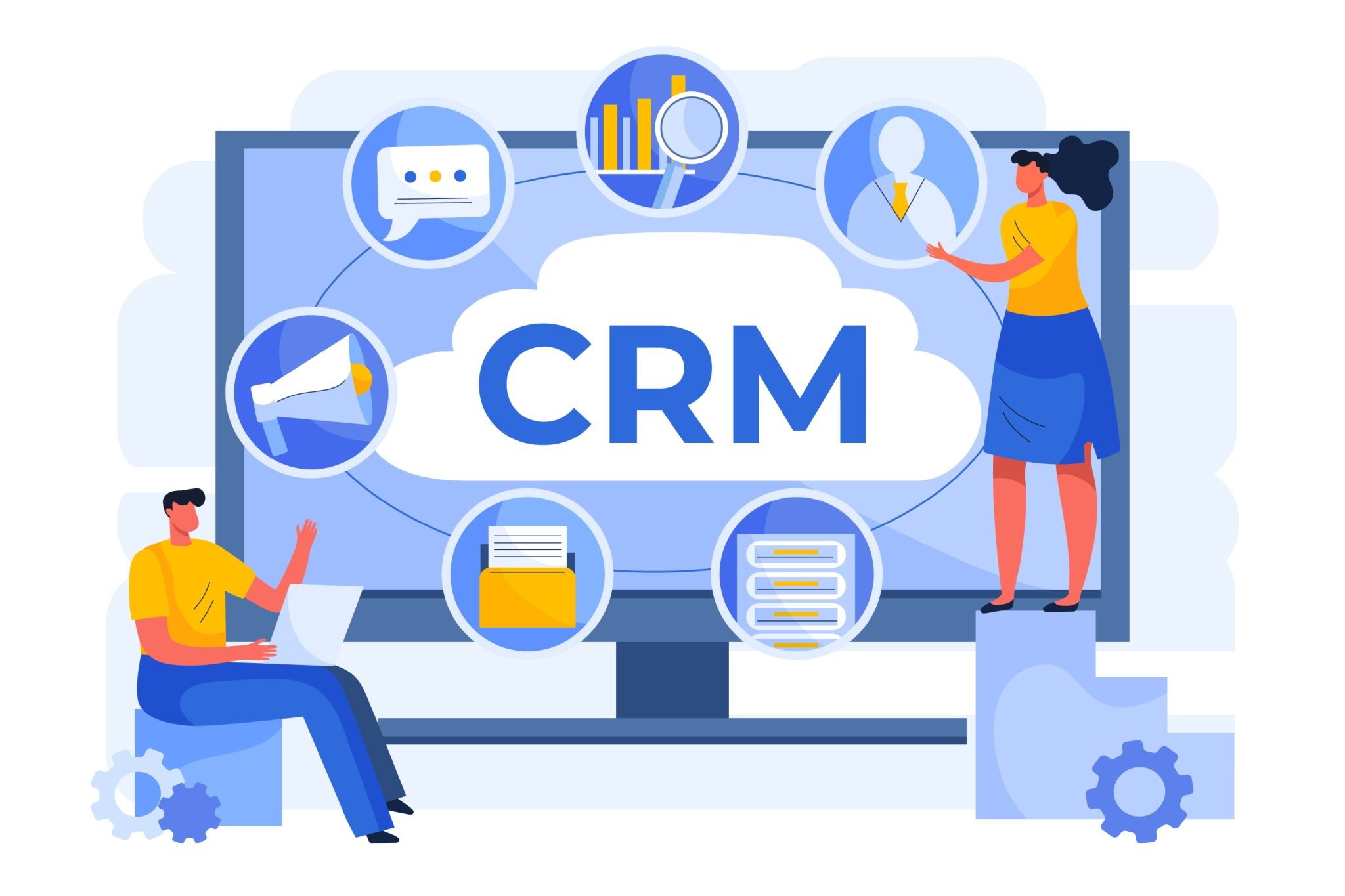
    At Cekat.AI, we see the AI agent as part of the revenue operating layer. That means the AI agent doesn’t stand alone as a conversation feature — it’s connected to the omnichannel inbox, CRM, automation, campaign management, and customer data. This way, a business doesn’t just respond faster, it also turns every customer interaction into data, insight, and a more measurable revenue opportunity.

    Trend One: Multi-Modal AI Agents Will Make the Customer Experience More Natural

    The 2026 Indonesia AI trend will be increasingly shaped by the development of multi-modal AI. That means AI won’t just understand text, it will increasingly be able to read various forms of input such as images, documents, voice, product catalogs, proof of payment, screenshots, and other visual context that often comes up in everyday customer conversations.

    For Indonesian businesses, this is highly relevant because customer interactions aren’t always neat. Customers often send photos of the product they’re looking for, screenshots of ads, transfer receipts, images of item sizes, voice notes, or short questions that require interpreting context. In a manual process, an admin has to read each one, understand what the customer means, check the data, then give the appropriate answer. As chat volume rises, this process becomes slow and error-prone.

    Multi-modal AI agents will open up a new way of managing the customer experience. Imagine a customer sends a screenshot of a product from a marketplace, then the AI agent helps recognize the context of their question. A customer sends proof of payment, then the system helps guide the verification process. A customer sends an image of the item they’re looking for, then the AI agent helps the admin understand the customer’s need before the conversation continues. All of this will make business conversations feel more natural, faster, and closer to how Indonesian customers actually communicate.

    However, businesses can’t jump straight into multi-modal AI without preparation. The key is tidy product data, a clear catalog, documented conversation SOPs, and a workflow that can be connected to the operational system. AI agents will get smarter, but the quality of their output still depends on the quality of context the business provides. That’s why preparing for 2026 isn’t just about choosing AI technology, it’s also about tidying up the operational foundation that will fuel that AI.

    Trend Two: Agentic AI Workflows Will Change the Way Teams Work

    One of the biggest trends in the future of the business AI agent is the rise of agentic AI workflows. This is an approach where AI doesn’t just help with one small task, but takes part in orchestrating a longer chain of work. In business, a workflow like this can cover capturing a lead, understanding customer needs, giving an initial response, building segmentation, sending follow-ups, routing to sales, logging status in a CRM, and helping the team see the progress of the customer journey.

    For Indonesian businesses, agentic AI workflows will be very important because many sales and customer service processes still depend on manual work. Admins have to open many tabs, sales has to check conversation history, marketing has to ask other teams about lead quality, and owners have to wait for manual reports to understand business performance. As a result, decisions become slow and customer opportunities can be missed.

    Agentic AI workflows let businesses build a more consistent process. When a lead comes in from an ad, the AI agent can help provide an initial response. When a customer shows interest, the system can help tag their intent. When a customer hasn’t bought yet, automation can run a follow-up. When a customer is ready to transact, the sales team can step in at the right moment. When the conversation ends, the data stays stored in the CRM so the business doesn’t lose context.

    This doesn’t mean humans are no longer needed. Quite the opposite — humans will focus even more on decisions that require empathy, strategy, negotiation, and problem-solving. The AI agent takes over the repetitive and administrative work that has been eating up the team’s time. This lets businesses increase their service capacity without having to keep adding admins in a linear way.

    Trend Three: AI for MSMEs Will Move from Experiment to Operational Necessity

    In Indonesia, discussions about AI often sound like it’s technology for big companies. Yet by 2026, AI for MSMEs will actually become one of the most important areas. MSMEs face very real pressures: small teams, limited budgets, many sales channels, customers who want fast responses, and increasingly tight price competition. Under these conditions, an AI agent can become operational leverage that helps MSMEs work faster and more neatly.

    For MSMEs, the challenge isn’t always a lack of customers. Often the problem is that customers are already coming in, but aren’t being handled well. Chats come in on WhatsApp but take a long time to be answered. Customers ask questions on Instagram but it’s never logged. Leads come in from ads but aren’t followed up promptly. Past buyers are never reactivated. Customer data is only stored in chat history and never turned into segmentation or insight.

    An AI agent helps MSMEs close that gap. With an AI agent, a small business can have a more consistent response system, a more disciplined follow-up workflow, and a more structured customer database. MSMEs don’t have to build a complex system right away. They can start from the most basic needs: responding to questions faster, managing customers from one dashboard, logging customer data, and automating simple follow-ups.

    Cekat.AI believes the future of the business AI agent in Indonesia shouldn’t be exclusive to big companies. In fact, small and medium businesses need technology that’s practical, easy to adopt, and whose impact on daily operations is felt immediately. That’s why an AI agent platform that’s relevant for Indonesia has to understand how local businesses work: close to WhatsApp, comfortable with marketplaces, dependent on admins, and in need of a system that can help right away without an overly heavy implementation process.

    Trend Four: Integration with Indonesian Marketplaces Will Become Increasingly Important

    Marketplaces are still one of the main transaction hubs for many Indonesian businesses. However, more and more businesses are starting to realize that relying entirely on marketplaces carries risk. Platform fees can rise, price competition is getting more aggressive, customer relationships are hard to fully own, and customer data often isn’t consolidated with other channels.

    That’s why AI agent integration with Indonesian marketplaces will be one of the important trends in 2026. It’s not enough for a business to just be present on a marketplace. Businesses need to connect marketplace activity with other communication channels like WhatsApp, Instagram, a website, and a CRM. The goal isn’t to replace the marketplace, but to make the customer journey more connected.

    For example, a customer finds a product on a marketplace but asks further questions via WhatsApp. A customer sees a promo on Instagram then compares prices on a marketplace. A customer buys once on a marketplace, then needs to be directed into a repeat-order program through a more personal channel. Without data and workflow integration, all these interactions look like separate activities. Yet for the customer, it’s all one experience with the same brand.

    An AI agent can help businesses maintain that continuity. When conversations from various channels flow into one system, a business can understand the customer more completely. An AI agent can help read intent, log needs, and make sure follow-up keeps happening. This way, a business isn’t just chasing a one-time transaction, it starts building a longer relationship with the customer.

    For brand owners, this is highly strategic. 2026 will demand that businesses not only sell on platforms, but also build their own customer assets. Data, conversation history, segmentation, and follow-up workflows will become important assets for protecting margin, increasing repeat purchases, and reducing dependence on paid acquisition.

    Trend Five: Indonesian Conversational Commerce Will Move Even Closer to Revenue

    Indonesian conversational commerce will become one of the most visible faces of AI agent use. Indonesian customers are already very used to communicating with brands through chat. They ask about stock, price, size, promos, location, schedule, booking, payment, and even shipping through conversation. Chat is no longer a supporting channel. Chat is part of the buying process.

    The problem is, many businesses still treat chat as an ordinary customer service activity. Yet every chat can be a signal of intent. When a customer asks “is it still available?”, “can it be shipped today?”, “how much is it?”, or “is there a promo if I take two?”, the customer is actually showing purchase interest. If the response is slow or follow-up is inconsistent, the business loses momentum.

    By 2026, the businesses that stand out will be the ones able to turn conversation into conversion. That means a conversation shouldn’t stop at just Q&A. It needs to be steered into a clear process: understanding the customer’s need, giving a relevant recommendation, guiding them to the transaction, logging status, and following up if the customer hasn’t bought yet.

    An AI agent will be an important engine in conversational commerce because it can maintain speed and consistency across many conversations at once. Not just to answer FAQs, but to make sure every customer intent is processed properly. For Cekat.AI, this is the major shift Indonesian businesses need to understand: chat isn’t just a communication channel, it’s a revenue touchpoint.

    Indonesian Businesses Must Start Preparing Data, Workflow, and Governance

    Following the 2026 Indonesia business AI agent trend isn’t enough by just buying AI tools. Businesses need to prepare their internal foundation so the AI agent can work effectively. The first foundation is data. Businesses need to start tidying up product information, FAQs, catalogs, prices, promos, shipping policies, refund policies, customer segmentation, and interaction history. The tidier the data, the better the AI agent will be at giving responses and running workflows.

    The second foundation is workflow. Many businesses want automation, but haven’t clearly defined their workflow yet. Who handles a new lead? When should a customer be followed up? When should the conversation be handed off to a human admin? What are the indicators of a hot customer? What status needs to be logged in the CRM? What response templates fit the brand? These questions need to be answered before the AI agent can deliver maximum impact.

    The third foundation is governance. As AI starts getting involved in customer conversations, businesses need to make sure there are clear boundaries, controls, permissions, and handoff mechanisms. An AI agent shouldn’t be left to work without direction. AI needs to be placed within a system that’s safe, measurable, and can be monitored. This is especially important for businesses handling customer data, transactions, financial services, healthcare, education, or other industries that require higher communication and security standards.

    The fourth foundation is team mindset. An AI agent isn’t a threat to the customer service, sales, or marketing team. An AI agent is a support system that helps the team work with more focus. The team still needs to understand the product, read the customer’s situation, make decisions, and build relationships. But repetitive work like answering the same questions, logging status, sending follow-ups, and sorting conversations can be helped by the system.

    What Should Businesses Do Starting Now?

    Preparation for 2026 should start with a simple audit of the customer journey. Businesses need to look at where customers come in most often, where conversations pile up most often, where follow-up gets missed most often, and where customer data gets lost most often. From there, a business can determine which process would give the fastest impact if helped by an AI agent.

    If the main problem is slow response, the first priority is an AI agent for customer inquiries and FAQs. If the main problem is leads not being followed up, the priority is automation and CRM. If the main problem is too many channels, the priority is an omnichannel inbox. If the main problem is campaigns that can’t be tied to revenue, the business needs to start connecting campaigns, conversations, and customer data in one system.

    Businesses also need to start building conversation standards. A good AI agent needs to understand brand tone, how to answer customers, information boundaries, and when to hand the conversation off to a human. With clear standards, an AI agent doesn’t just work fast, it also keeps maintaining customer experience quality.

    Just as important, businesses need to choose a platform that fits the reality of the Indonesian market. An AI agent platform for Indonesian businesses needs to be close to the channels customers actually use, especially WhatsApp and social commerce. That platform also needs to be able to connect with the CRM, automation, omnichannel, and workflow that support the revenue process. Without this integration, AI will just become an add-on feature, not a system that truly helps business growth.

    Cekat.AI Is Ready to Help Indonesian Businesses Face the 2026 AI Agent Era

    Cekat.AI is here to help Indonesian businesses build an AI agent foundation that’s better prepared for the future. We don’t see the AI agent as just a smart chatbot, but as part of a system that helps businesses manage conversations, customer data, follow-up, automation, and revenue workflow in one platform.

    Through Cekat Chat, businesses can respond to customers faster, more naturally, and more contextually. Through Cekat CRM, every customer interaction can be logged, grouped, and turned into more actionable insight. Through Cekat Automation, businesses can keep follow-up consistent without relying entirely on manual work. Through Cekat Omnichannel, conversations from various channels can be managed more centrally. Through Cekat Marketing, businesses can see a clearer link between campaigns, conversations, and revenue.

    This is what Indonesian businesses will increasingly need in 2026. Not just AI that can answer. Not just a dashboard that looks neat. But a platform that helps businesses capture customer intent, maintain conversation momentum, and turn interactions into more measurable growth opportunities.

    The AI Agent Is No Longer a Technology Trend, But Growth Infrastructure for Business

    The 2026 Indonesia business AI agent trend points to one very clear thing: a business that’s ready isn’t just a business that uses AI, but a business that can integrate AI into the way it works. AI agents will become increasingly multi-modal, increasingly agentic, increasingly relevant for MSMEs, increasingly connected to marketplaces, and increasingly important in conversational commerce.

    However, the biggest value from an AI agent doesn’t come from the technology itself. The biggest value comes when a business has tidy data, a clear workflow, connected channels, and a team ready to work alongside AI. Businesses that prepare this foundation early will have an advantage that’s hard to catch up to: faster responses, more consistent follow-up, stronger customer relationships, and more measurable revenue.

    At Cekat.AI, we believe the future of Indonesian business will be won by companies that can move fast without losing control. The customer journey may get more complex, channels may keep multiplying, and customer expectations may keep rising. But with the right AI agent, a business can stay present, stay responsive, and keep protecting every revenue opportunity so it isn’t lost after a customer shows interest.

    Join the businesses that are already future-ready with Cekat.AI, the AI agent platform that helps Indonesian businesses manage conversations, automate workflows, and turn customer interactions into more measurable growth.

  • AI to Boost Sales: 8 Proven Ways You Can Apply to Your Business

    AI to Boost Sales: 8 Proven Ways You Can Apply to Your Business

    In an increasingly competitive business world, consistently increasing sales is no longer just about adding more salespeople or running more promotions. Today’s biggest challenge is how to respond to customers faster, understand their needs accurately, and keep communication relevant at every stage of the buyer’s journey.

    Artificial Intelligence, or AI, technology has emerged as a strategic solution capable of transforming the way businesses sell. AI doesn’t just help speed up work processes, it also increases conversion opportunities through automation, data analytics, and real-time communication personalization. Businesses that use AI effectively typically gain an edge in efficiency, response speed, and their ability to understand customers better than competitors.

    AI can boost business sales through automated lead follow-up, personalized offers, churn prediction, and optimized message timing — all running 24/7 without manual intervention.

    8 Real Ways AI Can Boost Your Sales

    Below are eight of the most effective methods already widely used by modern businesses to increase revenue with AI.

    1. Automated Lead Follow-Up

    One of the main causes of lost sales opportunities is late follow-up with prospective customers. Many leads have already shown interest but aren’t followed up quickly enough because the sales team’s time is limited. AI enables the follow-up process to run automatically and consistently without needing human intervention.

    With an AI sales automation system, every incoming lead can immediately receive an initial response, reminders, and follow-up offers based on their behavior. This process helps maintain communication momentum so conversion opportunities stay high.

    Data:
    Businesses using AI follow-up see an average response rate increase of up to 40 percent.

    Concrete example:
    A property business uses an AI chatbot to automatically follow up on leads from Facebook ads in under one minute after a form is submitted.

    Tool or Platform:
    Cekat.ai, HubSpot, Salesforce Automation

    2. Lead Scoring with AI

    Not all leads have the same potential to become customers. Without the right system, sales teams often spend time on leads that actually have low conversion potential. AI helps solve this problem through data-based lead scoring.

    AI lead scoring works by analyzing various factors such as customer activity, interaction history, and product interest. The analysis results are used to determine which leads should be contacted first.

    Data:
    Companies using AI lead scoring report sales team efficiency gains of up to 30 percent.

    Concrete example:
    A SaaS company prioritizes leads who frequently open emails and visit the pricing page.

    Tool or Platform:
    Salesforce Einstein, Zoho CRM AI, HubSpot AI

    Internal Link:
    Learn more about automation systems on the /blog/crm/ page

    3. Data-Based Offer Personalization

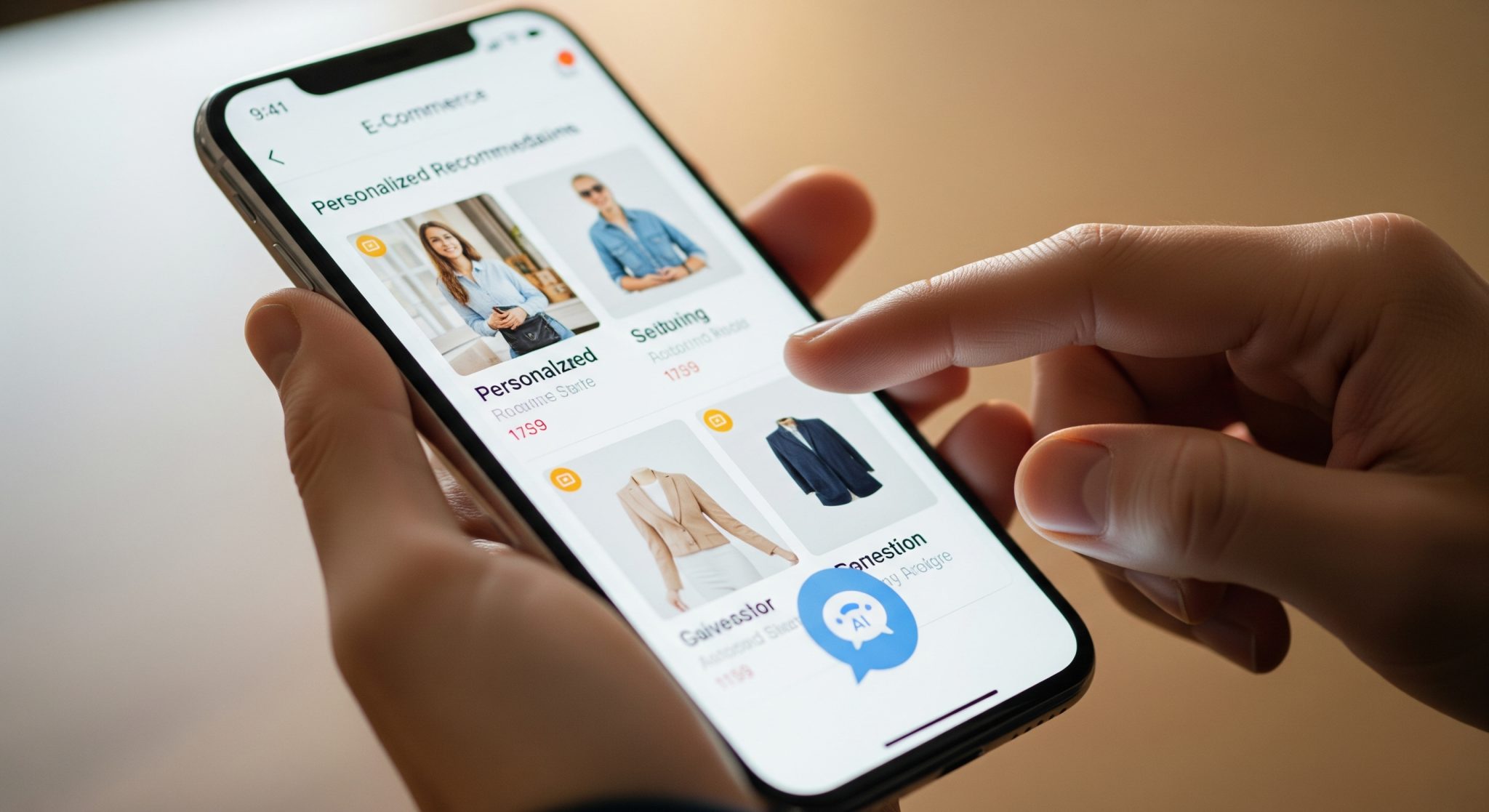
    Modern customers expect relevant, personal communication. Messages that are too generic are often ignored because they don’t match a customer’s specific needs. AI enables businesses to create offers tailored based on customer behavior.

    AI analyzes purchase history, product interests, and interaction patterns to determine the most suitable offer. With the right personalization, customers feel understood and trust the brand more.

    Data:
    AI-based personalization can increase conversion by up to 20 percent.

    Concrete example:
    An e-commerce store sends product recommendations similar to items the customer previously viewed.

    Tool or Platform:
    Cekat.ai, Klaviyo, Amazon Personalization

    4. Automated Abandoned Cart Recovery

    Many customers add products to their cart but don’t complete the purchase. Without a recovery strategy, these sales opportunities are simply lost. AI enables the system to detect abandoned carts and automatically send reminders.

    Reminder messages can be sent via WhatsApp, email, or SMS with engaging, relevant content. AI can also determine the best time to send messages to increase conversion chances.

    Data:
    AI-based abandoned cart recovery can recover 15 to 25 percent of potential transactions.

    Concrete example:
    An online store sends a WhatsApp message with a checkout link and an extra discount to customers who abandoned their cart.

    Tool or Platform:
    Shopify AI Tools, Cekat.ai, Omnisend

    5. Automated Upsell and Cross-Sell

    Increasing transaction value doesn’t always mean finding new customers. One of the most effective strategies is upselling and cross-selling to existing customers. AI helps identify the most relevant products to offer as an add-on purchase.

    AI uses historical data to predict products that are likely to be bought together. With the right recommendations, customers tend to add extra products within a single transaction.

    Data:
    AI-based upsell strategies can increase average transaction value by 10 to 30 percent.

    Concrete example:
    When a customer buys shoes, the system automatically recommends socks or a sports bag.

    Tool or Platform:
    Amazon Recommendation Engine, Cekat.ai, Shopify AI

    6. Customer Churn Prediction

    Losing long-time customers is often more costly than acquiring new ones. AI helps businesses identify customers who are likely to stop buying before it actually happens.

    AI analyzes changes in purchasing patterns, interaction frequency, and customer engagement levels. If churn indicators are detected, the system can automatically send special offers or loyalty programs.

    Data:
    AI-based churn prediction can help reduce customer loss by up to 20 percent.

    Concrete example:
    A membership platform offers exclusive discounts to customers who haven’t made a purchase in a while.

    Tool or Platform:
    Cekat.ai, Salesforce AI, HubSpot AI

    7. Broadcast Timing Optimization

    Sending promotional messages at the wrong time can reduce conversion opportunities. AI helps determine the best time to send messages based on customer habits.

    By analyzing customer behavior data, AI can determine when customers are most active in reading messages. As a result, sent messages have a higher chance of being opened and acted on.

    Data:
    AI-based broadcast timing optimization increases open rates by up to 35 percent.

    Concrete example:
    The system sends promotions during lunch break because customers tend to open messages at that time.

    Tool or Platform:
    Cekat.ai, Mailchimp AI, WhatsApp API Tools

    8. Conversation Analytics for Sales Insights

    Conversations with customers are a valuable data source that’s often overlooked. AI can analyze thousands of conversations to uncover patterns in customer needs.

    Conversation analytics helps businesses understand the most frequently asked questions, customer objections, and needs for new products. These insights can be used to refine sales strategy.

    Data:
    Businesses using AI conversation analytics report customer satisfaction increases of up to 25 percent.

    Concrete example:
    A retail business discovers that many customers ask about a specific product, prompting them to increase stock of that product.

    Tool or Platform:
    Cekat.ai Conversation Analytics, Google Dialogflow

    Internal Link:
    Learn about intelligent agent technology on the /blog/ai-agent/ page

    Strategic Benefits of Using AI for Sales Teams

    Using AI technology in the sales process doesn’t just improve efficiency, it also creates a long-term competitive advantage.

    Some of the key benefits businesses experience include:

    • increasing sales team productivity

    • speeding up customer response

    • increasing sales conversion

    • lowering operational costs

    • increasing customer loyalty

    • strengthening AI sales funnel strategy

    • consistently increasing revenue with AI

    FAQ About AI for Increasing Sales

    1. Is AI suitable for small and medium businesses?
    Yes, AI is now available at various scales, so it can be used by small businesses through to large enterprises without requiring a large upfront investment.

    2. Can AI replace human sales teams?
    No. AI serves as a supporting tool to boost sales team productivity, not to replace it entirely.

    3. How long does it take to see results from AI?
    Most businesses start seeing performance improvements within one to three months after implementation.

    4. Is AI safe to use for managing customer data?
    Modern AI uses strict security systems to protect customer data and ensure privacy is maintained.

    5. What’s the difference between AI marketing and traditional marketing?
    AI marketing uses data and automation to make decisions faster and more accurately than manual methods.

    6. How do you get started using AI for sales?
    The first step is to identify sales processes that can be automated, then use a platform like Cekat.ai to start implementing AI technology gradually.

    AI technology is no longer just an add-on innovation in the business world, it has become a core foundation of modern sales strategy. With the ability to automate processes, analyze large volumes of data, and deliver a more personal customer experience, AI helps businesses work smarter and more efficiently.

    Through the eight strategies discussed above, businesses can start applying AI gradually based on their needs and operational scale. The right implementation not only boosts conversion, but also builds a sales system that’s stable and sustainable in the long run.

    If your business wants to start applying AI to increase sales, now is the right time to use a solution that’s easy to implement and ready to use.

    Cekat.ai helps businesses automate lead follow-up, improve customer response, and optimize communication strategy through AI technology integrated with WhatsApp and CRM. Without needing to build a system from scratch, you can immediately leverage AI technology to boost conversion and accelerate business growth.

    Learn more about the features and plans available on the pricing page and start transforming your business’s sales today.

  • AI Agent for Education Businesses: Automating Registration, Follow-Up, and Administration

    AI Agent for Education Businesses: Automating Registration, Follow-Up, and Administration

    Key Advantages

    • 40% Student Enrollment Conversion Lift: Guides prospective students through conversational registration workflows 24/7 without operating hour limitations.
    • 65% Administrative Workload Reduction: Automates repetitive tuition pricing FAQs, placement testing, digital certificate delivery, and form verifications.
    • Sub-5 Second Instant Inquiry Resolution: Resolves admissions inquiries across WhatsApp and social channels at the peak of student learning interest.
    • Automated Tuition Reminders & Lead Nurturing: Maintains predictable institutional cash flow through automated payment cadences while educating undecided prospects.

    An AI Agent for education businesses is an enterprise artificial intelligence system engineered to operate as an autonomous digital admissions assistant. It automates prospective student consultations, streamlines registration pipelines, executes lead nurturing cadences, dispatches tuition payment reminders, and coordinates academic administrative tasks without requiring constant manual staff oversight. Discover core architecture in our guide to what Agentic AI is and how it works.

    Educational institutions, from language academies and tutoring centers to online edtech platforms and private colleges, face severe operational friction: high daily inquiry spikes during enrollment seasons, complex manual registration steps, inconsistent lead follow-ups, and unmonitored off-hour student inquiries.

    Deploying dedicated education AI agents is proven to expand total student enrollments by up to 40 percent, reduce administrative overhead by 65 percent, and compress inquiry response times from 60 minutes to under 5 seconds around the clock.

    Core Institutional Challenges Solved by Education AI Agents

    Communication bandwidth bottlenecks during admissions cycles directly cause prospective student drop-offs:

    Institutional Operational Friction Commercial Business Impact Autonomous AI Agent Resolution
    High Volume of Repetitive Inquiries Admissions staff spend entire shifts answering identical tuition and curriculum FAQs. AI resolves questions instantly using a verified knowledge base.
    Friction-Filled Registration Funnels Prospective students abandon static registration forms midway. AI guides form data collection conversationally step-by-step inside active chat threads.
    Inconsistent Prospective Lead Follow-Up High-intent inquiries go uncontacted due to rep bandwidth limits. Automated follow-up sequences trigger dynamically based on prospective student behavior.
    Operating Hour Availability Gaps Evening and weekend inquiries remain unmonitored until the next business day. Continuous 24/7 engagement captures prospective students during off-peak hours.
    Tuition Payment & Installment Delays Unpredictable institutional cash flow resulting from manual billing cadences. Automated billing alerts dispatched T-7, T-3, and day-of with instant checkout links.
    Manual Certificate Administration Administrative backlogs and potential clerical data errors on graduate documents. Instant generation and dispatch of verifiable digital certificates upon course completion.

    10 Core Capabilities of AI Agents for Educational Institutions

    Modern education AI agents deliver comprehensive workflow automation across the student lifecycle:

    1. Instant Program & Tuition Disclosure: Explains syllabus structures, tuition payment terms, class schedules, and faculty profiles in sub-seconds.
    2. Placement Triage & Level Qualification: Conducts preliminary diagnostic quizzes in-chat to recommend appropriate course tiers.
    3. Interactive In-Chat Registration: Collects student identification, program selection, and payment confirmations seamlessly inside WhatsApp.
    4. Automated Inquiry Follow-Up: Re-engages prospective students who abandoned registration forms. Apply proven frameworks from our guide on effective lead follow-up strategies.
    5. Automated Tuition Payment Alerts: Dispatches recurring billing reminders through structured payment reminder workflows.
    6. Class Schedule & Campus Broadcasts: Dispatches real-time announcements regarding schedule adjustments via official WhatsApp blast software.
    7. Automated Student Onboarding: Delivers Learning Management System (LMS) credentials and orientation documentation upon payment verification.
    8. Pre-Class Attendance Reminders: Dispatches class session reminders 1 hour prior to live lectures to maximize attendance rates.
    9. Instant Digital Certificate Delivery: Issues tamper-evident PDF completion certificates directly to student messaging threads upon course completion.
    10. Automated Faculty Evaluation Surveys: Collects course and instructor feedback systematically following graduation milestones.

    Step-by-Step Autonomous Student Enrollment Workflow

    Automating admissions funnels eliminates administrative bottlenecks while providing a frictionless onboarding journey:

    1. Inbound Prospective Inquiry: A prospective student initiates dialogue on WhatsApp, Instagram DM, or via an embedded live chat widget.
    2. Intent Parsing: The AI Agent identifies admissions intent and inquires about the target academic program.
    3. Diagnostic Level Placement: The system administers a brief assessment to determine appropriate class proficiency tiers.
    4. Conversational Data Collection: The prospective student provides registration details, contact information, and class schedule preferences.
    5. Invoice & Billing Generation: The AI locks the enrollment seat and issues digital billing details with instant transfer options.
    6. Onboarding Trigger: The underlying workflow automation engine verifies payment and dispatches welcome orientation kits automatically.

    Lead Nurturing Strategies for Undecided Prospective Students

    Prospective students frequently require evaluation time before committing to tuition enrollments. AI Agents execute systematic nurturing workflows:

    1. Rapid Post-Inquiry Consultative Follow-Up

    Within 2 to 4 hours post-inquiry, the AI sends a curriculum summary packet alongside verified alumni case studies illustrating successful career transitions.

    2. Progressive Educational Drip Cadences

    For undecided leads, the system shares free weekly learning resources and industry insights, keeping your institution top-of-mind when the student is ready to enroll.

    3. Enrollment Deadline & Early-Bird Urgency

    As intake deadlines approach, the AI dispatches seat availability alerts (e.g., “Only 3 seats remaining for this Saturday intake”) to accelerate commitment velocity.

    4. Alumni Upselling & Advanced Course Promotion

    Institutions segment past graduates inside customer segmentation software to offer preferential pricing on advanced certification tiers, executing proven repeat order strategies on WhatsApp.

    AI Agent Deployments Across Educational Sectors

    Educational Sector Primary Operational Focus AI Agent Workflow Implementation
    Tutoring Centers (K-12) Intake volume surges during exam and new school term seasons. Automated mock-exam scheduling, enrollment triage, and periodic grade reporting to parents.
    Language Academies Manual placement test assessments consuming extensive staff hours. Interactive chat placement testing, level recommendation, and native speaker booking.
    Edtech Online Platforms High volumes of LMS access inquiries and certificate issuance requests. 24/7 technical triage, automated password resets, and instant verified certificate delivery.
    Private Universities & Colleges Lengthy admissions funnels requiring extensive prospective guidance. Faculty program guidance, entrance exam scheduling, and document verification tracking.
    Corporate Training Providers Complex multi-department cohort coordination and scheduling. Corporate batch registration, pre-training material dispatch, and automated attendance logging.

    Case Study: Jakarta Language Academy Increases Enrollments by 40%

    A prominent language academy in Jakarta with 300 active students faced a classic admissions bottleneck: digital advertising generated over 300 daily inquiries, but a 2-person admissions team could not maintain sub-hour response times, causing significant enrollment drop-offs.

    By deploying Cekat.ai integrated with the official WhatsApp Business API and a unified CRM application, the academy achieved remarkable operational transformation in 90 days:

    Operational KPI Before AI Agent Deployment After Cekat.ai Implementation
    Average Response Latency 30 – 60 minutes during peak hours Under 5 seconds (24/7 continuous availability)
    Automated Inquiry Resolution 0% (100% manual handling by 2 admins) 85% resolved autonomously by AI
    New Student Enrollments Stagnant due to lead drop-off Increased 40% within 1 quarter
    Registration Funnel Duration 1 to 2 days of manual chat coordination Completed in 15 minutes via conversational bot
    Routine Administrative Overhead 90% of staff time spent typing FAQs Reduced 65%, staff shifted to curriculum development

    Eliminating admissions response latency mitigates overall churn rates and strengthens long-term student satisfaction, reinforcing customer retention.

    Calculating ROI for Education AI Agent Deployments

    ROI Value Driver Estimated Commercial Impact Measurement Framework
    Administrative Labor Savings Equivalent to 1-2 full-time admin salaries Administrative hours saved monthly × hourly team cost
    Enrollment Conversion Lift 20% – 40% increase in completed registrations New student enrollments captured via automated triage
    Tuition Arrears Reduction 30% – 50% decrease in late payments On-time tuition installment collection rates
    Off-Hour Inquiry Monetization Captures 30% of enrollments inquiring after-hours Expansion in total Customer Lifetime Value (CLV)

    Implementation Roadmap: Getting Started with Cekat.ai

    Deploying an AI Agent for your educational institution follows a disciplined, structured framework:

    1. Audit Admissions FAQs & Registration Paths: Compile the top 50 recurring questions regarding curriculum, tuition schedules, durations, and accreditations.
    2. Configure Institutional Knowledge Bases: Upload program syllabi, instructor bios, discount matrices, and academic calendars into your verified repository.
    3. Integrate Official WhatsApp Business API: Link your primary admissions line to secure green-badge verification and eliminate number-ban vulnerabilities.
    4. Build Placement & Diagnostic Flows: Configure automated diagnostic quiz logic inside the WhatsApp AI chatbot.
    5. Connect to Visual CRM Pipelines: Monitor student lifecycle milestones from first touch to enrolled status in dedicated pipeline management software.
    6. Enable Multi-Agent Faculty Collaboration: Connect academic advisors inside a centralized WhatsApp multi-agent workspace to manage complex counseling cases collaboratively.

    Frequently Asked Questions (FAQ)

    1. Can an AI Agent replace educational institution administrative staff?

    No. The AI Agent automates 80-85% of repetitive administrative tasks such as answering tuition FAQs, processing registrations, and sending class reminders, allowing human staff to focus on student counseling, curriculum design, and specialized academic support.

    2. Is an AI Agent suitable for small tutoring centers or private academies?

    Yes. Cekat.ai provides a no-code, agile platform suitable for academies of all sizes, enabling small teams of 2-3 staff to handle large prospective student inquiry volumes without additional administrative hiring.

    3. How does the AI Agent help reduce tuition payment arrears?

    The AI Agent automatically sends personalized billing reminders on T-7, T-3, and due dates via WhatsApp, equipped with direct payment links or virtual account codes to facilitate instant settlements.

    4. Is student personal and academic data preserved securely?

    Yes. Enterprise platforms like Cekat.ai apply bank-grade data encryption, Role-Based Access Control (RBAC), and strict privacy compliance standards to protect student records from unauthorized access.

    5. How long does it take to deploy an education AI Agent?

    Using Cekat.ai pre-built educational templates, initial configuration, knowledge base ingestion, and bot activation can be completed in 3 to 7 business days without dedicated software developers.

    Transform Your Admissions Operations with Cekat.ai

    Delivering responsive, transparent, and automated student communication is essential for scaling admissions in modern education. Resolving inquiries in sub-seconds transforms prospective student interest into committed, paying enrollments.

    The enterprise platform at Cekat.ai delivers conversational commerce infrastructure combining official WhatsApp Business API connectivity, Agentic AI technology, and visual CRM pipeline builders tailored for educational institutions. Explore plan options on our pricing and plans page or schedule a discovery consultation with our solutions team today.

  • Understanding Transactional Messages in WhatsApp API

    Understanding Transactional Messages in WhatsApp API

    Key Advantages

    • Real-Time Transaction Telemetry: Delivers critical order confirmations, billing receipts, and logistics milestones instantly with up to 98% open rates.
    • Multi-Factor Security Assurance: Dispatches One-Time Passwords (OTPs) securely over enterprise cloud infrastructure to protect user authentication integrity.
    • Operational Cost Efficiency: Leverages significantly lower conversation rates under Meta Utility and Authentication tiers compared to Marketing rates.
    • Template Rejection Prevention: Ensures parameters and message copy remain compliant with Meta policies by eliminating promotional text from operational updates.

    Transactional messages on the WhatsApp API are automated notifications dispatched by businesses to customers strictly for operational, informative, and security objectives rather than commercial promotion. These communications are triggered directly by explicit user actions, such as checkout completions, payment verifications, and One-Time Password (OTP) requests. Understanding these architectural boundaries aligns with our guide on how the WhatsApp API differs from standard WhatsApp.

    Under Meta official messaging governance, transactional communications fall into two defined categories: utility conversations and authentication conversations. Both classifications carry strict compliance rules: message content must be factual, specific, and deliver direct utility to the recipient without secondary promotional cross-sells.

    A widespread operational mistake is classifying all outbound automated messages as marketing. In reality, transactional notifications are engineered specifically to eliminate operational customer friction and provide real-time transaction transparency.

    Primary Types of WhatsApp API Transactional Messages

    Transactional messaging encompasses three essential operational workflows that support daily enterprise fulfillment:

    1. Order Tracking and Logistics Updates

    Deployed to confirm order placement and provide shipping progress milestones. This implementation forms the core foundation of scalable WhatsApp API notification systems.

    Typical operational scenarios:

    • Order confirmation receipts and invoice details upon successful checkout.
    • Warehouse packaging notifications and fulfillment status updates.
    • Logistics tracking numbers and estimated delivery timeframes.

    Delivering proactive status notifications eliminates repetitive tier-1 customer inquiries, elevating brand trust through real-time fulfillment visibility.

    2. Payment Confirmations and Billing Receipts

    These messages communicate financial transaction milestones, recurring subscription notices, or digital invoice receipts.

    Typical operational scenarios:

    • Successful payment receipts or transaction failure alerts.
    • Digital recurring invoices and subscription renewal notices.
    • Payment milestone reminders managed through structured payment reminder workflows.

    Payment and billing notifications must remain completely free of promotional sales incentives. Appending promotional discount vouchers or secondary product links to a utility template will trigger immediate rejection by Meta compliance algorithms for disguised marketing.

    3. Authentication and One-Time Passwords (OTPs)

    Engineered exclusively to authenticate user identities during account logins, password resets, and transaction verifications.

    Typical operational scenarios:

    • Dispatching account registration OTPs and multi-factor authentication codes.
    • Authorizing high-value financial transfers or credit card checkouts.
    • Delivering password reset security links.

    Authentication messages utilize standardized templates enforced by Meta, featuring concise parameters designed for rapid delivery.

    Why Transactional Messaging Is Mission-Critical for Enterprise Operations

    Many organizations assume WhatsApp API value lies primarily in outbound broadcast marketing. In practice, the greatest operational ROI stems from transactional communication:

    Operational Dimension WhatsApp API Transactional Messaging Traditional SMS / Email Notifications
    Open Rate Telemetry Averages 98%, opened within the first few minutes of delivery. Averages 20% (Emails filtered to spam, SMS frequently ignored).
    Delivery Velocity Instant sub-second delivery triggered by backend webhook events. Prone to telecom carrier network routing delays and latency.
    Cost per Interaction Utility and OTP tiers are priced significantly below marketing rates. High per-character SMS telecom fees when scaling globally.
    Brand Credibility Delivered via verified official green-badged business profiles. Sent via random shortcodes vulnerable to phishing suspicion.

    Compliance Rules for WhatsApp API Transactional Messages

    To ensure continuous template approval and protect business phone number quality ratings, enforce these operational standards:

    • Direct Event Trigger Requirement: Outbound notifications must trigger exclusively from verified user actions, such as completed payments or login requests.
    • Neutral, Factual Phrasing: Prohibit promotional language, sales urgency phrases, or extraneous emojis that distract from functional updates.
    • Strict Category Isolation: Never combine shipping tracking notices with secondary promotional discount codes. Review official pricing structures in our guide to WhatsApp API conversation categories.
    • Clear Structural Layout: Anchor the message with transaction context, supply the dynamic parameters (order ID or tracking link), and conclude with standard operational instructions.

    Operational Best Practices for Transactional Messaging

    Implement these technical disciplines to optimize post-purchase engagement workflows:

    • Deploy Dynamic Variable Mapping: Structure templates using explicit parameters such as {{1}} for customer names, {{2}} for invoice numbers, and {{3}} for tracking URLs.
    • Trigger Webhooks in Real Time: Connect internal fulfillment databases directly to WhatsApp API endpoints to dispatch alerts within milliseconds of order status changes.
    • Synchronize Interaction Logs with CRM: Record all transactional message histories inside an enterprise CRM application so support agents retain complete context during inquiries.
    • Provide Rapid Human Escalation: When customers experience delivery friction, route threads directly to support specialists inside a centralized WhatsApp multi-agent workspace.

    Orchestrate Transactional Messaging Infrastructure with Cekat.ai

    Managing high-volume transactional messaging requires an enterprise cloud infrastructure that is resilient, secure, and compliant with international data governance standards. Utilizing official WhatsApp Business API connectivity from Cekat.ai guarantees your operational messaging executes reliably.

    Powered by visual workflow automation engines and intelligent WhatsApp AI chatbots, Cekat.ai enables businesses to validate templates prior to Meta submission, automate real-time order notifications, and eliminate message cost waste as detailed in our guide on how to reduce WhatsApp API costs.

    Delivering clear, responsive transactional updates reinforces buyer trust and drives sustainable long-term customer retention.

    Frequently Asked Questions (FAQ)

    1. What is the difference between Utility and Marketing messages on WhatsApp API?

    Utility messages provide factual, essential updates regarding an ongoing customer transaction (such as tracking numbers, payment receipts, or OTP codes), whereas Marketing messages focus on driving commercial sales, promotions, and product discovery.

    2. Why did Meta reject my order notification template submitted under Utility?

    Meta automatically rejects Utility templates if algorithms detect promotional phrasing, discount incentives, upselling links, or secondary sales prompts within the message body.

    3. How long does a Utility conversation session remain active?

    A Utility conversation session remains active for 24 hours from the delivery timestamp of the initial template. Subsequent utility messages related to the same transaction sent within that window do not incur additional session charges.

    Scale Transactional Messaging with Cekat.ai

    Delivering rapid, accurate, and compliant transactional notifications is the foundation of digital customer trust. Structuring your transactional messaging architecture properly protects your business phone number reputation while delivering seamless fulfillment experiences.

    The enterprise platform at Cekat.ai provides complete WhatsApp Business API infrastructure equipped with automated template auditing, instant OTP delivery, CRM integrations, and multi-agent inboxes. Explore plan options on our pricing and plans page or schedule a discovery consultation with our growth solutions team today.

  • CRM Automation with AI: 9 Routine Tasks That Shouldn’t Be Done Manually

    In many businesses, the sales team looks extremely busy every day. They reply to chats, log lead data, move prospect statuses, send follow-ups, check who hasn’t been contacted yet, put together reports, and remind themselves to reach out to prospects again.

    The problem is, not all of that work actually requires strategic decisions from a human. Many CRM tasks done manually are actually repetitive, administrative, and can be automated. When the team spends too much time on work like this, they have less energy left for what matters more: understanding prospect needs, building relationships, negotiating, and closing sales.

    This is where AI CRM automation becomes important. Not to replace the sales team, but to help them stop doing work that should already be running automatically.

    Manual CRM Causes Many Missed Opportunities

    A CRM should be the control center for customer relationships. In practice, though, a CRM often turns into an administrative burden. Data has to be entered manually. Lead status has to be updated one by one. Follow-ups have to be remembered on your own. Contacts have to be segmented manually. Reports have to be pulled, cleaned up, and sent out again every week.

    As a result, the CRM doesn’t always reflect the actual condition of the sales pipeline. There are leads that are already interested but whose status hasn’t been updated. There are prospects that should be followed up but are buried in chat. There are customers who already bought but weren’t added to a retention segment. There are inquiries from WhatsApp that got lost because there was no time to log them.

    For sales teams and CRM admins, this situation isn’t just exhausting. It also risks making the business lose sales momentum. Because in sales, opportunities aren’t always lost because the customer isn’t interested. Often they’re lost because the system is too slow to capture, log, and act on intent.

    1. Data Entry From WhatsApp No Longer Has to Be Manual

    WhatsApp is often the most active lead source for many businesses in Indonesia. Customers ask about prices, stock, schedules, promos, location, service packages, and even payment processes directly through chat. But if all that information has to be copied manually into the CRM, the risk of human error becomes very high.

    The team can forget to log a name. A WhatsApp number doesn’t make it into the database. Customer needs go undocumented. Conversation history stays separate from the lead profile. In the end, the CRM only holds part of the data, while important context stays locked inside the chat.

    With AI for data entry, information from WhatsApp conversations can be read, cleaned up, and entered into the CRM system more automatically. Names, numbers, needs, product interest, lead source, and conversation context can all be captured without the team having to copy everything one by one.

    For the sales team, this saves time. For the business, this makes customer data more complete from the start.

    2. Lead Status Updates Can Run More Automatically

    In a manual CRM, lead status often lags behind the reality of the conversation. A lead who already asked for pricing is still logged as a new lead. A lead who already requested a proposal hasn’t been moved to the consideration stage. A lead who’s ready to pay still looks like an ordinary prospect.

    Problems like this make the pipeline look inaccurate. Sales managers struggle to tell which leads are hot, which need follow-up, and which have gone cold. The CRM ends up failing as a solid basis for decisions.

    With AI CRM automation, lead status can be updated based on activity and conversation context. When a customer asks about pricing details, the system can mark the lead as qualified. When a customer requests a proposal, the status can move to the next stage. When a customer doesn’t reply within a certain period, the system can put them into a follow-up flow.

    More accurate lead status helps the team work based on priority, not just the order in which chats came in.

    3. Contact Segmentation Shouldn’t Be Done One by One

    Segmentation is the foundation of relevant communication. Yet many businesses still group contacts manually. New customers, repeat buyers, leads from ads, customers who haven’t checked out, inactive old customers, and high-value prospects often end up mixed together in the same database.

    As a result, the messages sent become too generic. Everyone gets the same promo, the same follow-up, the same reminder. In reality, each segment has different needs and different levels of purchase readiness.

    With automation, contacts can be segmented based on data and behavior. For example, by lead source, product interest, purchase history, funnel stage, last engagement, or transaction value. AI helps read patterns from customer interactions so segmentation isn’t based only on static data, but also on conversation context.

    The result is that sales and marketing campaigns can be far more targeted.

    4. Lead Assignment Doesn’t Have to Depend on an Admin

    When a lead comes in from WhatsApp, a website, an ad, or another channel, the next question is who should handle that lead. If assignment is still manual, a lead can sit around too long before it reaches the right salesperson.

    In businesses with many branches, many products, or many sales reps, manual assignment can become a bottleneck. An admin has to read the chat, understand the customer’s needs, then decide who’s best suited to handle it. This process takes time, especially when inquiry volume is high.

    CRM automation lets lead assignment run based on clear rules. Leads can be routed based on location, product interest, campaign source, sales capacity, customer type, or urgency level. If a lead shows high intent, the system can prioritize assignment to the team that’s most ready to follow up.

    With a flow like this, response times get faster and the risk of leads being handled late goes down.

    5. Sending Proposal Templates Can Be Faster and More Consistent

    Sending a proposal is an important part of the sales process, but it’s often repetitive work. The sales team has to open an old file, swap in the customer’s name, adjust the details to fit their needs, double-check the pricing, then send it out manually.

    Done over and over, this process eats up a lot of time. Worse, the quality of the proposal can become inconsistent. Some information gets left out, formats differ, or the intro message doesn’t match the brand voice.

    With automation, proposal templates can be sent out faster based on the prospect’s needs. The system can help select the right template based on industry, product, package, or the customer’s funnel stage. AI can also help draft a more personal intro message based on the context of the previous conversation.

    The sales team can still review more complex cases, but the basic process no longer has to start from scratch every time.

    6. Follow-Up Reminders Shouldn’t Rely on the Team’s Memory

    Follow-up is one of the simplest sales tasks, but also one of the most frequently missed. Not because the team doesn’t care, but because they’re handling too many conversations, too many prospects, and too many priorities at the same time.

    Leads who haven’t replied need to be contacted again. Prospects who received a proposal need to be asked about their decision. Customers who already asked about pricing need to be pushed toward the next stage. Without a reminder system, all of this depends on manual notes or each salesperson’s memory.

    With AI CRM automation, follow-up reminders can run based on triggers. For example, if a prospect hasn’t replied within 24 hours, the system reminds the salesperson. If a proposal has been sent but there’s no response yet, a follow-up can be scheduled automatically. If a customer shows high interest, the system can give it a higher priority for sales.

    Consistent follow-up helps a business maintain momentum without overwhelming the team.

    7. Weekly Reports Don’t Need to Be Compiled Manually Every Week

    CRM admins and sales managers often spend a lot of time putting together weekly reports. They pull data, clean up the numbers, count leads, check pipeline status, log conversions, then compile a summary for management.

    The problem is, if CRM data isn’t updated diligently, the weekly report doesn’t really reflect what’s happening on the ground either. The report becomes just a formality, not insight that can actually be used to make decisions.

    With automation, weekly reports can be put together faster and more consistently. The system can help summarize the number of new leads, pipeline status, follow-up performance, response time, conversions, sales activity, and bottlenecks that occurred during a given period.

    For management, this makes it easier to see the state of sales more clearly. For the operations team, this reduces the administrative work that repeats every week.

    8. Email and WhatsApp Nurturing Can Run Based on Customer Stage

    Not every lead is ready to buy today. Some are still researching. Some are still comparing vendors. Some are already interested but waiting on budget. Some just need education before entering a sales conversation.

    If all nurturing is done manually, many leads will stall along the way. The sales team usually focuses on prospects who look most ready to buy, while colder leads don’t get any further communication.

    With CRM automation, email and WhatsApp nurturing can run based on the customer’s stage. New leads can receive initial education. Leads who already asked about pricing can receive case studies or product benefits. Leads who haven’t checked out can receive a reminder. Customers who already bought can move into a retention or upsell flow.

    Nurturing like this turns the CRM into more than just a place to store data — it becomes an engine that helps drive the customer journey forward.

    9. Customer Satisfaction Surveys Can Be Sent Without Waiting on Manual Work

    After a transaction is complete, many businesses stop communicating with the customer right away. Yet the post-purchase phase is an important moment to understand customer satisfaction, catch problems faster, and open the door to repeat purchases.

    Customer satisfaction surveys are often delayed because they have to be sent manually. As a result, feedback comes in late or doesn’t get collected at all. The business misses the chance to find out whether the customer is satisfied, disappointed, or needs further help.

    With automation, surveys can be sent after a specific trigger. For example, after an order is completed, a treatment is finished, a product is received, a service is used, or a support ticket is closed. AI can also help read customer responses and flag which feedback is positive, neutral, or needs immediate attention from the human team.

    This makes the customer experience more measurable and helps a business improve its service faster.

    CRM Automation Helps the Team Focus on High-Value Work

    CRM automation in Indonesia isn’t just about technology. It’s about a healthier way of working for sales teams and CRM admins. When repetitive work gets automated, the team has more time for the activities that genuinely need a human: understanding prospect needs, building trust, crafting a sales approach, negotiating, and maintaining relationships with important customers.

    AI shouldn’t make communication feel cold. If anything, AI helps reduce administrative work so the human team can focus more on conversations that require strategy, empathy, and decision-making.

    For businesses, the benefit isn’t just saved time. A more automated CRM also means tidier data, a more accurate pipeline, more consistent follow-up, and revenue opportunities that are easier to act on.

    Cekat.ai Helps Turn Your CRM From a Database Into a Workflow

    At Cekat.ai, we see a CRM as more than just a place to store contacts. A CRM should be a working system that connects chat, customer data, automation, AI, sales activity, and the customer journey into one more measurable flow.

    With Cekat.ai, businesses can automate various routine tasks such as data entry from WhatsApp, lead status updates, contact segmentation, lead assignment, sending proposal templates, follow-up reminders, weekly reports, email or WhatsApp nurturing, and customer satisfaction surveys.

    As a result, the team no longer gets buried in repetitive manual work. Every customer conversation can be captured, understood, acted on, and turned into a business opportunity faster.

    Ultimately, a good CRM isn’t the one filled in the most manually. A good CRM is one that helps the team move faster, make better decisions, and keep every opportunity from getting lost along the way.

    Automate your CRM with Cekat.ai.

  • AI Agent Trends for Business in Indonesia 2026: What You Need to Prepare

    In recent years, businesses in Indonesia have been moving through very fast change. Customers are increasingly used to discovering products on TikTok, asking questions via WhatsApp, comparing prices on a marketplace, checking social proof on Instagram, then coming back to a website or admin chat before finally buying. The customer journey no longer runs in a straight line from awareness to transaction. It jumps between channels, is often interrupted, and becomes harder to control if a business still relies on manual systems.

    This is where the 2026 Indonesia business AI agent trend becomes increasingly important. An AI agent is no longer just an add-on technology for answering customer questions. It is becoming a new operational layer that helps businesses capture intent, read conversation context, run follow-ups, connect customer data, and push the process from chat to transaction faster. For Cekat.AI, 2026 isn’t just the year businesses start “trying out AI” — it’s the year businesses need to start restructuring how they serve, sell, and manage customer relationships with the help of an AI agent.

    This shift isn’t happening just because AI technology is being talked about a lot. It’s happening because business needs have become more concrete. Customer acquisition costs are rising, marketplace competition is getting denser, customers are more selective, and operations teams are increasingly overwhelmed handling conversations across many channels. If every inquiry still has to be read manually, every follow-up still depends on an admin’s memory, and every piece of customer data is still scattered across many places, then the business will keep losing revenue opportunities after a customer shows interest.

    From Chatbot to AI Agent: The Major Shift Businesses Need to Understand

    Until now, many businesses have known conversation automation through chatbots. However, traditional chatbots generally only work based on simple rules. When the customer asks A, the system answers B. If the customer steps outside the predefined flow, the chatbot often fails to understand the context and ends up still needing a human admin to take over the conversation.

    An AI agent goes much further than that. An AI agent is designed to understand intent, read context, make decisions based on a given workflow, and carry out actions that are more relevant to business needs. In the context of Indonesian businesses, an AI agent can help answer product questions, qualify leads, direct customers to the right admin, remind about follow-ups, update customer status in a CRM, and even help move the customer journey from inquiry to invoice.

    The most important difference isn’t just the ability to answer, but the ability to act. A chatbot helps a business respond. An AI agent helps a business run a process. This is why the future of the business AI agent will move increasingly close to revenue, not just customer service. Businesses no longer just need tools that can answer customer questions, but a system that can make sure every opportunity from a customer doesn’t stall halfway through.

    At Cekat.AI, we see the AI agent as part of the revenue operating layer. That means the AI agent doesn’t stand alone as a conversation feature — it’s connected to the omnichannel inbox, CRM, automation, campaign management, and customer data. This way, a business doesn’t just respond faster, it also turns every customer interaction into data, insight, and a more measurable revenue opportunity.

    Trend One: Multi-Modal AI Agents Will Make the Customer Experience More Natural

    The 2026 Indonesia AI trend will be increasingly shaped by the development of multi-modal AI. That means AI won’t just understand text, it will increasingly be able to read various forms of input such as images, documents, voice, product catalogs, proof of payment, screenshots, and other visual context that often comes up in everyday customer conversations.

    For Indonesian businesses, this is highly relevant because customer interactions aren’t always neat. Customers often send photos of the product they’re looking for, screenshots of ads, transfer receipts, images of item sizes, voice notes, or short questions that require interpreting context. In a manual process, an admin has to read each one, understand what the customer means, check the data, then give the appropriate answer. As chat volume rises, this process becomes slow and error-prone.

    Multi-modal AI agents will open up a new way of managing the customer experience. Imagine a customer sends a screenshot of a product from a marketplace, then the AI agent helps recognize the context of their question. A customer sends proof of payment, then the system helps guide the verification process. A customer sends an image of the item they’re looking for, then the AI agent helps the admin understand the customer’s need before the conversation continues. All of this will make business conversations feel more natural, faster, and closer to how Indonesian customers actually communicate.

    However, businesses can’t jump straight into multi-modal AI without preparation. The key is tidy product data, a clear catalog, documented conversation SOPs, and a workflow that can be connected to the operational system. AI agents will get smarter, but the quality of their output still depends on the quality of context the business provides. That’s why preparing for 2026 isn’t just about choosing AI technology, it’s also about tidying up the operational foundation that will fuel that AI.

    Trend Two: Agentic AI Workflows Will Change the Way Teams Work

    One of the biggest trends in the future of the business AI agent is the rise of agentic AI workflows. This is an approach where AI doesn’t just help with one small task, but takes part in orchestrating a longer chain of work. In business, a workflow like this can cover capturing a lead, understanding customer needs, giving an initial response, building segmentation, sending follow-ups, routing to sales, logging status in a CRM, and helping the team see the progress of the customer journey.

    For Indonesian businesses, agentic AI workflows will be very important because many sales and customer service processes still depend on manual work. Admins have to open many tabs, sales has to check conversation history, marketing has to ask other teams about lead quality, and owners have to wait for manual reports to understand business performance. As a result, decisions become slow and customer opportunities can be missed.

    Agentic AI workflows let businesses build a more consistent process. When a lead comes in from an ad, the AI agent can help provide an initial response. When a customer shows interest, the system can help tag their intent. When a customer hasn’t bought yet, automation can run a follow-up. When a customer is ready to transact, the sales team can step in at the right moment. When the conversation ends, the data stays stored in the CRM so the business doesn’t lose context.

    This doesn’t mean humans are no longer needed. Quite the opposite — humans will focus even more on decisions that require empathy, strategy, negotiation, and problem-solving. The AI agent takes over the repetitive and administrative work that has been eating up the team’s time. This lets businesses increase their service capacity without having to keep adding admins in a linear way.

    Trend Three: AI for MSMEs Will Move from Experiment to Operational Necessity

    In Indonesia, discussions about AI often sound like it’s technology for big companies. Yet by 2026, AI for MSMEs will actually become one of the most important areas. MSMEs face very real pressures: small teams, limited budgets, many sales channels, customers who want fast responses, and increasingly tight price competition. Under these conditions, an AI agent can become operational leverage that helps MSMEs work faster and more neatly.

    For MSMEs, the challenge isn’t always a lack of customers. Often the problem is that customers are already coming in, but aren’t being handled well. Chats come in on WhatsApp but take a long time to be answered. Customers ask questions on Instagram but it’s never logged. Leads come in from ads but aren’t followed up promptly. Past buyers are never reactivated. Customer data is only stored in chat history and never turned into segmentation or insight.

    An AI agent helps MSMEs close that gap. With an AI agent, a small business can have a more consistent response system, a more disciplined follow-up workflow, and a more structured customer database. MSMEs don’t have to build a complex system right away. They can start from the most basic needs: responding to questions faster, managing customers from one dashboard, logging customer data, and automating simple follow-ups.

    Cekat.AI believes the future of the business AI agent in Indonesia shouldn’t be exclusive to big companies. In fact, small and medium businesses need technology that’s practical, easy to adopt, and whose impact on daily operations is felt immediately. That’s why an AI agent platform that’s relevant for Indonesia has to understand how local businesses work: close to WhatsApp, comfortable with marketplaces, dependent on admins, and in need of a system that can help right away without an overly heavy implementation process.

    Trend Four: Integration with Indonesian Marketplaces Will Become Increasingly Important

    Marketplaces are still one of the main transaction hubs for many Indonesian businesses. However, more and more businesses are starting to realize that relying entirely on marketplaces carries risk. Platform fees can rise, price competition is getting more aggressive, customer relationships are hard to fully own, and customer data often isn’t consolidated with other channels.

    That’s why AI agent integration with Indonesian marketplaces will be one of the important trends in 2026. It’s not enough for a business to just be present on a marketplace. Businesses need to connect marketplace activity with other communication channels like WhatsApp, Instagram, a website, and a CRM. The goal isn’t to replace the marketplace, but to make the customer journey more connected.

    For example, a customer finds a product on a marketplace but asks further questions via WhatsApp. A customer sees a promo on Instagram then compares prices on a marketplace. A customer buys once on a marketplace, then needs to be directed into a repeat-order program through a more personal channel. Without data and workflow integration, all these interactions look like separate activities. Yet for the customer, it’s all one experience with the same brand.

    An AI agent can help businesses maintain that continuity. When conversations from various channels flow into one system, a business can understand the customer more completely. An AI agent can help read intent, log needs, and make sure follow-up keeps happening. This way, a business isn’t just chasing a one-time transaction, it starts building a longer relationship with the customer.

    For brand owners, this is highly strategic. 2026 will demand that businesses not only sell on platforms, but also build their own customer assets. Data, conversation history, segmentation, and follow-up workflows will become important assets for protecting margin, increasing repeat purchases, and reducing dependence on paid acquisition.

    Trend Five: Indonesian Conversational Commerce Will Move Even Closer to Revenue

    Indonesian conversational commerce will become one of the most visible faces of AI agent use. Indonesian customers are already very used to communicating with brands through chat. They ask about stock, price, size, promos, location, schedule, booking, payment, and even shipping through conversation. Chat is no longer a supporting channel. Chat is part of the buying process.

    The problem is, many businesses still treat chat as an ordinary customer service activity. Yet every chat can be a signal of intent. When a customer asks “is it still available?”, “can it be shipped today?”, “how much is it?”, or “is there a promo if I take two?”, the customer is actually showing purchase interest. If the response is slow or follow-up is inconsistent, the business loses momentum.

    By 2026, the businesses that stand out will be the ones able to turn conversation into conversion. That means a conversation shouldn’t stop at just Q&A. It needs to be steered into a clear process: understanding the customer’s need, giving a relevant recommendation, guiding them to the transaction, logging status, and following up if the customer hasn’t bought yet.

    An AI agent will be an important engine in conversational commerce because it can maintain speed and consistency across many conversations at once. Not just to answer FAQs, but to make sure every customer intent is processed properly. For Cekat.AI, this is the major shift Indonesian businesses need to understand: chat isn’t just a communication channel, it’s a revenue touchpoint.

    Indonesian Businesses Must Start Preparing Data, Workflow, and Governance

    Following the 2026 Indonesia business AI agent trend isn’t enough by just buying AI tools. Businesses need to prepare their internal foundation so the AI agent can work effectively. The first foundation is data. Businesses need to start tidying up product information, FAQs, catalogs, prices, promos, shipping policies, refund policies, customer segmentation, and interaction history. The tidier the data, the better the AI agent will be at giving responses and running workflows.

    The second foundation is workflow. Many businesses want automation, but haven’t clearly defined their workflow yet. Who handles a new lead? When should a customer be followed up? When should the conversation be handed off to a human admin? What are the indicators of a hot customer? What status needs to be logged in the CRM? What response templates fit the brand? These questions need to be answered before the AI agent can deliver maximum impact.

    The third foundation is governance. As AI starts getting involved in customer conversations, businesses need to make sure there are clear boundaries, controls, permissions, and handoff mechanisms. An AI agent shouldn’t be left to work without direction. AI needs to be placed within a system that’s safe, measurable, and can be monitored. This is especially important for businesses handling customer data, transactions, financial services, healthcare, education, or other industries that require higher communication and security standards.

    The fourth foundation is team mindset. An AI agent isn’t a threat to the customer service, sales, or marketing team. An AI agent is a support system that helps the team work with more focus. The team still needs to understand the product, read the customer’s situation, make decisions, and build relationships. But repetitive work like answering the same questions, logging status, sending follow-ups, and sorting conversations can be helped by the system.

    What Should Businesses Do Starting Now?

    Preparation for 2026 should start with a simple audit of the customer journey. Businesses need to look at where customers come in most often, where conversations pile up most often, where follow-up gets missed most often, and where customer data gets lost most often. From there, a business can determine which process would give the fastest impact if helped by an AI agent.

    If the main problem is slow response, the first priority is an AI agent for customer inquiries and FAQs. If the main problem is leads not being followed up, the priority is automation and CRM. If the main problem is too many channels, the priority is an omnichannel inbox. If the main problem is campaigns that can’t be tied to revenue, the business needs to start connecting campaigns, conversations, and customer data in one system.

    Businesses also need to start building conversation standards. A good AI agent needs to understand brand tone, how to answer customers, information boundaries, and when to hand the conversation off to a human. With clear standards, an AI agent doesn’t just work fast, it also keeps maintaining customer experience quality.

    Just as important, businesses need to choose a platform that fits the reality of the Indonesian market. An AI agent platform for Indonesian businesses needs to be close to the channels customers actually use, especially WhatsApp and social commerce. That platform also needs to be able to connect with the CRM, automation, omnichannel, and workflow that support the revenue process. Without this integration, AI will just become an add-on feature, not a system that truly helps business growth.

    Cekat.AI Is Ready to Help Indonesian Businesses Face the 2026 AI Agent Era

    Cekat.AI is here to help Indonesian businesses build an AI agent foundation that’s better prepared for the future. We don’t see the AI agent as just a smart chatbot, but as part of a system that helps businesses manage conversations, customer data, follow-up, automation, and revenue workflow in one platform.

    Through Cekat Chat, businesses can respond to customers faster, more naturally, and more contextually. Through Cekat CRM, every customer interaction can be logged, grouped, and turned into more actionable insight. Through Cekat Automation, businesses can keep follow-up consistent without relying entirely on manual work. Through Cekat Omnichannel, conversations from various channels can be managed more centrally. Through Cekat Marketing, businesses can see a clearer link between campaigns, conversations, and revenue.

    This is what Indonesian businesses will increasingly need in 2026. Not just AI that can answer. Not just a dashboard that looks neat. But a platform that helps businesses capture customer intent, maintain conversation momentum, and turn interactions into more measurable growth opportunities.

    The AI Agent Is No Longer a Technology Trend, But Growth Infrastructure for Business

    The 2026 Indonesia business AI agent trend points to one very clear thing: a business that’s ready isn’t just a business that uses AI, but a business that can integrate AI into the way it works. AI agents will become increasingly multi-modal, increasingly agentic, increasingly relevant for MSMEs, increasingly connected to marketplaces, and increasingly important in conversational commerce.

    However, the biggest value from an AI agent doesn’t come from the technology itself. The biggest value comes when a business has tidy data, a clear workflow, connected channels, and a team ready to work alongside AI. Businesses that prepare this foundation early will have an advantage that’s hard to catch up to: faster responses, more consistent follow-up, stronger customer relationships, and more measurable revenue.

    At Cekat.AI, we believe the future of Indonesian business will be won by companies that can move fast without losing control. The customer journey may get more complex, channels may keep multiplying, and customer expectations may keep rising. But with the right AI agent, a business can stay present, stay responsive, and keep protecting every revenue opportunity so it isn’t lost after a customer shows interest.

    Join the businesses that are already future-ready with Cekat.AI, the AI agent platform that helps Indonesian businesses manage conversations, automate workflows, and turn customer interactions into more measurable growth.

  • AI Sales Automation: How to Automate Sales from Lead to Close

    AI Sales Automation: How to Automate Sales from Lead to Close

    Key Advantages

    • Instantaneous Inbound Lead Response: Engages incoming prospects within 5 seconds 24/7, increasing conversion likelihood by up to 21x compared to delayed manual outreach.
    • 100% Reliable Follow-Up Cadence: Automates multi-step lead nurturing across WhatsApp and email, ensuring no potential deal is abandoned prematurely.
    • Closed-Loop CRM Synchronization: Automatically updates contact fields, lifecycle stages, and deal pipelines without manual data entry friction.
    • AI-Powered Closing Signal Detection: Evaluates behavioral engagement metrics to alert sales representatives the moment a prospect demonstrates high purchasing readiness.

    AI sales automation refers to the end-to-end automation of the commercial sales lifecycle using artificial intelligence—spanning lead capture, prospect qualification, automated nurturing, closing signal detection, and performance analytics. This empowers sales representatives to dedicate their focus entirely to consultative negotiations and closing deals without being bogged down by repetitive administrative overhead.

    The three most critical factors determining modern sales success are response velocity, follow-up consistency, and the capacity to manage thousands of active prospects concurrently. Achieving these three pillars consistently through manual workflows is practically impossible, regardless of team size.

    Empirical research across CRM platforms reveals that responding within the first 5 minutes increases lead qualification likelihood by up to 21x compared to delayed replies. Furthermore, while over 80% of closed transactions require at least 5 meaningful follow-up touchpoints, most sales reps cease outreach after only 1 or 2 attempts.

    AI sales automation resolves both operational bottlenecks simultaneously: delivering instant 24/7 engagement and 100% consistent follow-up for every prospect without exception. Consequently, organizations implementing conversational sales automation achieve an average 30–50% increase in lead-to-deal conversion rates and up to a 40% boost in sales team productivity.

    What Is AI Sales Automation? Definition and Operational Scope

    AI sales automation is an integrated architecture combining artificial intelligence, machine learning, and natural language processing to automate commercial sales activities historically executed manually by human sales teams.

    The foundational distinction from legacy sales automation is AI’s ability to interpret context, recognize patterns from historical interaction datasets, and make adaptive decisions based on real-time prospect behavior. Rather than following rigid, static decision trees, the system continuously refines its accuracy as data volume expands.

    Core Operational Scope of AI Sales Automation

    • Lead Generation & Ingestion: Automatically captures and enriches prospect data across all inbound communication channels 24/7 without operational downtime.
    • Lead Qualification & Scoring: Dynamically scores the conversion potential of inbound leads using multi-dimensional behavioral data.
    • Lead Nurturing & Follow-Up: Delivers hyper-personalized messaging at optimal times across preferred customer channels.
    • Pipeline Management: Updates deal statuses and CRM properties in real time using dedicated pipeline management tools without manual inputs.
    • Closing Signal Detection: Analyzes engagement scores to notify sales representatives the moment a prospect displays high purchase readiness.
    • Post-Sale Expansion: Automatically triggers post-purchase communications for upselling, customer retention, and referral generation.
    • Sales Analytics & Reporting: Compiles comprehensive performance dashboards and closed-loop revenue insights for sales leadership.

    Cekat.ai unifies these capabilities within an autonomous Agentic AI platform connected directly to an enterprise CRM application, the official WhatsApp Business API, and multi-channel communication tools.

    Sales Funnel Stages Automated by Conversational AI

    AI sales automation manages each discrete stage across the buyer journey, from initial discovery to post-purchase expansion:

    Funnel Stage Traditional Manual Sales Process AI Sales Automation Workflow Measurable Commercial Impact
    Awareness Marketing captures attention via paid ads and organic content. AI analyzes visitor behavior, recommends relevant assets, and identifies commercial intent from browsing patterns. Personalized top-of-funnel discovery; elevated content relevance.
    Lead Capture Static website forms or manual chat queues answered only during business hours. Autonomous AI Agents capture prospect details 24/7 across WhatsApp AI chatbots, live chat, and landing pages. Zero after-hours lead leakage; immediate data enrichment.
    Lead Qualification Sales reps conduct manual screening calls, spending 30–60 minutes per lead. AI evaluates prospect qualification criteria and purchasing signals using automated lead qualification workflows. Sales reps focus exclusively on high-intent, sales-qualified leads (SQLs).
    Lead Nurturing Manual email follow-ups with consistency dependent on individual rep discipline. AI delivers targeted, contextual messages across WhatsApp and email via automated follow-up software. 100% follow-up execution rate; zero stalled opportunities.
    Closing Signals Reps lack visibility into buyer timing, often following up too late. AI tracks intent metrics and triggers real-time alerts to reps when prospects review pricing or proposal documents. Reps intervene at the exact peak of buyer purchase intent.
    Negotiation & Closing Executed manually from memory or fragmented notes. AI equips reps with enriched buyer profiles, interaction logs, and consultative objection-handling prompts. Reps enter negotiations with complete context; higher win rates.
    Upsell & Retention Post-purchase check-ins are inconsistent or forgotten entirely. AI presents expansion offers based on usage milestones, reinforcing customer retention strategies. Increased customer lifetime value (LTV); reduced account churn.

    12 Sales Tasks Fully Automated by AI

    The following table outlines key commercial activities executed autonomously by AI, along with their direct operational benefits:

    Automated Sales Task AI Execution Methodology Direct Impact on Sales Teams
    Multi-Channel Lead Ingestion Captures and logs prospect data 24/7 across WhatsApp, web widgets, and ads. Eliminates missed opportunities outside business hours.
    Automated Lead Scoring Analyzes engagement frequency, referral source, and firmographic data to score intent. Reps prioritize opportunities with the highest closing probability.
    Instant Inbound Query Triage Answers commercial and technical FAQs instantly across messaging channels. Delivers response times in seconds, creating exceptional first impressions.
    Multi-Stage Follow-Up Sequences Dispatches scheduled follow-ups triggered by prospect behavior and deal stages. Ensures disciplined outreach without manual calendar tracking.
    Automated Meeting Scheduling Coordinates demo times directly within chat threads synced to rep calendars. Eliminates unproductive back-and-forth scheduling emails.
    Sales Collateral Fulfillment Sends product catalogs, brochures, and case studies matched to funnel stages. Prospects receive verified information at the ideal buying moment.
    Real-Time CRM Data Updates Logs message transcripts, call notes, and deal stage progressions automatically. Maintains 100% accurate pipeline telemetry without manual data entry.
    Closing Signal Detection Monitors document opens and high-intent keyword triggers to alert reps in real time. Reps initiate closing conversations when buying intent peaks.
    Long-Term Lead Nurturing Delivers educational playbooks to unready leads across long buying cycles. Keeps brand top-of-mind without continuous manual effort.
    Automated Referral Requests Prompts satisfied buyers for peer referrals following successful onboarding. Generates high-margin inbound referral pipeline automatically.
    Sales Telemetry & Reporting Aggregates conversion velocity, rep activity, and revenue attribution automatically. Provides leadership with complete pipeline visibility in real time.
    Dormant Lead Re-Engagement Launches re-engagement sequences to inactive database contacts via WhatsApp broadcast software. Unlocks pipeline value from existing data without new ad costs.

    Automating these 12 operational tasks recovers 40–60% of a sales representative’s working hours, redirecting valuable time toward high-impact negotiations, consultative objection handling, and relationship building.

    AI Sales Automation vs. Manual Sales: Quantitative Comparison

    Operational Aspect Manual Sales Process AI Sales Automation Architecture
    First Response Time 1–24 hours depending on rep shifts and queue load Instantaneous (under 5 seconds) 24/7/365
    Follow-Up Discipline Dependent on memory and individual prioritization 100% consistent execution based on behavioral triggers
    Active Lead Capacity per Rep Capped at 20–50 concurrent opportunities Scales to 200–500+ active prospects concurrently
    Lead Scoring Accuracy Subjective, based on rep intuition Objective, data-backed multi-dimensional evaluation
    Administrative Overhead Consumes 40–60% of total working hours Automated, near 0% manual effort for routine tasks
    After-Hours Lead Capture Lost to faster competitors 100% captured, engaged, and qualified in real time
    Message Personalization High for low volumes; degrades rapidly under scale Consistently personalized across boundless volume tiers
    Pipeline Data Accuracy Subject to human logging delays and discrepancies Real-time, automatic event logging after every touchpoint
    Operational Scalability Linear; requires proportional headcount growth Exponential throughput with zero proportional overhead
    Revenue Output per Rep Restricted by available working hours Expands 30–50% by eliminating non-selling tasks

    Core Tools Powering the AI Sales Automation Stack

    Tool Category Primary Commercial Function Typical Enterprise Use Case Essential Integrations
    Autonomous AI Agent Platforms Executes conversational qualification and commercial actions autonomously. Engages inbound leads, answers complex FAQs, and issues proposals via WhatsApp. CRM databases, scheduling tools, notification APIs
    AI-Powered Sales CRMs Manages pipeline progression, predicts churn, and automates deal workflows. Lead scoring, pipeline management, revenue forecasting, automated reporting. AI Agents, email infrastructure, calendar software
    Omnichannel Inboxes Consolidates multi-channel conversations into a single unified workspace. Unified management across omnichannel applications (WhatsApp, Instagram, live chat). CRM platforms, collaborative agent workspaces
    Workflow Automation Engines Coordinates cross-platform triggers and multi-step operational handovers. Automates task assignment, creates invoices, and updates order fulfillment. REST APIs, webhooks, internal enterprise ERPs

    Cekat.ai: The Unified Conversational AI Sales Platform

    Cekat.ai natively integrates autonomous AI Agents, CRM pipelines, omnichannel workspaces, and workflow automation into a unified platform engineered for modern commercial enterprises:

    • Conversational AI Agents: Autonomously manages initial prospect discovery, understands natural commercial context, and qualifies leads 24/7.
    • Closed-Loop Pipeline Automation: Automatically triggers follow-ups, qualification updates, and deal stage changes without manual input.
    • Native WhatsApp Business API: Connects directly to WhatsApp endpoints without fragile third-party connectors.
    • Multilingual Natural Language Processing: Understands complex customer conversations, localized idioms, and commercial terminology seamlessly.
    • Visual No-Code Builder: Enables sales operations teams to construct and optimize sales funnels using a visual interface without dedicated developers.

    Measurable ROI Benchmarks of AI Sales Automation

    Key ROI Metric Manual Baseline (Without AI) With AI Sales Automation Measured Improvement
    Average First Response Time 1–24 hours Under 5 seconds (Instant) Up to 100x faster response velocity
    Lead-to-Opportunity Conversion Historical rep baseline Increases by 30–50% Substantially higher closed deal volume
    Sales Cycle Duration Extended cycles with recurring delays Shortened by 20–40% Accelerated revenue velocity
    Active Lead Capacity per Rep 20–50 active prospects 200–500 active prospects 10x capacity expansion without headcount growth
    Administrative Overhead 40–60% of total working hours Reduced to 10–15% Reclaims 25–45% time for high-value selling
    Follow-Up Execution Rate 60–70% (remainder dropped) 100% consistent execution Zero lost sales pipeline opportunities
    Revenue Generated per Rep Constrained by manual hours Increases by 30–50% Positive financial ROI within 2–4 months

    8-Step Roadmap for Implementing AI Sales Automation

    1. Audit Existing Sales Workflows: Map your end-to-end sales funnel—from lead ingestion and qualification to follow-up cadence and drop-off points. Isolate the primary operational bottlenecks requiring automation.
    2. Define Explicit Triggers and Actions: Specify criteria that initiate automation sequences: form completions, inbound WhatsApp inquiries, proposal views, or checkout stalls. Ensure each trigger possesses an explicit commercial action.
    3. Curate Knowledge Bases & Sales Collateral: Centralize documentation for conversational AI: product catalogs, pricing tiers, case studies, and standard objection-handling playbooks inside your knowledge base.
    4. Establish CRM as the Single Source of Truth: Ensure all conversational data, qualification scores, and activity logs synchronize with customer data management software in real time.
    5. Deploy Phased Automation Workflows: Begin with high-impact, foundational workflows: instant inbound response and automated 24–48 hour follow-up sequences. Add multi-channel complexity once core funnels prove stable.
    6. Architect Frictionless Human Escalation: Establish explicit criteria for transferring threads to human reps—such as closing signal triggers or complex consultative inquiries—inside a collaborative WhatsApp multi-agent workspace.
    7. Train Sales Reps on AI Collaboration: Train your sales team to interpret AI-generated buying signals, leverage conversation summaries, and enter negotiations equipped with complete buyer context.
    8. Monitor KPIs & Iterate Continuously: Track stage conversion rates, response velocity, and pipeline cycle duration inside your marketing analytics and ROAS dashboard, conducting regular optimization sprints.

    7 Common Mistakes in AI Sales Automation Deployment

    Common Deployment Mistake Resulting Operational Impact Recommended Corrective Action
    Automating Without Mapping Customer Journeys Pushes irrelevant messaging; leads feel alienated and opt out. Map customer lifecycle stages methodically before building workflows.
    Deploying AI Without Deep CRM Integration Creates data silos; sales reps lack context during critical calls. Integrate CRM bi-directionally before launching outbound automation.
    Over-Automation Without Human Touchpoints Buyers feel treated like numbers; trust erodes at the closing stage. Establish clear escalation triggers for human reps when purchase intent peaks.
    Neglecting Telemetry Monitoring & Iteration Performance plateaus; conversion friction remains undetected. Define explicit KPIs and execute regular weekly/monthly review cadences.
    Expecting Instantaneous Overnight Returns Premature abandonment of projects before systems mature. Adopt realistic milestones: 1 month setup, 2–3 months for optimal scale.
    Neglecting Knowledge Base Data Hygiene AI delivers inaccurate recommendations based on outdated information. Audit and clean knowledge base documentation prior to deployment.
    Excluding Sales Reps from Workflow Design System conflicts with daily sales realities; causes low team adoption. Involve frontline sales reps in workflow mapping and scenario testing.

    Frequently Asked Questions (FAQ)

    1. What is AI sales automation?

    AI sales automation is the application of artificial intelligence, machine learning, and natural language processing to automate the commercial sales lifecycle end-to-end—including lead capture, qualification, nurturing, CRM updates, and closing signal detection.

    2. What is the difference between AI sales automation and an AI sales agent?

    An AI sales agent is a specific conversational component that interacts directly with prospects to answer questions and qualify intent. AI sales automation is the broader operational architecture encompassing cross-platform workflows, CRM synchronization, and performance reporting.

    3. Is AI sales automation suitable for small businesses and SMEs?

    Yes. Small sales teams benefit immensely because AI sales automation allows 2–3 sales reps to operate with the capacity and responsiveness of a 10–15 person enterprise sales team at a fraction of the cost.

    4. Will AI sales automation replace human sales representatives?

    No. AI automates repetitive, administrative tasks (data entry, initial triage, scheduled follow-ups), allowing human sales specialists to dedicate their expertise to high-value negotiations, relationship building, and complex closing strategies.

    5. How does AI increase sales conversion rates?

    AI increases conversions through three primary drivers: (1) instantaneous response within seconds to capture peak intent, (2) 100% consistent follow-up execution ensuring no opportunities stall, and (3) objective lead scoring directing rep attention to high-probability prospects.

    6. Can AI be used for outbound lead generation?

    Yes. AI analyzes visitor behavior, captures lead data through automated conversational widgets, qualifies multi-channel inquiries, and delivers targeted content to guide new prospects into your sales pipeline.

    7. How long does it take to implement an AI sales automation system?

    Foundational deployment (AI Agents, WhatsApp integration, automated follow-ups) can be completed in 1 to 2 weeks on modern platforms like Cekat.ai. Full enterprise setups with deep CRM logic and custom analytics take 3 to 6 weeks.

    8. How do you measure the ROI of AI sales automation?

    Key metrics include first response time velocity, funnel stage conversion rates, sales cycle duration, active prospect capacity per rep, follow-up completion rates, and overall revenue generated per representative.

    9. What features should businesses look for in an AI sales automation platform?

    Prioritize platforms offering native WhatsApp Business API integration, adaptive NLP language support, built-in CRM pipelines, and visual no-code workflow builders like Cekat.ai.

    10. What is the greatest risk when deploying AI sales automation?

    The primary risks are over-automation that eliminates necessary human touchpoints, poor knowledge base data hygiene, and lack of continuous performance monitoring. All three can be mitigated through disciplined customer journey mapping and proactive oversight.

    Scale Your Commercial Sales Pipeline with Cekat.ai

    AI sales automation is no longer exclusive to global tech conglomerates. Modern conversational platforms make this technology accessible and affordable for expanding enterprises and SMEs alike.

    The platform at Cekat.ai provides the tools needed to build a high-converting, automated sales engine integrated directly with WhatsApp, CRM pipelines, and multi-channel workflows.

    Explore flexible subscription tiers on our pricing and subscription page or consult directly with our growth solutions team to launch your AI sales automation engine today.

  • Cold Outreach Automation: How AI Reaches Thousands of Prospects Without Looking Like Spam

    For sales teams, growth hackers, and business development, cold outreach is often one of the fastest ways to open up new opportunities. But the wrong approach can actually damage brand reputation. Messages that are too mass-blasted, too aggressive, irrelevant, or sent without context will feel like spam, even if they’re technically sent from an official channel.

    AI cold outreach automation that reaches prospects without spam doesn’t mean sending messages to as many numbers as possible in the shortest time. The right approach is building an outreach system that’s more relevant, personal, gradual, and respectful of platform limits. Especially on WhatsApp, businesses need to pay attention to permissions, message quality, templates, and sending limits. WhatsApp states that businesses are responsible for obtaining the necessary notice, permission, and consent, and may restrict or remove access in the event of violations such as unauthorized mass sending.

    At Cekat.ai, we see outreach not as a blast activity, but as a growth workflow. The goal isn’t just getting prospects to receive a message, but making them feel that the message is relevant, well-timed, and worth replying to.

    Why Ordinary Broadcasts Often Look Like Spam

    An ordinary broadcast usually starts from one identical message sent to everyone. The prospect’s name might get swapped in, but the content stays generic. There’s no industry context, no specific pain point, no reason why the message is being sent now, and no follow-up sequence that adapts to the prospect’s response.

    As a result, the prospect feels like just another entry on a mass mailing list. They don’t see the relevance, don’t feel understood, and have no strong reason to reply. In the short term, a campaign like this might look like it’s generating a lot of sent messages. But over the long run, response quality drops, unsubscribes rise, and the channel’s reputation weakens.

    Good cold outreach works the opposite way. The first message should feel like the opening of a conversation, not a sales push. AI helps the team understand who the prospect is, what their industry context looks like, what pain points they might be facing, and what kind of message makes the most sense to start a conversation.

    AI Makes Outreach More Personal, Not Noisier

    AI’s role in cold outreach isn’t to replace human empathy with automated messages. Instead, AI should help the team make outreach feel more human at a much larger scale.

    Before a message is sent, AI can help run automatic research on a prospect’s profile. For example, what business they run, what industry they’re in, what channels they use, or what pain points might be relevant based on their business category. From there, the message no longer opens with a generic line, but with context that’s closer to the prospect’s reality.

    For an F&B prospect, the message could touch on reservation issues, promos that never got followed up, or customers repeatedly asking about business hours. For property, the message could raise the challenge of following up leads after a unit viewing. For a clinic, the message could come from the angle of appointment reminders and no-shows. For retail, the message could talk about restock alerts, loyalty, and repeat purchases.

    Personalization like this makes outreach feel more relevant because the message doesn’t just mention a name — it also shows an understanding of the prospect’s business context.

    The Right Cold Outreach Automation Framework

    Effective cold outreach starts with segmentation. Businesses need to split prospects by industry, business size, data source, intent level, and likely pain points. Prospects who’ve interacted with content, filled out a form, come from an event, or entered through a specific campaign shouldn’t be treated the same as a database that has never heard of the brand at all.

    After segmentation, the team needs to build a warm-up sequence. That means the first message doesn’t go straight into selling the product. The opening message should be light, relevant, and give a clear reason why the prospect is being contacted. The goal is to open a conversation, not force a close.

    The next stage is a multi-touch sequence. Not every prospect will reply to the first message. Some need a second follow-up with a different angle. Some need to be sent an insight, a case study, or a more specific question. Others need to be paused for a while if they show no engagement.

    This is where automation becomes important. The system doesn’t just send messages — it reads engagement level. Prospects who open, reply, click a link, or show interest can move into a more active follow-up flow. Prospects who don’t respond can move into a softer sequence, be given a longer gap, or be paused so it doesn’t feel intrusive.

    Timing Determines Whether Outreach Feels Relevant or Intrusive

    The same message can feel helpful or intrusive depending on when it’s sent. Good cold outreach doesn’t just think about message content, but also about timing.

    For business development, timing can be aligned with a prospect’s business moments. For example, after they run a campaign, open a new branch, launch a new product, attend an event, or show a certain kind of digital activity. For sales teams, timing can also be tied to business hours, working days, and the likelihood that a prospect is actively making decisions.

    AI automation helps manage this timing more neatly. The team doesn’t need to send every message at once. Outreach can run in stages, with more natural gaps, and a sequence that adapts to the prospect’s response. The result is a message that feels more like a relevant business conversation, not mass pressure.

    A/B Testing Sharpens Outreach

    Cold outreach can’t rely on assumptions alone. A message the team thinks sounds great won’t necessarily get the best response. That’s why A/B testing is an important part of the outreach workflow.

    Teams can test different message angles. For example, whether prospects respond better to a pain-point-based message, an industry insight, social proof, or a short invitation to discuss. Teams can also test message length, opening lines, CTAs, send times, and sequence order.

    With AI, this evaluation process can move faster. The system can help read response patterns, group together messages that perform better, and provide insight into which segments are most responsive. From there, an outreach campaign doesn’t just run automatically — it keeps learning from data.

    Compliance: Spam-Free Outreach Must Respect Platform Limits

    Spam-free outreach isn’t only about a more natural writing style. Businesses also need to follow platform rules. On WhatsApp Business, conversations started by the user can be replied to without a template within the 24-hour customer service window, while messages sent outside that window need to use approved message templates.

    Meta also has a quality and messaging limit system to keep the messaging ecosystem healthy. WhatsApp templates have quality scores and can be subject to messaging limits, while marketing template messages can also be restricted at the user level if they’re seen as insufficiently relevant.

    That’s why healthy cold outreach needs to avoid scraping numbers, sending messages without context, overly aggressive repeated messaging, and misleading claims. Proper outreach should start from legitimately sourced data, clear segmentation, appropriate templates, an opt-out option, and a reasonable communication frequency.

    For businesses, compliance isn’t a growth blocker. In fact, compliance helps protect channel reputation so outreach can keep running sustainably.

    A Human-Like Cold Outreach Sequence Template

    The first message in the sequence should work as a conversation opener. It doesn’t need to be long. The focus is relevance and a reason for reaching out.

    Hi [Name], this is [Brand]. I noticed [Business Name] operates in the [Industry] space. Businesses in this category usually start feeling overwhelmed once inquiries come in from many channels, but follow-up is still handled manually.

    Is your team currently dealing with something similar?

    If the prospect hasn’t responded, the second follow-up can bring a more specific insight. The goal isn’t to repeat the first message, but to give a new reason to reply.

    Hi [Name], just a quick follow-up here.

    From several [Industry] businesses we’ve talked to, one problem that comes up often is that a prospect is already interested, but the momentum gets lost because of a slow response or inconsistent follow-up.

    At [Business Name], is your prospect follow-up process still manual, or are you already using a system for it?

    If the prospect shows interest, the next sequence can move more clearly into the pain point and solution.

    Interesting, [Name]. If the challenge is follow-up and response consistency, what usually needs to be built isn’t just a chatbot, but a tidier outreach and customer-handling workflow.

    With Cekat.ai, teams can manage conversations, automation, AI response, and follow-up within one more measurable flow. I’d be happy to walk you through an example flow for [Industry] businesses.

    If the prospect still doesn’t reply after a few touches, the final message should be polite and leave room open. This matters so the brand doesn’t come across as pushy.

    Hi [Name], I’ll wrap up my follow-ups here for now.

    If down the road [Business Name] wants to tidy up its outreach process, prospect follow-up, or customer handling via WhatsApp and other channels, feel free to reply to this message anytime. Wishing your business all the best.

    A sequence like this helps outreach feel more natural because each message plays a different role: opening context, offering insight, showing relevance, then closing politely.

    Cold Outreach Automation Workflow Diagram

    Prospect Segmentation

    AI Research on Profile & Pain Point

    Message Personalization by Industry

    Warm-Up Message

    Multi-Touch Sequence

    Engagement Detection

    Automated Response Based on Interest

    Human Sales Follow-Up

    A/B Testing & Optimization

    This workflow shows that cold outreach automation isn’t just about sending messages. There’s a process of research, personalization, testing, reading engagement, and handover to the human team once a prospect shows intent.

    Cekat.ai for Effective Outreach That Doesn’t Look Like Spam

    Cekat.ai helps businesses run cold outreach with a more human-like approach. Teams can manage prospect segmentation, build relevant templates, run multi-touch sequences, set up automation, read engagement, and forward ready prospects to the sales team.

    For sales teams, this helps cut down on repetitive manual work. For growth hackers, this opens up room to experiment with A/B testing and tighter segmentation. For business development, this helps keep conversations personal even as the number of prospects being reached grows.

    Ultimately, effective outreach isn’t about who sends the most messages. Effective outreach is about who’s the most relevant, has the best timing, and is best able to start a conversation worth continuing.

    With the right AI automation and workflow, businesses can reach more prospects without sacrificing the quality of their communication.

    Set up effective cold outreach with Cekat.ai.

  • How to Improve User Experience and Sales at Beauty Clinics with Cekat.AI

    How to Improve User Experience and Sales at Beauty Clinics with Cekat.AI

    The health & beauty industry, especially beauty clinics, has grown extremely fast in recent years. Amid rising public awareness of appearance, self-care, and healthy lifestyles, demand for beauty services keeps climbing. On the other hand, competition among clinics is also getting fiercer. Clinics that can’t adapt to changing technology and customer expectations will fall behind. This is where digital transformation plays a critical role. One of the latest technology solutions capable of driving business growth is Cekat.AI, an artificial intelligence platform designed specifically to help beauty clinics improve the customer experience while significantly boosting sales.

    This article takes an in-depth look at how to improve user experience and sales at beauty clinics using Cekat.AI. It covers the common challenges clinics face, the AI features on offer, the real business benefits, and practical implementation strategies you can apply right away. If you own or manage a beauty clinic, this information will be highly relevant and can help you boost both efficiency and customer loyalty.

    Beauty Clinic Challenges in the Digital Era

    Many beauty clinics today still rely on conventional systems to manage schedules, record patient data, and run promotions. As a result, they face a number of serious challenges, such as:

    • Lack of service personalization: Customers tend to want services tailored to their needs and treatment history. Clinics without a structured data system struggle to deliver personalized service.

    • Slow response times: In the service industry, response speed to customers is critical. Slow responses often push prospective customers toward competitors.

    • Scheduling and admin chaos: Manual schedule management often leads to double-booking errors, service delays, and data mistakes that harm the clinic’s reputation.

    • Poorly targeted promotions: Without in-depth analytics, promotional campaigns become inefficient and generate low ROI.

    These obstacles can be major barriers to building a great customer experience and stable business growth. However, with AI technology like Cekat.AI, these challenges can be turned into strategic opportunities.

    A Comprehensive Solution from Cekat.AI

    Cekat.AI is an artificial intelligence platform built specifically for beauty clinics. It’s designed to automate daily operations, boost marketing effectiveness, and deliver more personal, efficient customer service. Below are the key features Cekat.AI offers, along with an in-depth look at their benefits:

    1. Automated Reservations and Patient Follow-Up

    This feature lets customers book through digital platforms like WhatsApp without waiting for a manual reply from staff. The system arranges the schedule, sends automatic reminders before the appointment day, and even follows up after treatment. The benefit is significant: customers feel looked after, and their engagement with the service increases.

    Benefits:

    • Reduces no-shows by up to 60%

    • Improves staff scheduling efficiency

    • Delivers a comfortable, professional experience to customers

    2. Patient Data Analytics for More Personal Service

    By integrating treatment history, product preferences, and visit frequency, Cekat.AI lets clinics offer highly relevant recommendations. For example, if a patient has a history of acne treatment, the system can automatically recommend suitable follow-up products and treatments.

    Benefits:

    • Increases product sales conversion

    • Makes patients feel more cared for

    • Builds long-term loyalty

    3. Real-Time Team Performance Monitoring

    Cekat.AI has a performance dashboard that lets management monitor each individual’s performance: number of patients served, patient satisfaction levels, and successful upsells. This helps build a more motivated, professional team.

    Benefits:

    • Build data-driven staff training strategies

    • Measure service effectiveness

    • Improve internal accountability and transparency

    4. Automated, Integrated Inventory Management

    This system accurately tracks product stock movement, whether it’s skincare, treatment tools, or retail products. When stock runs low, the system sends a notification so you never run out of essential items when you need them.

    Benefits:

    • Prevents lost sales due to stockouts

    • Avoids waste from expired products

    • Maintains healthier cash flow

    5. Accurate Marketing ROI Evaluation

    With integrated reporting, you can see the performance of every promotional campaign: from click counts and bookings generated to actual sales. You can then reallocate budget to strategies that actually deliver real results.

    Benefits:

    • More targeted marketing campaigns

    • More efficient promotional spending

    • Significant sales growth

    The Positive Impact of Using Cekat.AI in Beauty Clinics

    Based on case studies and internal data, here are the real-world impacts beauty clinics using this system can experience:

    Aspect

    Business Impact

    User Experience

    Customer satisfaction increases by up to 85%

    Customer Retention

    Repeat orders increase 2.5x on average

    Operational Efficiency

    Daily admin time savings of up to 70%

    Sales

    Revenue doubles within 3 months in some cases

    Team Loyalty

    Staff feel more valued thanks to fair, transparent evaluation

    Practical Strategy: How to Improve User Experience and Sales at Beauty Clinics with Cekat.AI

    For Cekat.AI implementation to deliver optimal results, here are strategies clinic managers can apply:

    1. Conduct an internal digitalization audit
      Identify which parts of your operations are still manual and error-prone. Use this data as the foundation for integrating the Cekat.AI system.

    2. Enable automatic notifications for all customers
      Make sure every patient receives reminders before and after treatment, including birthday greetings and personalized special offers.

    3. Use patient data as the foundation for promotions
      Stop sending mass promotions. Use Cekat.AI’s segmentation feature to send offers tailored to each patient’s needs.

    4. Train staff to understand the new technology
      Run regular training so the whole team gets comfortable using the features and understands how the system benefits their work performance.

    5. Evaluate and adapt regularly
      Use the analytics dashboard to continuously evaluate performance and adapt to new trends in beauty services.

    AI Isn’t Just a Tool, It’s Your Clinic’s Strategic Partner

    In facing business challenges in the digital era, a solution like Cekat.AI isn’t just a helper tool, it’s a strategic partner capable of driving real change. With artificial intelligence tailored to the needs of beauty clinics, you can not only speed up processes, but also improve the quality of your customer relationships, drive sales, and maximize your team’s potential.

    Beauty clinics that can integrate technology with quality service will come out on top in this industry. And Cekat.AI is the first step toward a smarter, more sustainable business future.

    Want to learn more about how Cekat.AI can help your clinic?
    Visit https://www.cekat.ai and consult directly about your digitalization needs today.

  • WhatsApp API for Marketing: Safe Limits & Risks

    WhatsApp API for Marketing: Safe Limits & Risks

    Key Advantages

    • Phone Number Quality Rating Protection: Preserves healthy sender reputation scores to eliminate account suspensions and spam penalties from Meta.
    • Verified Permission-Based (Opt-In) Workflows: Respects customer privacy to drastically minimize spam reports and enhance outbound read rates.
    • Audience Segmentation Efficiency: Replaces unsegmented promotional blasts with targeted, contextual messages based on verified purchase behaviors.
    • Event-Driven Marketing Automations: Connects promotional triggers directly with CRM data and AI chatbots for real-time customer relevance.

    WhatsApp has evolved into one of the most intimate, personal communication channels in the modern digital ecosystem. When expanding enterprises transition to WhatsApp API for marketing, a dangerous misconception frequently arises: assuming that higher message volume automatically accelerates sales conversions. In reality, marketing efficacy on the WhatsApp Business Platform is determined by policy compliance, message relevance, and explicit user consent (opt-in).

    Deploying dedicated WhatsApp marketing solutions powered by the official WhatsApp Business API allows brands to engage thousands of customers programmatically. However, disregarding governance rules can permanently damage your communication channel. Review key structural distinctions in our guide to how the WhatsApp API differs from standard WhatsApp.

    This guide critically examines safe operational boundaries for WhatsApp API marketing, common compliance pitfalls, and how enterprises can execute high-converting campaigns while avoiding spam flags and account penalties.

    What Is WhatsApp API Marketing?

    WhatsApp API marketing refers to structured outbound promotional workflows executed via the WhatsApp Business Platform, deploying Meta-approved message templates delivered strictly to recipients who have provided verifiable opt-in consent.

    Unlike standard mobile WhatsApp apps, the WhatsApp Business API is engineered for scaling enterprises and operates under strict Meta governance regarding:

    • Official message classifications eligible for outbound delivery.
    • Transparent recipient opt-in capture mechanisms.
    • Dispatch frequency and messaging context.
    • Aggregated customer interaction and sentiment quality.

    In essence, the WhatsApp API is not an aggressive mass blasting tool—it is a trust-anchored communication channel. Discover core technical differences in our breakdown of WhatsApp blast vs. standard broadcast.

    Safe Operational Boundaries for WhatsApp API Marketing

    1. Opt-In Is a Foundational Prerequisite, Not a Legal Checkbox

    Many businesses view opt-in consent merely as a passive checkbox on a checkout form. Meta strictly enforces that consent must be explicit, specific, and demonstrable. Always adhere to official WhatsApp API opt-in compliance standards.

    Mandatory consent criteria include:

    • Clear disclosure of what specific message types the user will receive (e.g., order tracking or promotional updates).
    • Explicit acknowledgment that communications will be delivered via WhatsApp.
    • Frictionless opt-out mechanisms allowing recipients to unsubscribe at any moment.

    2. Template Messages: Technically Approved vs. Contextually Compliant

    Securing Meta template approval does not grant immunity from spam flags. Outbound templates that pass technical reviews will still trigger account penalties if the copywriting is manipulative or aggressive. Learn how to draft compliant copy in our guide to fast-approval official WhatsApp message templates.

    High-risk copywriting practices to eliminate:

    • Artificial pressure: “Last chance today! Act now or lose this deal forever…”
    • Unsubstantiated claims: “100% guaranteed profit with zero financial risk.”
    • Promotional cold messaging without established prior commercial context.

    Explore compliant, high-converting frameworks in our promotional WhatsApp blast templates.

    3. Dispatch Frequency Outweighs Copy Volume

    Meta continuously evaluates aggregate user responses. Even compelling promotional copy will trigger negative feedback if dispatched too frequently. Follow proven best practices on how to broadcast on WhatsApp without getting banned.

    Key risk signals monitored by Meta:

    • High delivery counts paired with low conversational reply rates.
    • Spikes in user block actions or spam submissions.
    • Sudden declines in overall campaign engagement metrics.

    Severe Business Risks of Non-Compliant WhatsApp Marketing

    1. Degradation of Phone Number Quality Rating

    Meta categorizes phone numbers into Quality Ratings (High, Medium, Low). When customer spam reports spike, your sender rating drops to Low (displayed as Red inside Meta Business Manager).

    2. Increased Template Rejection Rates

    Accounts with a history of negative customer feedback face stringent algorithmic reviews, causing standard promotional templates to be rejected repeatedly.

    3. Messaging Tier Restrictions and Permanent Account Bans

    Severe violations trigger immediate messaging tier downgrades (e.g., restricted from 10,000 daily conversations down to 1,000) or permanent phone number termination without appeal options.

    Spam Prevention: Overlooked Enterprise Strategies

    Audience Segmentation Outperforms Bulk Lists

    Engaging 1,000 highly targeted contacts delivers superior commercial ROI compared to blasting 10,000 unsegmented numbers. Deploy automated customer segmentation software to group audiences based on past transaction history, lifecycle stages, and stated product interests by following how to segment your WhatsApp audience.

    Event-Driven Triggers and CRM Context

    WhatsApp API marketing delivers maximum commercial impact when:

    Frequently Asked Questions (FAQ)

    1. Why do WhatsApp Business API numbers get banned or suspended?

    API numbers are suspended primarily due to a high volume of recipient spam reports and user blocks. This occurs when businesses send unsolicited messages without explicit opt-in consent, dispatch excessive promotional broadcasts, or use aggressive, manipulative sales copy.

    2. How can an enterprise maintain a High (Green) Quality Rating on WhatsApp API?

    Dispatch messages strictly to opted-in contacts, segment campaigns based on purchasing interests, maintain moderate broadcast cadences (1–2 times per month per cohort), and provide an unambiguous, automated opt-out mechanism.

    3. What are WhatsApp API messaging limits (tiers)?

    Meta allocates daily messaging limits across discrete tiers: Tier 1 (1,000 unique contacts/day), Tier 2 (10,000 contacts/day), Tier 3 (100,000 contacts/day), and Unlimited. Numbers automatically graduate to higher tiers as they maintain consistent message volume with a High Quality Rating.

    Build Safe, Scalable WhatsApp Marketing Campaigns with Cekat.ai

    Executing WhatsApp API marketing is not about whether you can promote—it is about promoting responsibly within verified platform boundaries. Organizations that respect safe messaging practices cultivate enduring customer relationships that accelerate customer retention.

    If you want to run high-converting, compliant WhatsApp API marketing campaigns protected against ban risks, the platform at Cekat.ai provides the tools you need—from opt-in management and automated audience clustering to conversational AI agents. Review our plans on our pricing and subscription page or consult with our growth team today.