Executive Summary & Value Proposition
- Automated Transaction Infrastructure: Bridges e-commerce websites with banks and digital wallets for real-time authorization within seconds.
- Global Security Standards: Protects customer financial data using end-to-end encryption, tokenization, and PCI DSS compliance.
- Checkout Success Rate Optimization: Offers popular payment channels (QRIS, Virtual Accounts, Credit Cards) to reduce cart abandonment.
- Cash Flow & Settlement Efficiency: Automates transaction records so operations teams eliminate manual bank transfer verifications.
You hit the Pay button, and within seconds, a success or failure notification pops up. It is completely natural to ask, “how did that happen so fast, and who handled everything behind the scenes?” Behind the screen, a digital system acts as a secure bridge, ensuring the transaction executes safely with instant status confirmation.
This system serves as the foundational key to keeping your business checkout flows organized, controlled, and secure from day one. To ensure seamless workflow integration, consult with the expert engineering team at Cekat.ai.
What Is a Payment Gateway and Its Core Role?
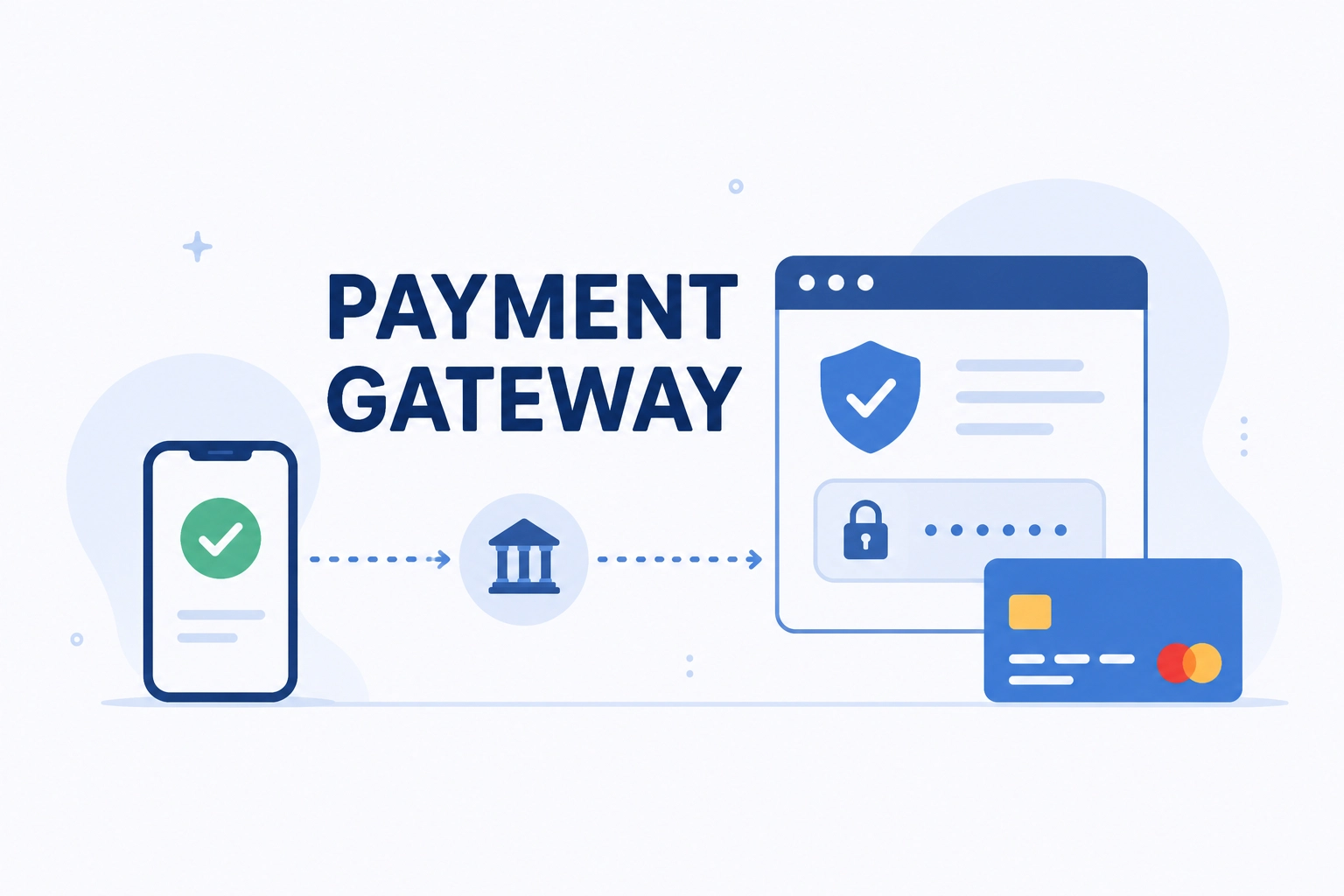
Simply put, understanding what a payment gateway is means viewing it as a digital intermediary service linking online merchant stores with financial institutions (such as acquiring banks or e-wallet providers). The gateway encrypts payment payloads, facilitates authorization checks, and returns real-time status signals.
Within the online transaction ecosystem, a payment gateway fulfills three core functions:
- Secure Transaction Bridge: Encrypts sensitive credentials (like credit card numbers or account details) to eliminate data leak risks during network transmissions.
- Global Security Compliance: Operates under strict PCI DSS (Payment Card Industry Data Security Standard) guidelines and tokenization tech, preventing raw financial data storage on merchant servers.
- Instant Authorization Decisions: Leverages verification tech (such as OTP or 3D Secure) to approve or decline transaction requests automatically in seconds.
Read also: Difference Between Payment Gateway and Payment Link
How Does a Payment Gateway Work from Checkout?
The processing workflow executes rapidly through several automated steps:
- Initiating Checkout: The buyer selects products and chooses a preferred payment method (QRIS, Virtual Account, e-wallet, or credit card) at checkout.
- Data Encryption: The system encrypts payment payloads to secure credentials before passing them to banking networks.
- Authorization Request: Secured data dispatches to the acquiring bank or payment network for eligibility checks.
- Verification & Decision: The issuing bank verifies account balances, checks credentials, or requests additional steps (like OTP entries).
- Status Return: Authorization decisions (success or failed) return instantly to display on buyer and merchant screens.
- Fund Settlement: Following successful authorization, funds transfer to the merchant’s bank account according to agreed settlement timelines.
Implementation Options for E-Commerce Businesses
When implementing a gateway for online operations, choose the integration approach best aligned with your technical capabilities:
- Hosted Payment Page: Customers redirect to an external secure payment interface managed entirely by the gateway vendor. Highly practical, secure, and low maintenance for growing stores.
- Self-Hosted / Integrated (API): Payments execute directly on the merchant’s site via direct Open API connections. Provides complete UX control but requires robust technical readiness and strict security compliance.
Common Pitfalls When Selecting or Using Payment Gateways
| Common Mistake | Business Risk Impact | Recommended Solution |
|---|---|---|
| Confusing Gateway vs. Processor | Misunderstanding front-end authorization versus back-end interbank settlement. | Understand that gateways handle front-end authorization while processors handle interbank clearing. |
| Selecting Solely on Low Fees | Poor checkout stability, high transaction drop-off rates. | Select vendor partners based on uptime stability, latency, and authorization success rates. |
| Storing Card Data Manually | Severe security vulnerabilities, compliance penalties, PCI DSS violations. | Rely entirely on vendor tokenization APIs rather than storing raw card details. |
| Offering Too Many Payment Channels | Cluttered checkout interfaces confusing buyers. | Provide 3 to 5 core payment methods matching your target audience preferences. |
| Confusing Authorization with Settlement | Accounting errors caused by treating authorization dates as cash-in-bank dates. | Separate transaction authorization logs from actual bank settlement deposit schedules. |
Next Steps After Understanding Payment Gateways
Understanding what a payment gateway is alongside the checkout payment gateway workflow allows you to build fast, reliable, and trusted checkout experiences. Supported by payment automation tech, retail & e-commerce operations run efficiently without manual payment slip verifications.
Moving forward, evaluate checkout success rates regularly, track processing fees per transaction, and ensure offered payment methods remain aligned with buyer preferences.
If you want to build a structured payment gateway integration strategy, the team at Cekat.ai is ready to align your business needs with the right payment architecture.
Frequently Asked Questions (FAQ)
1. What is the main difference between a Payment Gateway and a Payment Link?
A Payment Gateway integrates directly into online store checkout systems for automated processing, while a Payment Link is a standalone URL shared manually via chat or social media.
2. Is a Payment Gateway necessary for small and medium businesses?
Highly recommended once transaction volumes grow. It eliminates manual bank transfer checks, prevents fake receipt fraud, and speeds up fulfillment.
3. What does Settlement mean in Payment Gateway operations?
Settlement is the process where authorized customer funds cleared by banks are transferred into the merchant’s official business bank account.
4. How do Payment Gateways protect customer financial data?
They utilize SSL encryption, PCI DSS compliance standards, card tokenization, and multi-factor authentication (like OTP or 3D Secure) to eliminate breach risks.
Leave a Reply