Key Advantages
- Average Order Value (AOV) Expansion: Accelerates revenue per checkout by presenting higher-tier, premium product versions to active buyers.
- Enhanced Customer Lifetime Value (LTV): Connects buyers with comprehensive, durable solutions that improve satisfaction, usage, and long-term retention.
- Value-Driven Consultative Selling: Shifts the customer perception from paying extra costs to gaining tangible, problem-solving benefits.
- CRM Data & Workflow Synchronization: Uses behavioral interaction records and pipeline deal stages to trigger upgrade offers at the optimal commercial moment.
Imagine shopping for a work laptop. After evaluating several models, the sales representative presents a higher-tier specification—featuring expanded memory and upgraded processing speed—for a proportional price increment. The recommendation does not feel pushy; instead, it helps you make a well-informed decision that better matches your long-term requirements.

This scenario illustrates the core principle of what upselling is: a sales methodology where a business encourages buyers to purchase a premium, advanced, or upgraded version of the product or service they are evaluating. Unlike arbitrary price increases, upselling centers on delivering elevated value—such as enhanced feature sets, greater operational capacity, or extended warranty coverage. It functions as a vital component within comprehensive WhatsApp marketing strategies.
Mechanically, upselling operates on the principle of the “relevant upgrade.” The buyer first demonstrates purchase intent for a specific option. Next, the business introduces an upgraded version within the same category while clearly articulating its concrete benefits. The defining factors are contextual relevance and perceived value.
Core Distinctions: Upselling vs. Cross-Selling
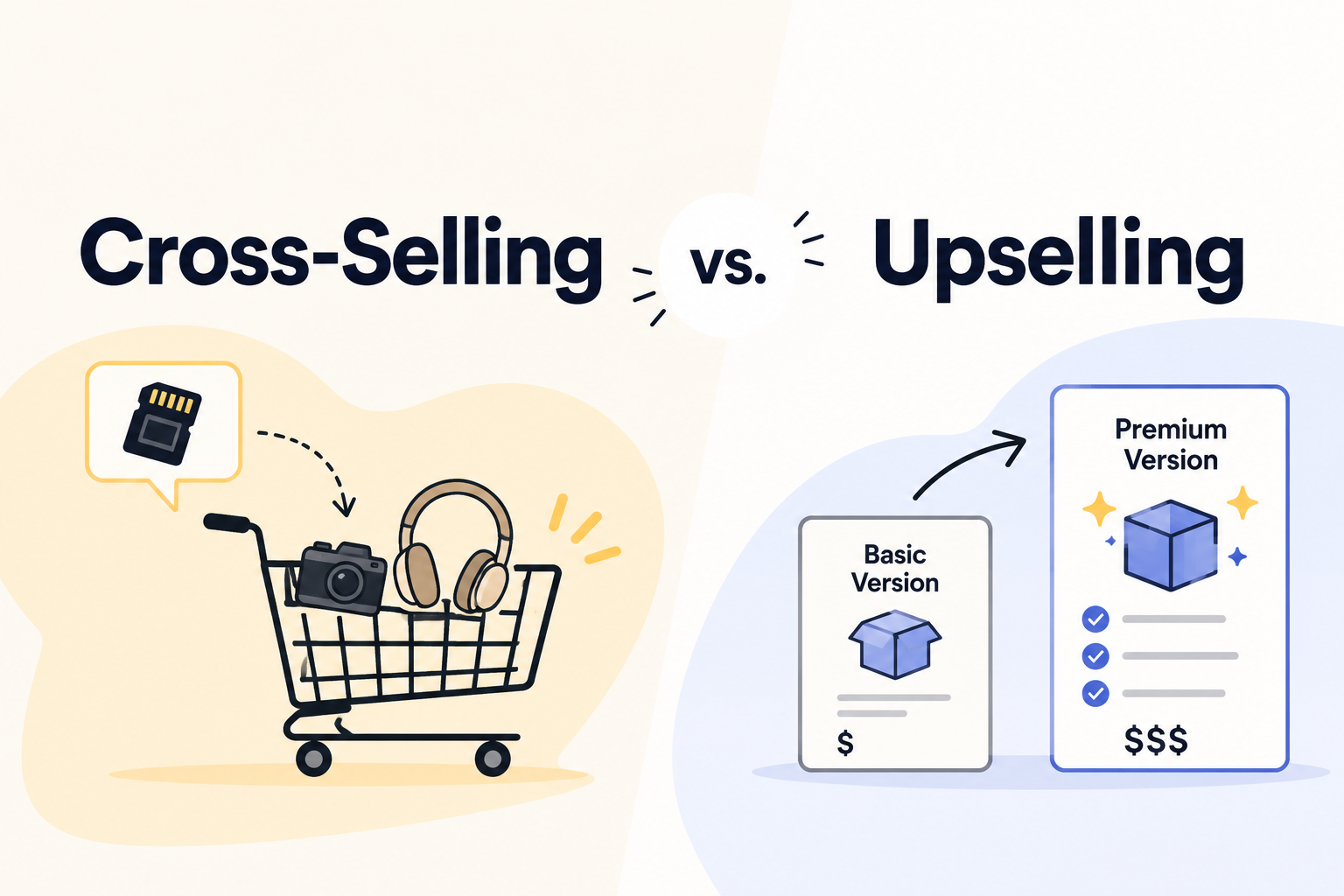
To keep promotional offers aligned with customer expectations, it is essential to distinguish upselling from cross-selling:
- Upselling focuses on higher-tier upgrades: Encourages the customer to select an upgraded version of the same product (e.g., choosing a laptop with 16GB RAM instead of 8GB RAM).
- Cross-selling introduces complementary items: Offers secondary products or add-ons that accompany the primary purchase (e.g., adding a laptop sleeve or wireless mouse after purchasing a laptop).
To verify whether your upgrade paths are architected effectively across sales stages, map your opportunities inside structured pipeline management tools with Cekat.ai.
Why Upselling Drives Commercial Growth
- Expands Average Order Value (AOV): Upselling elevates transaction volume by offering high-intent buyers an option of superior value.
- Delivers Stronger Gross Margins: Premium tiers generally yield higher profitability compared to entry-level product versions.
- Deepens Customer Loyalty: A well-timed upgrade resolves user pain points more effectively over the long term, supporting broader customer retention strategies.
- Enhances Brand Equity: Connecting buyers with durable, capable solutions prevents the frustration associated with outgrowing entry-level products.
- Maximizes Customer Lifetime Value (LTV): Value-driven upselling provides customers with ongoing reasons to maintain their subscription or purchasing relationship.
How to Implement Frictionless, Non-Intrusive Upselling
To prevent upgrade recommendations from feeling aggressive or pushy, businesses must follow a disciplined operational flow:
The 5-Stage Upselling Workflow
- Identify Core Pain Points: Review buyer preferences and past purchasing trends using customer data management software.
- Present Relevant Upgrades: Showcase premium variations within the same category inside an in-app WhatsApp product catalog.
- Highlight the Value Proposition: Articulate concrete business outcomes rather than merely listing technical specifications.
- Ensure Frictionless Checkout: Make accepting the upgrade seamless via automated payment workflows.
- Prepare Downsell Alternatives: If the premium upgrade is declined, provide a lighter alternative to preserve the core transaction.
Checklist for Ethical Upselling
- Verify Relevance: Ensure the upgrade directly solves the buyer’s primary challenge using customer segmentation.
- Maintain Price Transparency: Present price differences clearly (ideally keeping the upgrade increment within 25% of the original purchase).
- Check Customer Sentiment: Never pitch an upgrade while an active support ticket is being resolved in complaint management.
- Avoid Artificial Urgency: Steer clear of high-pressure sales tactics or overpromising product capabilities.
Common Mistakes That Sabotage Upselling Conversion
- Conflating Upselling with Cross-Selling: Mixing product upgrades with unrelated add-ons creates decision fatigue for buyers.
- Defaulting Exclusively to the Most Expensive Tier: Pushing top-tier items without considering the customer’s budget damages commercial trust.
- Restricting Upselling to Checkout Moments: Confining upgrades solely to the cart stage, ignoring post-purchase opportunities via WhatsApp sales follow-ups.
- Assuming Value Is Self-Evident: Expecting buyers to understand premium advantages without clearly explaining concrete benefits.
- Ignoring Customer Frustration: Pitching upgrades to accounts currently experiencing technical blockers or service dissatisfaction.
Strategic Evolution: Reactive vs. Proactive Upselling

To scale sales velocity, evaluate how your organization executes conversational upgrades:
| Approach | Key Characteristics | Business Impact |
|---|---|---|
| Reactive (Passive) | Displays higher prices without explaining added value; waits passively at checkout. | Perceived as an unnecessary surcharge, lowers conversion rates, and erodes trust. |
| Value-Driven (Proactive) | Solves explicit buyer challenges; anticipates needs using behavioral data in a CRM application. | Buyers feel supported, Average Order Value (AOV) expands, and long-term LTV increases. |
Measure upselling impact quantitatively by monitoring Average Order Value (AOV), Upsell Conversion Rate, and Customer Lifetime Value (LTV) using WhatsApp conversion tracking.
To deploy structured, data-backed upgrade workflows across all communication channels, connect your sales operations through an integrated WhatsApp marketing platform with Cekat.ai.
Frequently Asked Questions (FAQ)
1. What is the difference between upselling and cross-selling?
2. When is the best time to present an upsell offer?
3. How can sales teams execute upselling without appearing aggressive?
Conclusion: Value-Driven Selling Drives Sustainable Revenue
Understanding what upselling is leads to a vital commercial conclusion: high-performing sales strategies remain value-driven rather than transaction-driven. The goal is to introduce relevant, premium upgrades, communicate their advantages transparently, and engage buyers at the right operational moment while protecting customer trust.
The team at Cekat.ai is ready to help you architect an intelligent upselling and conversational sales strategy tailored to your growth goals. Explore our flexible subscription tiers on our pricing and plans page.
Leave a Reply