Author: Cekat AI

  • WhatsApp API for E-Commerce: An Effective End-to-End Architecture

    WhatsApp API for E-Commerce: An Effective End-to-End Architecture

    Digital shopping behavior in Indonesia is becoming increasingly conversational. Consumers no longer simply visit a website or marketplace and complete a transaction. They ask questions, compare options, request recommendations, and even confirm payments through instant messaging apps. In this context, WhatsApp API for e-commerce is no longer a nice-to-have feature — it’s the foundation of a modern business communication architecture.

    The right WhatsApp API integration can unify cart sync, order lifecycle, and payment trigger processes into a single measurable flow. The result isn’t just higher conversion, but also operational efficiency, a consistent customer experience, and automation that can scale.

    Why WhatsApp API Is Relevant for Modern E-Commerce

    WhatsApp is a communication channel with a far higher message read rate than email or app notifications. In e-commerce, every point of friction at checkout can potentially reduce conversion. WhatsApp API allows brands to intervene at these critical points in real time.

    Some scenarios that become crucial:

    1. Abandoned cart recovery through personal, contextual messages

    2. Checkout reminders to encourage payment completion

    3. Automatic order tracking without needing to log back into the website

    4. Order status notifications from processing through delivery

    With an e-commerce automation approach, communication is no longer manual or sporadic. Everything is connected within an event- and data-driven system.

    End-to-End WhatsApp API Architecture for E-Commerce

    Effective WhatsApp API implementation for e-commerce requires an integrated architecture design spanning backend to frontend. The general structure consists of several main layers:

    1. Data and Cart Sync Layer

    Cart sync is the initial foundation. When a user adds a product to the cart, that data must be stored and able to be triggered as an event.

    Required integrations:

    • A connection between the e-commerce platform, such as Shopify, WooCommerce, Magento, or a custom system
    • Synchronization of product data, stock, price, and promos
    • User identification via a verified WhatsApp number

    When the system detects a cart hasn’t been completed within a certain period, for example 30 minutes, it automatically triggers abandoned cart recovery via WhatsApp API.

    The message sent can include:

    • Product name
    • Product image
    • Price and discount
    • Direct checkout link

    This approach is far more effective than email because it’s instant and personal.

    2. Order Lifecycle Management Layer

    The order lifecycle covers the entire journey of an order from checkout to receipt by the customer.

    The general stages in an e-commerce lifecycle:

    1. Order created

    2. Payment received

    3. Order processed

    4. Order shipped

    5. Order received

    6. Aftersales and feedback

    WhatsApp API enables automatic notifications at every one of these stages. The e-commerce backend system sends a webhook every time the status changes. This webhook is then forwarded to the WhatsApp API system to send an approved template message.

    Example implementation:

    • Order confirmation with a purchase detail summary
    • Payment confirmation once the gateway reports success
    • Order tracking with a tracking number and link
    • Delivery-completed notification

    The main benefit is transparency. Customers don’t need to manually ask about order status because all information is sent proactively.

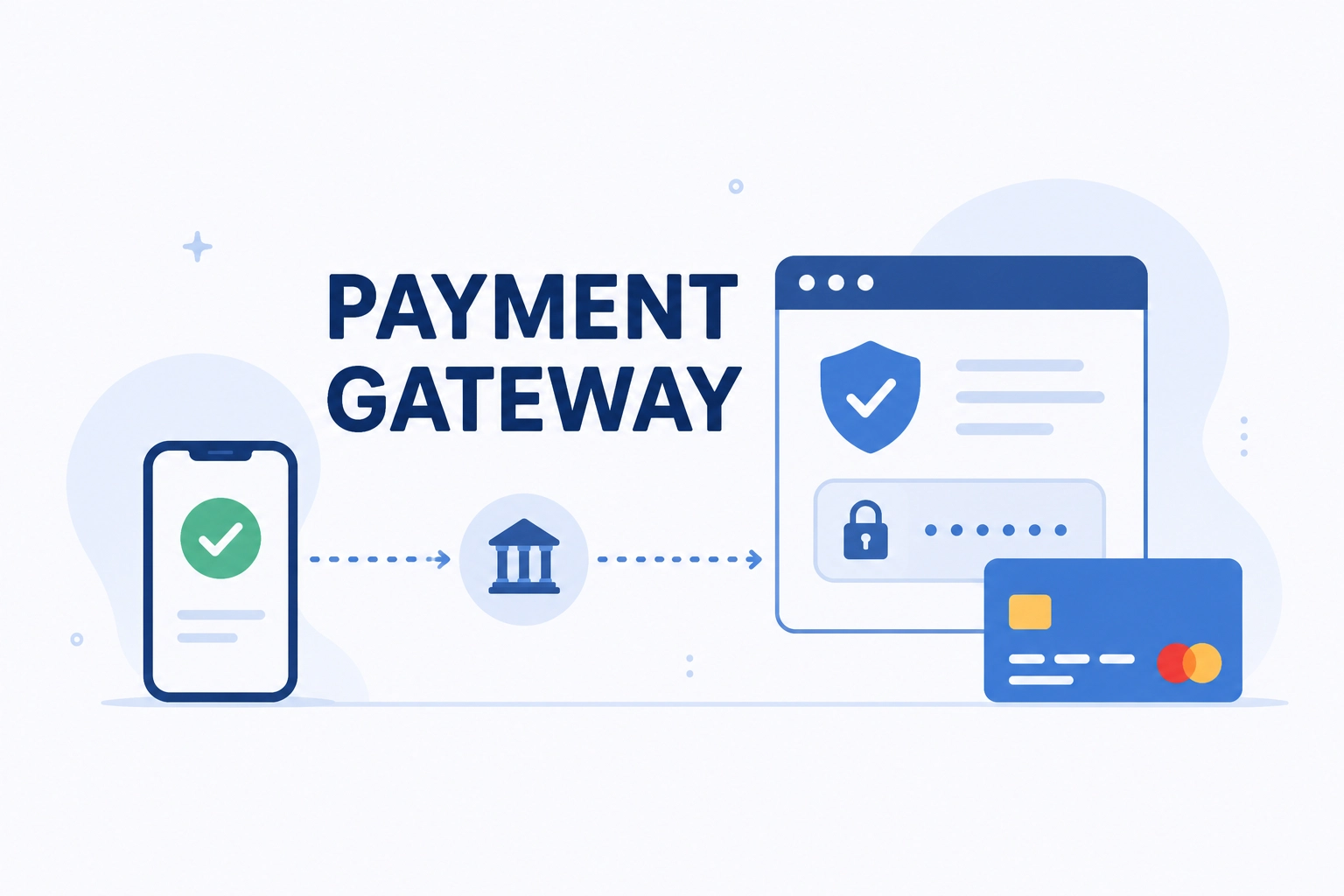
    3. Payment Trigger and Checkout Reminder Layer

    Many e-commerce transactions fail at the payment stage. Users have checked out but haven’t completed a transfer or payment through the payment gateway.

    This is where payment triggers come into play.

    Every time the system detects an unpaid invoice within a certain period, WhatsApp API can send a personalized checkout reminder.

    Effective strategies include:

    • A first reminder within 15 to 30 minutes
    • A second reminder with added urgency, such as limited stock
    • A limited-time incentive to encourage conversion

    Because the message is sent directly to the app users check most often, the likelihood of a response is higher than with other channels.

    Integrating WhatsApp API with E-Commerce Systems

    For the architecture to run optimally, the integration must be designed with the following principles:

    1. Based on an event-driven architecture

    2. Using webhooks for real-time synchronization

    3. Using template messages that comply with Meta’s policy

    4. Having a dashboard to monitor message performance

    Some metrics worth monitoring:

    • Message open rate
    • Click-through rate to the checkout page
    • Abandoned cart recovery rate
    • Conversion rate after a checkout reminder
    • Customer service response time

    This data forms the basis for continuous optimization.

    WhatsApp API Optimization Strategy to Boost Conversion

    Technical implementation alone isn’t enough. A strategic approach is needed for WhatsApp API to truly become a growth engine.

    Data-Driven Personalization

    Use purchase history and user preferences to send relevant messages. For example, recommending complementary products after an order is complete.

    Customer Segmentation

    Separate new customers, loyal customers, and customers who frequently abandon their carts. Each segment requires a different communication approach.

    Automation and Human Escalation

    Not every conversation can be resolved by an automated system. Integration with a CRM enables escalation to the customer service team when needed, keeping the experience human-centric.

    Testing and Iteration

    Run A/B testing on message content, send timing, and calls to action. Data-driven optimization will significantly boost the effectiveness of e-commerce automation.

    Challenges and Compliance Aspects

    Use of WhatsApp API must comply with Meta’s official policy. Key things to keep in mind:

    • Use of approved template messages
    • No spam or broadcasting without consent
    • Maintaining customer data security

    Compliance with personal data protection regulations is also critical. The system must be designed with adequate encryption and access control.

    Business Impact of WhatsApp API E-Commerce Implementation

    When the end-to-end architecture runs well, the impact can be felt at several levels:

    1. Higher conversion through abandoned cart recovery

    2. Reduced customer service load thanks to automatic order tracking

    3. Increased customer lifetime value through proactive communication

    4. Operational efficiency due to fewer manual processes

    WhatsApp API doesn’t just become a communication channel — it becomes an orchestration system for the customer journey from start to finish.

    WhatsApp API for e-commerce is strategic infrastructure that connects cart sync, order lifecycle, and payment trigger within a single integrated ecosystem. With an event-driven approach, data-based automation, and measurable personalization, businesses can turn conversations into real conversions.

    A properly designed integration delivers effective abandoned cart recovery, timely checkout reminders, and transparent order tracking that build customer trust. In an increasingly competitive e-commerce landscape, response speed and communication relevance become the key differentiators.

    If you want to build a WhatsApp API architecture for e-commerce that’s integrated, scalable, and focused on boosting conversion, Cekat AI is ready to help design an implementation suited to your business needs. From cart sync integration to e-commerce automation optimization, the Cekat AI team delivers measurable, data-driven solutions ready to drive sustainable business growth.

  • WhatsApp API: The WhatsApp API Lifecycle from Template to End-to-End Automation

    WhatsApp API: The WhatsApp API Lifecycle from Template to End-to-End Automation

    WhatsApp API is often misunderstood as simply a “more official” version of WhatsApp Business. In practice, WhatsApp API is an end-to-end communication system with a clear, interconnected workflow—starting from account registration, message template management, message delivery and handling, all the way to automation and performance reporting.

    Without a thorough understanding of this lifecycle, many businesses run into classic problems: ballooning costs, failed message delivery, inconsistent automation, and a fragmented customer experience. This article covers the complete WhatsApp API Lifecycle, so your implementation is stable, measurable, and ready to be developed further with AI.

    What Is the WhatsApp API Lifecycle?

    The WhatsApp API Lifecycle is a recurring series of stages that describe how messages are created, sent, processed, and optimized within one integrated system. This lifecycle covers six main phases:

    1. Onboarding

    2. Template Message

    3. Message Delivery & Session

    4. Handling & Error Management

    5. Automation with AI

    6. Reporting & Optimization

    The lifecycle approach ensures WhatsApp API isn’t used partially, but rather as business communication infrastructure.

    Stage 1: WhatsApp API Onboarding

    Onboarding is the technical and operational foundation. At this stage, a business sets up its WhatsApp API account so it can operate officially and reliably.

    Key onboarding components:

    • Business account verification

    • Registration of a dedicated API WhatsApp number

    • Webhook configuration and access credentials

    • Defining the WhatsApp Business Account (WABA) structure

    A common mistake at this stage is onboarding without planning the use case. As a result, the system becomes difficult to scale into the automation stage or further integrations.

    Stage 2: Template Messages as the Foundation of Communication

    Template messages are the primary requirement for proactive communication on WhatsApp API. Messages outside the 24-hour window can only be sent using pre-approved templates.

    Main template categories:

    • Utility: transaction notifications, service status

    • Authentication: OTP and verification

    • Marketing: promotions, campaigns, re-engagement

    A template is more than just message text. It determines:

    • Compliance with WhatsApp policy

    • Conversation cost

    • The starting point for automation

    A well-designed template can be directly connected to business events such as successful payment, failed checkout, or account activation.

    Stage 3: Message Delivery & Session Management

    Once templates are active, the focus shifts to message delivery and conversation session management.

    Key aspects of this stage:

    • The 24-hour customer service window rule

    • Conversation categories and their impact on cost

    • Queue management and delivery limits

    Without a structured system, businesses are prone to delayed messages, dropped sessions, or wasted costs due to miscategorized conversations.

    Stage 4: Handling & Error Management

    In practice, not every message is delivered successfully. Errors are part of the lifecycle.

    Common errors:

    • Template rejected or miscategorized

    • Recipient number inactive or opted out

    • Session expired

    • Delivery limit exceeded

    A mature approach doesn’t just log errors, but determines an automated response: retry, fallback, escalation to a human agent, or ending the conversation.

    Stage 5: Automation with AI Agent

    At this stage, WhatsApp API evolves from a communication channel into an operational and business growth engine.

    Examples of end-to-end automation:

    • Incoming lead → AI classification → distribution to sales

    • Failed transaction → automatic reminder → recovery flow

    • Repeated question → AI resolves → handoff if needed

    • Inactive customer → behavior-based reactivation

    Effective automation is always connected to templates, sessions, and error handling—not standing as a separate flow.

    Stage 6: Reporting & Optimization

    The WhatsApp API Lifecycle doesn’t stop at message delivery. Performance evaluation is key to continuous improvement.

    Metrics to monitor:

    • Delivery and read rate

    • Response time

    • Conversion per template

    • Cost per conversation

    • AI resolution vs. human handoff ratio

    This data is used to refine templates, automation logic, and overall communication strategy.

    (People Also Ask)

    What is the WhatsApp API flow?
    The WhatsApp API flow covers account onboarding, template creation and approval, message delivery according to session, error handling, conversation automation, as well as ongoing reporting and optimization.

    What stages are mandatory in WhatsApp API?
    Mandatory stages include official onboarding, using templates for proactive messages, managing the 24-hour session, an error handling system, and conversation performance monitoring.

    WhatsApp API is not just a messaging tool, but a business communication lifecycle system. The end-to-end approach ensures every message has context, purpose, and measurable impact—from the first template to full automation.

    Activate WhatsApp API lifecycle automation with Cekat.ai to manage all of these stages on a single integrated platform, so WhatsApp truly works as an operational and growth channel for your business.

  • Difference between WhatsApp API and Regular WhatsApp

    Difference between WhatsApp API and Regular WhatsApp

    Executive Summary & Value Proposition

    • Programmatic Communication Infrastructure: Connects directly with backend systems, CRMs, and artificial intelligence (AI) without requiring manual smartphone input.
    • Enterprise-Scale Automation: Capable of managing thousands of concurrent conversations, OTP dispatches, transactional notifications, and instant lead qualification.
    • Official & Ban-Safe: Complies with Meta standards featuring official business verification (Green Tick) and secure opt-in mechanisms.
    • Conversation-Based Cost Model: Implements Meta’s Conversation-Based Pricing system based on message categories (Marketing, Utility, Authentication, Service).

    The WhatsApp API is an official application programming interface provided by Meta that enables business systems to connect directly with the WhatsApp ecosystem programmatically. Unlike the standard WhatsApp application used by individuals for manual chat, the WhatsApp API is engineered specifically for applications, backend systems, and automation—not for personal use on a mobile device.

    With the WhatsApp API, enterprises can send and receive messages automatically, measurably, and in full compliance with Meta policies via internal systems like CRMs, ERPs, e-commerce backends, or AI Agents. This is why this infrastructure is frequently referred to as the WhatsApp Business API, WhatsApp Cloud API, or Official WA API.

    Standard WhatsApp vs. WhatsApp API: Fundamental Differences

    A common misconception is treating the WhatsApp API as an “expensive version of WhatsApp” or an “upgraded WhatsApp Business App.” This assumption is architecturally incorrect.

    Evaluation Aspect WhatsApp App (Standard / Business App) WhatsApp Business API (System-to-User)
    Primary Interface Smartphone / Web Browser (Manual) Server, CRM System, Omnichannel Dashboard
    Capacity & Agent Limit Highly limited, prone to staff bottlenecks Unlimited multi-agent access, thousands of concurrent chats
    Integration Access No programmatic system integration Connects directly to CRM, OMS, ERP, & AI
    Automation Power Limited to basic greeting/away auto-replies Full automation: AI Agents, Workflows, & API Triggers
    Verification Status Standard business profile Eligible for Verified Badge (Official Green Tick)

    Why Do Businesses Need the WhatsApp API?

    As a business scales, managing operations via manual mobile applications exposes severe operational bottlenecks:

    • Support teams get overwhelmed by incoming chat spikes.
    • Customer inquiries risk being missed or delayed in response.
    • Lack of a centralized customer database or conversation history.
    • Absence of service performance metrics and team analytics.
    • Manual follow-ups and payment reminders must be remembered individually.

    The WhatsApp Business API solution directly resolves these operational hurdles in an official, scalable manner that protects numbers from suspension risks.

    Enterprise-Level WhatsApp API Use Cases

    The WhatsApp API was built to drive end-to-end business operations efficiently:

    1. Automated 24/7 Customer Support

    Routine FAQs are resolved automatically by an agentic AI, support tickets are generated automatically, and human escalations are routed via an omnichannel application only when human intervention is necessary.

    2. Transactional Notifications & Utility Messages

    Automate order status updates, payment confirmations, invoice due date reminders, and account verification One-Time Passwords (OTPs).

    3. Sales & Lead Qualification

    Trigger automated follow-ups based on website actions, qualify prospective buyers based on conversational intent, and distribute hot leads to sales representatives in real-time.

    4. Data Synchronization & System Integration

    All conversation histories and customer profiles synchronize automatically into your CRM application, granting management full visibility over the sales pipeline.

    Technical Rules & WhatsApp API Constraints

    To protect platform users from spam, Meta enforces strict operational mechanics across the WhatsApp API:

    • No Built-in Native Chat UI: There is no standard consumer app interface; chat interactions must be managed through third-party platform dashboards.
    • Message Template Rules: The initial outbound message sent to a customer must utilize a Meta-approved message template.
    • 24-Hour Customer Service Window: Businesses can send free-form session messages within a 24-hour window from the user’s last inbound message.
    • Conversation-Based Pricing Model: Meta charges per 24-hour conversation session based on category (Marketing, Utility, Authentication, and Service).

    WhatsApp Cloud API vs. On-Premise API

    Meta provides two primary infrastructure deployment architectures:

    • WhatsApp Cloud API: Hosted directly on Meta’s global cloud servers. Faster to set up, highly stable, and the standard choice for most modern enterprises.
    • On-Premise API: Hosted via local Business Solution Provider (BSP) servers. Typically used by legacy financial institutions with strict physical data sovereignty regulations.

    Transforming WhatsApp into a Business Growth Engine

    Simply having WhatsApp API access is insufficient if operational workflows inside remain unautomated. This is where Cekat.ai serves as your end-to-end platform provider.

    With Cekat.ai, connect your WhatsApp API with intelligent AI Agents, configure workflow automations, and consolidate all communication channels into a unified dashboard. Manage customer communications securely, scalably, and efficiently with Cekat.ai.


    Frequently Asked Questions (FAQ)

    What is the WhatsApp API?

    The WhatsApp API is Meta’s official programming interface that connects business systems and applications directly to WhatsApp to automate high-volume message delivery and reception.

    What is the difference between standard WhatsApp Business and WhatsApp API?

    Standard WhatsApp Business runs on a smartphone app for manual 1-on-1 chats. The WhatsApp API is app-less system infrastructure integrated into CRMs, AI Agents, or omnichannel dashboards for automated large-scale messaging.

    Can a business phone number using the WhatsApp API get banned?

    The risk of account bans is extremely low provided the business complies with Meta policies, uses approved templates for outbound messaging, and targets opted-in contacts.

    How do I get official WhatsApp Business API access?

    Enterprises can activate official WhatsApp Business API access through solution provider partners like Cekat.ai, who assist with Meta Business Manager verification and ready-to-use software integration.


  • A Smart Way to Deliver the Right Product Recommendations for Every Customer

    A Smart Way to Deliver the Right Product Recommendations for Every Customer

    In the modern digital era, consumer behavior is changing rapidly, especially in the health & beauty industry. Today’s customers want a shopping experience that is far more personal, relevant, and tailored to their specific needs. They are no longer interested in mass promotions or generic products. Instead, they prefer brands that deeply understand their needs and offer relevant, personalized product recommendations. This is where AI technology comes in as a revolutionary solution capable of transforming how businesses interact with customers.

    As one of the leading AI platforms, Cekat.AI offers a practical and effective solution to this challenge. With advanced, data-driven technology, Cekat.AI helps businesses deliver a more accurately targeted product personalization experience. This article discusses in depth how Cekat.AI helps deliver personalized product recommendations to customers, while also offering insight into why personalization has become a crucial part of health & beauty marketing strategy today.

    Why Product Personalization Is Key to Health & Beauty Business Success

    In the health & beauty industry, every customer’s needs are unique. From skin type, nutritional needs, and sensitivity to certain ingredients, to color preferences and individual lifestyles, each factor presents its own challenge for business owners. If your business only offers products generically without personalization, the risk of customers feeling misunderstood rises, which leads to lower customer satisfaction and declining loyalty.

    Product personalization brings real benefits to a business, including:

    • Increasing Customer Satisfaction: Customers feel the brand understands their specific needs, not just as a sales statistic.

    • Increasing Conversion Rate: Relevant product recommendations are more likely to convert into purchases, boosting marketing effectiveness.

    • Driving Loyalty and Repeat Orders: Customers who feel cared for tend to be more loyal and make repeat purchases.

    • Reducing Abandoned Carts: With more accurate recommendations, customers decide to complete their purchase faster.

    However, a challenge arises when a business has to personalize the experience for hundreds or even thousands of customers at once. This is where technology like Cekat.AI comes in, offering a smart, automation-based solution.

    How Cekat.AI Helps Deliver Personalized Product Recommendations to Customers

    Cekat.AI is an AI-based platform specifically designed to help businesses personalize products effectively, efficiently, and relevantly. By leveraging machine learning technology and data analytics, Cekat.AI doesn’t just automatically provide recommendations — it also understands customer preferences over time.

    1. Analyzing Customer Behavior Data in Real Time

    One of Cekat.AI’s main advantages is its ability to analyze customer data in real time. The data collected doesn’t just come from transaction history, but also includes customer interactions across various channels such as the website, mobile app, social media, and chatbot. Every click, product search, and item added to a wishlist is analyzed to identify customer preference patterns.

    With this data-driven approach, Cekat.AI can build a deeper, more accurate customer profile. This allows your business to understand each customer’s unique needs without having to collect data manually.

    2. Generating Specific, Relevant Product Recommendations

    After analyzing customer behavior data, Cekat.AI automatically compiles a list of product recommendations most relevant to that customer’s needs. For example, for customers with sensitive skin, the AI will prioritize skincare products with hypoallergenic formulas. For customers who frequently buy cosmetic products in a certain color, the system will suggest similar products matching the customer’s favorite color trends.

    Cekat.AI’s product recommendations don’t just consider past transaction data, but also emerging trends, product reviews, and similar products liked by other customers with a similar profile. This creates a richer, more contextual recommendation experience.

    3. Delivering a More Personal Shopping Experience

    With Cekat.AI system integration, your business’s website or app will present a more personal shopping experience from the moment a customer enters the platform. Visitors are immediately greeted with product recommendations matching their interests, reducing search time and increasing comfort throughout the shopping process.

    This feature not only helps increase conversion rates but also creates a more enjoyable experience, encouraging customers to come back and shop again.

    4. Adaptive and Dynamic, Following Customer Preferences

    Customer behavior is highly dynamic and can change over time. Cekat.AI’s advantage lies in its ability to continuously adapt to shifting customer preferences. Through continuous learning, the system keeps updating product recommendations based on the latest data, whether it’s market trends or changes in individual customer needs.

    This ensures your business always delivers up-to-date product recommendations, stays on trend, and remains relevant to evolving customer needs.

    5. Easy Integration Without Complex Infrastructure

    Cekat.AI is designed to be easily integrated with various business platforms such as e-commerce systems, marketplaces, CRMs, and chatbots. Without needing major changes to your existing system, your business can quickly adopt AI technology with fast, cost-effective implementation and minimal operational disruption.

    Strategic Advantages of Using Cekat.AI in the Health & Beauty Industry

    Adopting Cekat.AI technology gives your health & beauty business a significant competitive edge. Here are some of the strategic advantages you can gain:

    Key Advantage

    In-Depth Explanation

    Operational Efficiency

    Product personalization is done automatically, so the marketing team can focus on developing other strategies.

    Sales Optimization

    With relevant product recommendations, the likelihood of a transaction increases, even without large-scale discounts.

    Strengthened Brand Loyalty

    Customers who feel cared for are more likely to stay loyal and less likely to switch to a competitor brand.

    Smarter Data Analysis

    The AI system helps you understand customers more granularly, so business decisions are more data-driven and less speculative.

    Increased Customer Lifetime Value

    Consistent personalization helps increase the total transaction value from each customer over the long term.

    Case Study: AI Implementation in Health & Beauty

    Case studies from various health & beauty businesses show the positive impact of AI adoption. Brands that adopt AI-based personalization have seen sales increases of up to 30%, a drop in abandoned cart rates of up to 25%, and a customer satisfaction increase of 35%. These figures show that investing in an AI-based recommendation system like Cekat.AI is not just an expense, but a strategic step toward driving sustainable business growth.

    Build a Smarter Business with Cekat.AI

    Personalization is now a fundamental need in the modern business world, especially in the health & beauty sector, which is oriented toward customers’ personal needs. With the support of technology like Cekat.AI, you can optimize the customer experience, increase sales, and build long-term loyalty more effectively.

    Through Cekat.AI’s ability to deliver personalized product recommendations, your business will not only become closer to your customers, but will also be able to compete more effectively in an increasingly digital market. Now is the time to adopt a smart approach to delivering the right product recommendations for every customer, turning challenges into opportunities, and driving your business toward more sustainable growth.

    Start Personalizing Your Products with Cekat.AI

    Don’t let your business fall behind in an increasingly personalized market. With Cekat.AI, you can deliver a far more relevant and satisfying shopping experience for your customers without the hassle of managing data manually. Increase sales, optimize customer loyalty, and build long-term relationships through smart, personalized product recommendations. Transform your business now with AI technology solutions from Cekat.AI. Contact our team today and get a free demo to see how Cekat.AI can directly contribute to the growth of your health & beauty business.

  • WhatsApp API Rate Limits & Their Impact on Business Operations

    WhatsApp API Rate Limits & Their Impact on Business Operations

    In implementing WhatsApp API for mid-size to enterprise business needs, the rate limit is often the most underestimated technical factor—yet it is the one that determines service stability the most. Many teams assume that as long as server infrastructure is strong, message sending and receiving will run smoothly. This assumption is mistaken.

    In fact, WhatsApp API has strict quota and throughput limits. When these limits are exceeded, the consequences aren’t just delayed messages, but also failed deliveries, a decline in customer experience quality, and even the risk of account restrictions. This article dissects in depth what WhatsApp API rate limiting is, how the mechanism works, and its impact on burst traffic along with realistic mitigation strategies.

    What Is Rate Limiting on WhatsApp API?

    A rate limit is a restriction on the number of requests or messages that the WhatsApp Business Platform can process within a certain period of time. Its purpose isn’t to make things difficult for businesses, but to keep WhatsApp’s global system reliable and stable for billions of users.

    In a technical context, rate limiting is directly related to:

    • API quota: the total allowed message-processing capacity.

    • Throughput limit: the maximum message-sending speed per second/minute.

    • Concurrency control: the number of simultaneous requests that can be accepted.

    A common mistake is assuming rate limits only apply to outbound messages. In fact, webhook events, message statuses, and callbacks also contribute to API quota consumption.

    The Rate Limit Mechanism: Not Just a Number

    WhatsApp API’s rate limit is not static. It’s influenced by several key variables:

    1. Quality and reputation of the business number
      Numbers with a good message-sending history (low block & report rate) tend to have more stable capacity.

    2. Message-sending pattern
      Gradual message sending (gradual ramp-up) is treated differently from sudden spikes (burst traffic).

    3. Message type
      Template messages, session messages, and transactional notifications have different technical implications for throughput.

    In other words, two businesses with the same message volume won’t necessarily get identical API performance.

    The Impact of Burst Traffic on WhatsApp API

    1. Delayed or Failed Messages

    When a traffic spike occurs (for example, a flash sale, mass campaign, or simultaneous OTP notifications), requests that exceed the throughput limit will be rejected or queued.

    2. Declining Customer UX

    A delay of a few seconds in replies may still be tolerable. But in the context of customer service or OTP, a small delay can have a major impact on customer trust.

    3. Risk of Throttling & Temporary Restriction

    If the burst pattern is deemed aggressive and repetitive, the system may apply automatic throttling—even temporarily restricting the account.

    4. Additional Load on Internal Systems

    Without proper retry and queue mechanisms, internal applications end up with a bottleneck of their own, not just an issue with WhatsApp API.

    Effective Rate Limit Mitigation Strategies

    A defensive approach isn’t enough. What’s needed is a quota-aware architecture design.

    Proven best practices:

    • Internal message queue & rate limiter
      Controlling the sending speed before requests reach the API.

    • Traffic smoothing
      Spreading message delivery across micro-intervals to avoid extreme bursts.

    • Retry with exponential backoff
      Avoiding aggressive retries that would worsen throttling.

    • Real-time quota & error code monitoring
      So the team can react before the impact is felt by users.

    • Use-case segmentation
      Separating critical message paths (OTP, system notifications) from promotional messages.

    This approach shows the difference between simply “being able to use WhatsApp API” and operating WhatsApp API maturely.

    Rate Limits and Business Scale: A Common Mindset Mistake

    Many businesses assume that:

    “If our volume goes up, our rate limit will surely go up too.”

    This isn’t always true. Healthy scaling isn’t just about volume—it’s about consistency, interaction quality, and traffic control. Without those, an increase in volume actually amplifies the risk of operational disruption.

    WhatsApp API rate limits are not an obstacle, but a control mechanism that must be understood. Businesses that ignore this will face repeated technical problems, while businesses that design their systems with quota awareness will gain stability, speed, and customer trust.

    Understanding API quota, throughput limits, and the characteristics of burst traffic is an essential foundation before making WhatsApp API your primary communication channel.

    Optimize Your WhatsApp API with Cekat.AI

    Cekat.AI helps businesses manage WhatsApp API intelligently and in a measured way—with rate limit control, traffic management, and an architecture ready to handle message surges without sacrificing the customer experience.
    If you want your WhatsApp API to work stably at scale, not just to be active, it’s time to build the right foundation with Cekat.AI.

  • State of AI for Indonesian Business 2026: Data, Trends, and Predictions

    The State of AI for Indonesian Business 2026 is a data-driven report mapping the state of artificial intelligence adoption within Indonesia’s business ecosystem, covering the trends shaping the industry, the barriers that still remain, and strategic predictions that business owners, operations managers, and technology decision-makers can use as a planning reference.

    In 2024, conversations about AI among Indonesian business owners were still dominated by the question “is AI relevant for my business?” Entering 2026, that question has fundamentally shifted to “how do I maximize the AI I’ve already implemented, or am about to?” This shift isn’t just a change in rhetoric — it reflects a real, measurable acceleration in adoption on the ground.

    According to the 2025 edition of the McKinsey Global Survey on AI, more than 65% of organizations globally now use at least one generative AI feature in their business operations. That figure is nearly double the roughly 33% recorded in 2023. Indonesia, per the Google e-Conomy SEA 2025 report, has a digital economy projected to exceed USD 130 billion in 2025, with AI serving as one of the main drivers of efficiency in e-commerce, fintech, and consumer services.

    Where Does Indonesia Stand in Global AI Adoption?

    Although awareness of AI among Indonesian business owners is already very high, the level of actual deployment is still relatively lower than in countries like Singapore or Vietnam in certain segments. This gap between awareness and adoption is both the main opportunity and the main challenge for Indonesian businesses in 2026.

    According to the IDC Asia/Pacific 2025 survey, around 42% of Indonesian companies with more than 50 employees have already implemented at least one AI-based solution in their business processes. This is a significant jump from 24% in 2023.

    Business Segment

    AI Adoption Rate (2025)

    Growth vs 2023

    Large enterprises (500+ employees)

    ~71%

    Up from ~55%

    Mid-sized companies (50-500 employees)

    ~38%

    Up from ~22%

    SMBs (fewer than 50 employees)

    ~18%

    Up ~300% in 2 years

    The rapid growth in the SMB segment is being driven by increasingly affordable subscription-based AI agent solutions that don’t require large upfront infrastructure investment. This marks a democratization of access to AI technology that was previously only within reach of large companies.

    The Sectors Most Aggressively Adopting AI in Indonesian Business

    Data from Bain & Company’s 2025 report on Southeast Asian digitalization shows that not every sector is moving at the same speed. The following five sectors show the most significant adoption momentum:

    Sector

    Adoption Level

    Primary Implementation

    Measured Efficiency

    Financial Services and Fintech

    Very High

    Fraud detection, AI credit scoring, automated customer onboarding

    60-70% reduction in verification processing time

    E-commerce and Retail

    High

    Recommendation engines, inventory management, customer service

    Higher conversion from product personalization

    Healthcare

    High and Fast

    Appointment scheduling, patient follow-up, clinic administration

    One of the fastest-growing adoption sectors in 2025

    Education

    Medium-High

    Learning personalization, enrollment automation, student communication

    Post-pandemic EdTech boom acting as an adoption catalyst

    Property and Services

    Medium

    Lead qualification, prospect follow-up via chatbot

    The most popular entry point for adoption in this sector

    5 AI Trends Dominating Indonesian Business in 2026

    2026 is marked by five major trends that collectively define the direction of business AI adoption in Indonesia. Understanding these trends is key to making timely, well-targeted technology investment decisions.

    Trend 1: From Chatbots to True AI Agents

    Older-generation chatbots work on a rigid rule-based flow: if the user types A, the system responds with B. When a question doesn’t match the pre-programmed script, the system fails and has to be escalated to a human. Modern AI agents work differently — they can understand conversational context holistically, make decisions based on the situation, execute workflows across systems including CRM, databases, calendars, and payments, and handle scenarios that were never explicitly programmed.

    In Indonesia, the shift from chatbots to AI agents began accelerating in Q3 2025. Businesses that have already migrated report an increase in conversation resolution rate without human intervention, from an average of 40-45% to 70-80%.

    This difference isn’t merely technical. It’s the difference between a tool and a genuine digital workforce, and this shift is the most fundamental trend of 2025-2026.

    Trend 2: Sales and CRM Automation Becomes a Top Priority

    According to Salesforce’s 2025 State of Sales Report, sales reps on average spend only about 28% of their time on activities directly related to selling. The rest is lost to data entry, manual follow-up, scheduling, and administration.

    AI sales automation attacks this waste directly by automating lead scoring, follow-up message delivery, prospect qualification, and CRM data syncing. In Indonesia, this trend is shaped by a strong preference for conducting business communication through WhatsApp. The combination of an official WhatsApp API with an AI agent integrated into a CRM is a formula increasingly adopted by businesses of every size.

    Bain & Company’s report shows that businesses implementing AI CRM automation see an average conversion rate increase of 15-25% within the first 6 months of implementation.

    Trend 3: Omnichannel AI Replaces the Single-Channel Approach

    Indonesian consumers interact with businesses across many channels simultaneously: WhatsApp, Instagram DM, website chat, email, and even Tokopedia or Shopee. Managing all these channels manually is a significant operational burden that becomes increasingly unsustainable as a business grows.

    The 2026 trend shows accelerating adoption of omnichannel AI: systems that let a single AI agent operate consistently across every communication channel with synchronized conversation context. This means that when a consumer starts a conversation on Instagram DM and then continues it on WhatsApp, the AI agent understands the historical context and continues the conversation seamlessly. This is no longer a luxury — it’s a baseline expectation for modern Indonesian consumers.

    Trend 4: Business AI Expands into Tier 2 and Tier 3 Cities

    During the first few years of AI adoption in Indonesia, implementation was concentrated in major cities like Jakarta, Surabaya, and Bandung. But 2025-2026 marks an important inflection point: AI is starting to spread to businesses in Tier 2 and Tier 3 cities, driven by three main factors.

    • No-code or low-code AI agent solutions are increasingly easy to use without technical expertise

    • Increasingly affordable subscription costs make positive ROI achievable even for smaller-scale businesses

    • The maturing WhatsApp Business API ecosystem opens access to technology previously available only to enterprises

    This shift is highly significant, given that the majority of Indonesian businesses by number sit in the SMB segment and are spread outside Jakarta.

    Trend 5: Customer Service AI as a Competitive Advantage

    Google research shows that 60% of Indonesian consumers expect a response in less than an hour when interacting with a business online. A well-configured AI agent can meet this expectation consistently, 24 hours a day, 7 days a week, without a proportional increase in operating costs.

    The perspective on customer service AI is fundamentally changing. Previously, many businesses adopted AI chatbots purely to cut CS operating costs. The 2026 trend shows a shift toward a more strategic perspective: AI customer service isn’t just about cutting costs — it’s about building a measurable competitive advantage through response speed, consistent quality, and personalization at scale.

    Businesses that can respond to inquiries within seconds, 24 hours a day, 7 days a week, with responses that are personal and accurate, hold an advantage that’s hard for competitors still fully reliant on human CS teams to match.

    The Cekat.ai platform integrates all these capabilities into a single AI agent solution designed specifically for the needs of Indonesian businesses, with official WhatsApp API support, an omnichannel inbox, and an AI agent capable of running business workflows end to end.

    Barriers to AI Adoption That Still Exist in Indonesia

    Understanding adoption trends is incomplete without understanding the barriers that remain. Data points to four main friction points limiting broader AI adoption among Indonesian businesses:

    Barrier

    Description

    How to Address It

    Concerns about AI response quality and accuracy

    Business owners worry that an AI agent will give incorrect information or contextually inappropriate responses, damaging customer trust

    Choose a platform with a deeply configurable knowledge base and adjustable guardrails. Start with lower-risk use cases

    Integration with existing systems

    Many businesses run operations on a mix of different systems: legacy CRMs, spreadsheets, accounting apps, and disparate communication tools

    Choose a modern AI agent platform with pre-built integrations for popular systems, significantly reducing implementation complexity

    Uncertainty about early-stage ROI

    Business owners, especially SMBs, struggle to project the return on investment from AI implementation before trying it

    Adopt a phased implementation approach starting with the use case that has the most measurable ROI and the fastest time to results

    Limited internal capabilities

    Many businesses lack staff who understand how to select, implement, and optimize AI solutions

    Prioritize an AI agent platform that non-technical business users can configure themselves without needing an internal developer team

    5 Predictions for Indonesian Business AI in 2026 and Beyond

    Based on an analysis of existing trend data and adoption patterns, here are predictions that can serve as a strategic planning guide for businesses in Indonesia:

    Prediction 1: More Than 60% of Mid-to-Large Businesses Will Have an AI Agent by End of 2026

    AI adoption in the mid-size and large enterprise segment is predicted to exceed 60% by the end of 2026. The main drivers are a combination of increasingly affordable solutions, a growing number of referenceable success stories in Indonesia, and competitive pressure that’s making non-adopting businesses fall visibly behind.

    Prediction 2: WhatsApp AI Agents Become Standard Infrastructure for Indonesian Business

    Given WhatsApp’s extremely high penetration in Indonesia — more than 130 million active users per Meta’s 2025 report — the combination of the WhatsApp Business API and an AI agent is predicted to become standard infrastructure within the next 18-24 months. Comparable to the position email marketing held a decade ago, businesses that lack this capability will face a gap that’s increasingly hard to close.

    Prediction 3: AI Workflow Automation Spreads to Every Department

    Currently, AI adoption in most businesses is still concentrated in customer service and sales. Predictions for 2026-2027 show AI workflow automation beginning to spread to other departments: HR, operations, finance, and supply chain management. An AI agent capable of automating cross-departmental processes, not just a single function, will become the next standard.

    Prediction 4: Advantage Shifts Toward Implementation Quality

    In the early era of AI adoption, competitive advantage came simply from having the technology while competitors didn’t. By 2026 and beyond, as AI technology becomes increasingly accessible, the advantage will shift toward implementation quality. Businesses that implement an AI agent with a more accurate knowledge base, more integrated workflows, and a more consistent optimization strategy will hold a sustainable advantage.

    Prediction 5: AI Regulation for Business Begins to Take Shape

    The Indonesian government has already begun discussing an AI regulatory framework, including aspects of consumer data protection in the context of interactions with AI systems. Businesses that have already prepared themselves on the compliance side, including transparency about their use of AI in service delivery, will be better positioned to navigate an increasingly structured regulatory environment.

    A Practical Framework for Starting or Expanding AI Adoption

    Data and trends are useless without a practical guide. Here is a four-phase framework Indonesian businesses can use to determine their next step in the AI adoption journey:

    Phase 1: Identify the Highest-ROI Use Case

    Not every business process needs to be automated at once. First identify processes with the following characteristics:

    • High volume, occurring hundreds to thousands of times per month

    • Repetitive and based on clear rules

    • Requiring a fast, consistent response

    • Currently handled by humans who could be redirected to higher-value work

    Concrete examples that can be implemented right away: answering product FAQs, sending initial follow-up to new leads, sending payment or appointment reminders, and automatically collecting customer satisfaction data.

    Phase 2: Choose the Right AI Agent Platform

    Choosing the right AI agent platform is a strategic decision, not just a technical one. Evaluate it against four main criteria:

    Criterion

    Key Question to Answer

    Ease of configuration

    Can a non-technical team operate and update the system without depending on developers?

    Integration capability

    Does the platform connect with the systems already in use: CRM, WhatsApp API, payment systems?

    Scalability

    Can this solution grow alongside the business without a platform switch down the road?

    Local support

    Is there a team that understands the Indonesian business context and provides support in Indonesian?

    Phase 3: Implement in Stages and Measure Results

    Avoid a “big bang” approach that tries to automate everything at once. Phased implementation allows learning from each stage, optimizing before expanding, and building internal trust in the technology. KPIs to measure from the start include average response time, resolution rate without human escalation, customer satisfaction level (CSAT), and operating cost per interaction.

    Phase 4: Optimize Continuously

    An AI agent is not a “set it and forget it” solution. The best performance is achieved through continuous optimization: analyzing failed conversations, updating the knowledge base, refining workflows, and adapting the system as business needs and customer behavior evolve.

    With a platform like Cekat.ai, implementation can begin within days using ready-made templates and a comprehensive onboarding guide, without requiring a dedicated engineering team or a large upfront infrastructure investment.

    FAQ: Frequently Asked Questions About Indonesian Business AI 2026

    What is Indonesian business AI 2026?

    It refers to the state and ecosystem of artificial intelligence adoption for business purposes in Indonesia, which is developing rapidly in 2026, covering AI agents, sales automation, customer service AI, CRM automation, and workflow automation.

    How high is business AI adoption in Indonesia?

    According to the IDC Asia/Pacific 2025 survey, around 42% of Indonesian companies with more than 50 employees have already implemented at least one AI solution in their business processes, up from 24% in 2023.

    What’s the difference between a chatbot and an AI agent?

    A chatbot operates on a rigid rule-based flow and can only respond to pre-programmed scenarios. An AI agent can understand context holistically, make decisions, and independently execute workflows across systems.

    Is AI suitable for Indonesian SMBs?

    Yes. Modern AI agent platforms like Cekat.ai are designed to be usable by businesses of every scale, including SMBs, with affordable subscription costs, fast implementation, and an interface that doesn’t require a dedicated technical team.

    Which business sectors use AI the most in Indonesia?

    According to Bain & Company 2025 data, the financial services and fintech sector is the most aggressive, followed by e-commerce, retail, healthcare, and education. The property and services sector is still in the early stages of adoption.

    What is the biggest barrier to business AI adoption in Indonesia?

    Four main barriers: concerns about AI response quality, the complexity of integrating with existing systems, uncertainty about early-stage ROI, and limited internal technical capabilities.

    How long does it take to achieve ROI from business AI adoption?

    Many businesses report positive ROI within the first 3-6 months of AI implementation, especially when the initial focus is on automating high-volume, repetitive processes like customer service and sales follow-up.

    Is a WhatsApp AI agent important for Indonesian businesses?

    Very important. With more than 130 million active users in Indonesia per Meta’s 2025 report, WhatsApp is the dominant business communication channel. Integrating the WhatsApp Business API with an AI agent is predicted to become standard infrastructure for Indonesian businesses within the next 18-24 months.

    How should a business in Indonesia start adopting AI?

    Start by identifying a high-volume, repetitive use case, choose an AI agent platform that doesn’t require a dedicated technical team, implement it in stages, and measure KPIs such as resolution rate, CSAT, and operating cost efficiency per interaction.

    Is there AI regulation for businesses in Indonesia?

    The Indonesian government is in the process of discussing an AI regulatory framework, including aspects of consumer data protection. Businesses that prepare early on compliance and transparency around their AI usage will be better positioned to navigate an increasingly structured regulatory landscape.

    The state of AI for Indonesian business in 2026 describes a moment that no one involved in business decision-making can afford to ignore. AI adoption in Indonesia has moved past the experimental phase and entered the mainstream adoption phase. Businesses still waiting to start adopting AI face an increasingly real risk: falling behind in service speed, operational efficiency, and the ability to scale without a proportional increase in operating costs.

    The shift from chatbots to AI agents is the most important trend every business decision-maker needs to understand. This isn’t just a technical upgrade — it’s a fundamental change in how AI can contribute to business operations end to end. And as AI technology becomes increasingly accessible to everyone, implementation quality, not merely access to the technology, will determine who benefits the most from this revolution.

    In a data-driven business era, an AI agent is no longer just a competitive advantage — it’s a new operational standard for Indonesian businesses that want to grow sustainably. The earlier a business adopts and optimizes AI, the greater the advantage it builds over competitors still relying on manual processes.

    Transform Your Business Operations with AI Alongside Cekat.ai

    Cekat.ai delivers an AI agent solution designed for the needs of modern businesses in Indonesia. With integrated AI agent support, sales automation, real-time customer analytics, and WhatsApp Business API integration, businesses can manage the entire customer relationship lifecycle more intelligently and effectively, without needing to grow their team proportionally.

    • An all-in-one CRM AI agent platform for Indonesian businesses of every scale

    • Direct integration with the official WhatsApp Business API

    • Fast implementation with no dedicated engineering team required, using ready-made templates

    Businesses that integrate AI into their operations earlier build a competitive advantage that becomes increasingly hard for competitors still relying on manual processes to catch up with.

  • AI Agent Adoption in Clinics & Public Services: Local Case Studies and Its Impact on Service Efficiency

    AI Agent Adoption in Clinics & Public Services: Local Case Studies and Its Impact on Service Efficiency

    The Digital Revolution in Healthcare and Public Services

    Digital transformation is now reaching various sectors, including clinics and public service institutions that previously relied entirely on human interaction. One of the most impactful technologies in this transformation is AI Agent, an artificial intelligence system capable of performing roles such as front office staff, customer service, and even data management automatically and efficiently.

    In the Indonesian context, AI adoption is increasing along with the growing need for operational efficiency and a better customer experience. Clinics and public institutions are starting to use AI to answer questions, schedule appointments, verify patient data, and handle public complaints in real time.

    This article discusses how an AI Agent like Cekat.ai can help clinics and public services through real case studies in Indonesia, complete with the benefits and challenges of implementation.

    What Is AI for Clinics & Public Services?

    AI for Clinics & Public Services refers to the use of artificial intelligence to automate service processes that previously required human interaction. This system usually comes in the form of a chatbot, voice assistant, or CRM (Customer Relationship Management) integration system that supports medical staff and service officers.

    Some main functions of AI adoption in this sector include:

    • Chatbot Appointment Scheduling: helps patients book a consultation with a doctor without queuing.

    • Automated Customer Support: answers common questions (FAQs) such as operating hours, doctor availability, or facility location.

    • Data Verification: checks the completeness of patient data and sends automatic reminders.

    • Feedback & Complaint Handling: quickly collects customer feedback to improve service quality.

    How AI Helps Clinics and Hospitals

    The healthcare sector faces complex challenges — from long queues to limited administrative staff. This is where AI plays an important role by offering solutions based on efficiency and scalability.

    1. Patient Service Automation

    AI can manage new patient registration, confirm consultation schedules, and provide visit reminders without human intervention.
    Example: The Cekat.ai chatbot, integrated with WhatsApp or a clinic’s website, can ask about a patient’s symptoms, direct them to the right doctor, and schedule a consultation directly in the system.

    2. Fast Responses to Common Questions

    Patients often ask simple questions like “When is the dermatologist available?” or “Can I use BPJS?”. AI Agent can answer automatically within seconds, reducing call center load by up to 60%.

    3. Patient Monitoring and Automatic Follow-Up

    After a consultation, the AI system can send follow-up messages, such as medication reminders or a follow-up checkup schedule. This helps improve patient compliance with treatment while strengthening the long-term relationship between the clinic and the patient.

    4. Data Analysis for Decision Making

    AI doesn’t only function as a service assistant, but also collects patient behavior data that can be analyzed to improve resource management, medicine stock, and service quality.

    Local Case Study: Klinik Sehat Prima and Digital Transformation

    Klinik Sehat Prima, one of Cekat.ai’s partners in West Java, is a successful example of implementing an AI Agent to improve service efficiency.
    Before using AI, this clinic faced challenges such as long queues at the registration desk and a high volume of WhatsApp questions every day.

    Problems Before Implementation:

    • 35% of patients canceled their appointments because they had trouble reaching the admin.

    • Average waiting time at the reception desk reached 20 minutes.

    • Customer service had to manually answer more than 300 messages a day.

    Solution by Cekat.ai:

    • Implementation of an AI-based WhatsApp chatbot for automatic registration and appointment reminders.

    • Integration of the AI system with the doctor database to display schedules in real time.

    • Automatic reporting at the end of each day on patient numbers and average response time.

    Results After 3 Months:

    • Administrative waiting time dropped by 65%.

    • Manual question volume reduced by 70%.

    • Patient satisfaction increased by up to 40% based on an internal survey.

    Klinik Sehat Prima has now added an AI voice assistant feature for emergency calls, expanding AI adoption to a wider range of service lines.

    Benefits of AI Chatbots for Public Services

    It’s not just clinics — public institutions such as health offices, public service centers, or state universities are also beginning to adopt AI to speed up public response and improve service transparency.

    1. 24/7 Service Without Additional Staffing Costs

    AI Agent can answer public questions at any time, even outside working hours, ensuring communication stays open at all times.

    2. Transparency and Information Consistency

    A chatbot ensures every citizen gets the same answer, avoiding miscommunication between staff.

    3. Operational Efficiency

    Public institutions that normally face queues or a backlog of questions can now cut response time from hours to seconds.

    Real Example:

    One Dinas Kependudukan dan Catatan Sipil (Dukcapil / Civil Registry Office) in East Java uses a Cekat.ai-based AI system to handle questions about e-KTP (electronic ID cards) and birth certificates. The results:

    • Average response time reduced from 2 hours to 3 minutes.

    • Manual complaints reduced by up to 55%.

    Can AI Replace Clinic Receptionists?

    The answer: not entirely.
    AI isn’t meant to replace humans, but to complement and support their role.
    Receptionists and administrative staff remain essential for complex cases that require human empathy and judgment, while AI handles routine and repetitive work so staff can focus on high-value tasks.

    In other words, AI makes clinic and public institution systems more productive, responsive, and human in the long run.

    Steps to Implement AI in Clinics and Public Services

    1. Identify Processes That Can Be Automated
      Starting from patient registration, appointment reminders, to service FAQs.

    2. Choose a Flexible & Integrated AI Platform
      Use a platform like Cekat.ai that can connect with CRM systems and communication channels such as WhatsApp, website, and email.

    3. Internal Training & Testing
      Make sure staff understand how the AI works and can monitor the results in real time.

    4. Regular Evaluation & Optimization
      Analyze interaction data to find service areas that can still be improved.

    AI as a Strategic Partner in Modern Service

    AI Agent isn’t just an automation tool, but a digital team member that helps improve the quality and efficiency of service in the healthcare and public sectors.
    With the right implementation, as seen at Klinik Sehat Prima or Dukcapil East Java, results can be felt immediately — faster response times, lower operational costs, and significantly higher user satisfaction.

    For clinics, hospitals, and public institutions that want to accelerate digital transformation without sacrificing service quality, Cekat.ai offers an AI Agent solution that can be tailored to local needs, is secure, and is ready to be integrated with existing systems.

  • Chatbot vs AI Agent: Differences, Advantages, and Which Is Better for Your Business

    Chatbot vs AI Agent: Differences, Advantages, and Which Is Better for Your Business

    Executive Summary & Value Proposition

    • Different Approaches: Chatbots operate on simple rule-based systems, whereas AI Agents are powered by context-aware generative artificial intelligence.
    • Execution Capability: Chatbots only provide static responses, while AI Agents can execute end-to-end business workflows autonomously.
    • System Integration: AI Agents feature deep integrations with the WhatsApp API, CRM platforms, payment gateways, and inventory systems.
    • Target Use Cases: Chatbots are ideal for simple FAQs, whereas AI Agents act as “digital employees” for growing enterprises.

    The “chatbot vs. AI Agent” debate is surfacing more frequently, especially as many businesses realize traditional chatbots easily hit dead ends, struggle to understand conversation context, and cannot complete tasks end-to-end.

    However, not every process requires an AI Agent. There are scenarios where traditional chatbots remain more efficient, stable, and cost-effective. To avoid poor decision-making and wasted implementation costs, it is essential to understand their fundamental differences, how they work, and their impact on service performance and business operations.

    What Is a Chatbot?

    A chatbot is an automated system that answers messages based on pre-defined rules, decision trees, or pre-built templates.

    How Traditional Chatbots Generally Work

    • Relies on rigid rules, keywords, or menu selection logic.
    • Lacks deep or long-term conversation context comprehension.
    • Cannot make new decisions outside designed scenarios.
    • Cannot execute complex workflows across systems without complicated custom integrations.

    When Chatbots Work Well

    • Repetitive inquiries that require no complex reasoning (FAQs).
    • Highly simplified and structured processes.
    • High-volume operations with low problem variance (e.g., operating hours, location checks, or static catalogs).

    What Is an AI Agent?

    An AI Agent is an LLM-powered generative AI system that doesn’t just answer messages, but understands context, makes decisions, executes workflows, and interacts directly with other business software.

    Core Capabilities of an AI Agent

    • Comprehends natural language completely (Natural Language Understanding/NLU).
    • Retains and dynamically utilizes long conversation context.
    • Makes decisions based on a combination of business rules and adaptive AI logic.
    • Executes operational procedures: real-time stock checks, complaint ticket generation, follow-ups, and customer data updates.
    • Acts as a “digital employee” through agentic AI capabilities that resolve tasks from start to finish.

    Key Differences: Chatbot vs. AI Agent

    Evaluation Aspect Traditional Chatbot Modern AI Agent
    Core Mechanism Rule-based (decision trees / keywords) Generative AI + Autonomous Workflow Engine
    Language Understanding Limited to specific keywords Contextual Natural Language Understanding (NLU)
    Conversation Context Does not retain long-term context Capable of following complex, long-form conversations
    Execution Capability Answers messages only Answers messages + executes operational tasks
    System Integration Highly limited Deep integration (Connected to CRMs, APIs, Payments, ERPs)
    Decision Making Rigid, cannot process new inputs Flexible, determines optimal steps based on context
    Failure Handling Hits dead ends easily (“Sorry, I don’t understand”) Adaptive and handles smooth escalation to human agents

    Case Study: Delivery Complaint Resolution Workflow

    To understand their practical differences, let us compare a delivery complaint handling workflow between a standard chatbot and an AI Agent:

    Traditional Chatbot Workflow

    1. Asks for tracking number → customer mistypes format → chatbot fails to understand.
    2. Chatbot repeatedly requests the correct format without offering a solution.
    3. If a complex issue arises (stuck package / missing courier updates), the chatbot cannot assist.
    4. Customer gives up and leaves negative feedback → triggers manual escalation to human CS.

    Modern AI Agent Workflow

    1. Customer sends an unformatted message → AI Agent understands intent context.
    2. AI Agent checks delivery status in real-time via logistics APIs.
    3. If an issue exists (e.g., delayed delivery), the AI Agent automatically creates a complaint ticket.
    4. AI Agent provides resolution estimates and dispatches periodic status updates.

    Result: First Contact Resolution (FCR) time drops significantly, support team workload decreases, and Customer Satisfaction (CSAT) scores increase sharply.

    Pros and Cons Analysis

    Advantages of Chatbots

    • Stable and consistent for large-scale, repetitive inquiries.
    • Ideal for presenting static information (opening hours, store addresses).
    • Initial implementation costs tend to be lower.
    • Extremely low risk of generating false answers (hallucinations).

    Advantages of AI Agents

    • Handles complex cases independently without human intervention.
    • Executes cross-system automation like syncing data with a CRM system, payment gateways, and inventory software.
    • Reduces customer service operational workload by 60–85%.
    • Fully integrates with official channels via the WhatsApp Business API and omnichannel application.

    Selection Guide: When to Use a Chatbot vs. AI Agent?

    Use a Chatbot If:

    • Customer inquiries are simple and highly repetitive.
    • Required answers are 100% based on static templates.
    • Business processes do not require complex logic flows.
    • Conversation volume is moderate with a strictly limited initial budget.

    Upgrade to an AI Agent If:

    • End-to-End Automation Is Needed: Registrations, warranty claims, KYC, appointment bookings, and automated follow-ups via workflow automation.
    • Multi-System Integration Is Required: Connections to CRMs, inventory software, or payment gateways are essential.
    • High Problem Resolution Without CS: Support teams are overwhelmed by daily chat queues.
    • High Chatbot Failure Rates: If 20–40% of chat interactions end with “Sorry, I don’t understand,” it is a clear indicator to upgrade to an AI Agent.

    Start Using AI Agents with Cekat.ai

    The era of rigid chatbots has passed its peak. Businesses aiming to increase service speed and cost efficiency are shifting to AI Agent platforms capable of executing operational work.

    The Cekat.ai platform enables your enterprise to run intelligent AI Agents capable of:

    • Comprehending natural conversation context and making autonomous decisions.
    • Executing operational business workflows independently 24/7.
    • Integrating directly with the WhatsApp Business API, CRMs, payment gateways, and internal company systems.

    Start transforming your business operations today with Cekat.ai.


    Frequently Asked Questions (FAQ)

    1. What is the main difference between a Chatbot and an AI Agent?

    Chatbots operate on a structured rule- or keyword-based model to deliver static responses. Meanwhile, AI Agents use LLM-based artificial intelligence to understand conversation context, make adaptive decisions, and execute cross-system tasks automatically.

    2. Can an AI Agent replace human customer service agents completely?

    AI Agents resolve up to 80% of routine tasks and complex inquiries independently. However, for issues requiring deep empathy or special decision-making outside base policies, AI Agents seamlessly escalate to human agents along with complete context history.

    3. Is implementing an AI Agent more expensive than a standard chatbot?

    While initial AI Agent investments may be higher than standard chatbots, the generated Return on Investment (ROI) is significantly greater because AI Agents resolve operational tasks (high FCR) and save CS operational costs at scale.

    4. How fast can an AI Agent be implemented for a business?

    Using no-code platforms like Cekat.ai, businesses can configure and integrate an AI Agent with the WhatsApp API or CRM in a matter of days using pre-built templates.


  • Automated, Personalized Product Recommendations for Customers: How AI Agents Understand Customer Preferences

    Automated, Personalized Product Recommendations for Customers: How AI Agents Understand Customer Preferences

    In today’s digital era, customer expectations of service businesses have changed drastically. Consumers are no longer satisfied with generic product or service offerings; they expect a personalized, relevant experience that responds to their needs. Businesses that can understand and predict customer preferences gain a significant competitive advantage. One technology that can make this happen is the AI Agent, and Cekat.AI stands out as a leading solution. With its advanced capabilities, Cekat.AI can analyze customer data in depth, recognize individual preference patterns, and automatically deliver the right product recommendations, making the customer experience more personal and interactive.

    Using AI to deliver product recommendations isn’t just about automation, it’s also about improving accuracy in matching products or services to each customer’s unique needs. This approach allows service businesses not only to increase sales but also to build long-term loyalty, because customers feel understood and valued.

    How Does Cekat.AI Deliver the Right Product Recommendations to Users?

    Cekat.AI combines machine learning algorithms, real-time data analysis, and adaptive learning systems to ensure every product recommendation given is relevant, accurate, and contextual. This process includes several strategic steps:

    1. In-Depth Customer Data Analysis

    Cekat.AI collects various types of data from customer interactions, including purchase history, search behavior, clicks on specific products, and even feedback given directly or indirectly. This data is then analyzed to identify patterns in customer behavior and preferences. For example, the system can recognize that a particular customer tends to prefer services with certain additional features or products in a specific category. This in-depth data analysis ensures recommendations aren’t generic, but based on each customer’s specific needs.

    A study by Hassan et al. (2025) shows that AI-based personalization can strengthen the relationship between satisfaction, trust, and customer loyalty, especially in the context of e-commerce and digital services. This confirms the importance of accurately understanding customer behavior to improve the effectiveness of product recommendations.

    2. Personalizing Product Recommendations

    After analyzing the data, Cekat.AI applies personalization algorithms such as collaborative filtering and content-based filtering to tailor product recommendations to each customer’s profile. Collaborative filtering analyzes the preferences of other users with similar behavior, while content-based filtering emphasizes the characteristics of products the customer has shown interest in before. This approach ensures every customer receives relevant recommendations, increasing conversion opportunities and customer satisfaction.

    Research by MDPI (2023) confirms that AI-based product recommendations improve customer shopping efficiency, since customers find products that match their needs and preferences more quickly. This shows how AI personalization can create a more effective and enjoyable shopping experience.

    3. Continuous Learning and Adaptation

    One of AI’s key strengths is its ability to keep learning from every interaction. Cekat.AI uses new data from customer behavior to continuously update its recommendation model. For example, if a customer’s preferences change over time, or a new product trend emerges, the system will adjust its product suggestions to stay relevant. This approach allows businesses to deliver recommendations that are always up to date and aligned with customers’ actual needs, not just based on historical data.

    4. Integration with Business Services

    Cekat.AI is designed to be easily integrated with various business platforms, including websites, mobile apps, and customer relationship management (CRM) systems. This integration allows product recommendations to appear directly at relevant touchpoints, for example when a customer browses a service catalog or completes an online transaction. As a result, the customer experience becomes smoother and more interactive, while enabling the business to maximize upselling and cross-selling potential.

    5. Transparency and Recommendation Accuracy

    Customer trust is a key factor in the use of AI. Cekat.AI provides recommendations that can be explained transparently, including the basis for selecting a product based on data analysis and customer behavior. This transparency helps customers understand why a particular product is recommended, reduces the risk of dissatisfaction, and strengthens trust in the business. This accuracy and transparency align with Google’s AI Overview standards, which emphasize the importance of expertise, accuracy, and user understanding in AI systems.

    Benefits of Implementing Cekat.AI for Service Businesses

    Implementing Cekat.AI provides significant strategic benefits for service businesses:

    • Improving Sales Efficiency: With automatic recommendations, businesses can offer relevant products at the right time, reducing the burden on sales staff and increasing productivity.

    • Increasing Customer Satisfaction: Accurate personalization makes customers feel understood and valued, improving their experience and loyalty.

    • Optimizing Marketing Strategy: Data analysis from AI interactions helps businesses understand trends and customer behavior, supporting more targeted marketing strategies.

    • Business Scalability: AI allows businesses to serve a large number of customers simultaneously without needing to significantly increase human resources, supporting growth and expansion.

    The ability to understand customers deeply and deliver the right product recommendations is key to a service business’s success in the digital era. Cekat.AI offers an AI Agent solution that can personalize the customer experience, improve recommendation accuracy, and ensure transparency in every interaction. By adopting Cekat.AI, businesses can significantly improve customer satisfaction, operational efficiency, and growth opportunities. Focusing on “How Does Cekat.AI Deliver the Right Product Recommendations to Users?” shows that using AI isn’t just a technology trend, but a business strategy that creates real value for both customers and companies.

    References:

    1. Hassan, N., Abdelraouf, M., & El-Shihy, D. (2025). The moderating role of personalized recommendations in the trust-satisfaction-loyalty relationship: an empirical study of AI-driven e-commerce. Future Business Journal, 11(66). https://fbj.springeropen.com/articles/10.1186/s43093-025-00476-z

    2. MDPI. (2023). The Impact of AI-Personalized Recommendations on Clicking Behavior. MDPI. https://www.mdpi.com/0718-1876/20/1/21

    3. Google AI Overview. (2023). Responsible AI Practices: Transparency, Explainability, and Accuracy in Machine Learning. https://ai.google/responsible-ai

  • AI Agent for Fintech and Financial Services: Efficiency with Data Security

    AI Agent for Fintech and Financial Services: Efficiency with Data Security

    In the fintech and financial services industry, every conversation with a customer carries two major responsibilities: providing a fast response and maintaining trust. Prospective customers want to know product requirements, users are waiting for an OTP, customers need payment reminders, and the customer service team has to answer frequently repeated questions without making the experience feel slow or inconsistent.

    The problem is, the larger the volume of transactions and questions, the harder it becomes for operational teams to maintain service speed manually. A delayed response can cause a prospective customer to abandon the process. An undelivered reminder can raise the risk of late payment. Inconsistently answered product FAQs can create confusion. In the financial sector, a small gap in the customer journey can affect efficiency, compliance, and trust.

    Because of this, implementing an AI agent for fintech and financial services efficiency and security needs to be seen as part of the operational system, not just a chatbot. AI agents help fintech companies and financial institutions manage customer interactions faster, in a more structured way, and more securely, from initial authentication to transaction notifications.

    AI for Fintech as a More Measurable Operational Layer

    For fintech founders and financial services managers, the challenge isn’t just answering more messages. The challenge is making sure every interaction moves into a clear process. Has the customer been verified? Has the payment been reminded? Has the product question been answered according to official information? Has the prospective customer been qualified before being passed to the sales team or relationship manager?

    This is where AI for fintech becomes relevant. An AI agent can help handle repetitive conversations, guide customers to the next step, log intent, and maintain information consistency across channels. With a more organized workflow, the team no longer has to keep repeating the same answers, while customers still get fast, clear service.

    Cekat.AI sees the AI agent as part of the customer journey, not just an auto-reply machine. In the context of financial services, customer conversations need to connect with processes like CRM, automation, follow-up, campaign workflow, and escalation to a human team when needed. As a result, businesses can reduce manual workload without losing control over service quality.

    OTP and Authentication That Need Fast, Secure Responses

    OTP and authentication are critical points in the fintech user experience. When a user is logging in, making a transaction, or verifying an account, delayed information can immediately create friction. Customers don’t want to wait long just to understand why the OTP hasn’t arrived, how to request a new code, or what to do if the authentication process fails.

    An AI agent can help answer OTP and authentication questions instantly, such as guidance on checking the registered number, code expiry time, retry steps, and basic security instructions. For the service team, this reduces the volume of repetitive questions that usually come in all at once during spikes in user activity.

    However, for the financial sector, speed alone is not enough. The AI agent must be designed with clear access boundaries. Sensitive information must not be shown carelessly, the authentication process must follow internal policy, and escalation to a human team needs to be available for risky cases. With this approach, the AI agent helps speed up service without sacrificing financial data security.

    Automated Payment Reminders to Reduce the Risk of Late Payments

    In lending, paylater, insurance, recurring investment, or financial subscription services, automated payment reminders are an important part of customer engagement. Many delays don’t always happen because a customer is unable to pay, but because they forgot the due date, didn’t see the notification, or didn’t understand the consequences of being late.

    An AI agent can help send automated payment reminders through the relevant channel, with a message that is clear, polite, and appropriate to the context. Reminders can be set to notify the due date, payment status, payment instructions, or a link to the official channel. With measurable automation, the team doesn’t have to rely on manual one-by-one follow-up.

    For fintech and financial services, the benefit isn’t just operational efficiency. Consistent reminders help maintain cash flow, reduce the risk of default due to negligence, and improve the customer experience because communication feels more proactive. At Cekat.AI, automation like this can be part of a broader communication workflow, so reminders don’t stand alone but are connected to the customer journey status.

    Consistent Financial Product FAQs Across Many Channels

    Financial products often have sensitive details: fees, tenor, limits, interest, risk, eligibility, documents, and the approval process. If information is answered manually by many agents without the same standard, the risk of miscommunication becomes greater. In the financial industry, inconsistent answers don’t just disrupt the customer experience, they can also affect trust.

    An AI agent helps AI bank customer service, fintech support, and financial services teams answer product FAQs more consistently. Customers can ask about application requirements, how to activate an account, service fees, process status, or product usage guides. The AI agent then provides answers based on a prepared knowledge base, so information is more controlled.

    Importantly, the AI agent doesn’t need to replace the entire customer service role. For simple, repetitive questions, the AI agent can handle the initial response. For cases that need further verification, policy exceptions, sensitive complaints, or potential fraud, the conversation can be escalated to a human team. This model makes customer service more efficient without losing oversight quality.

    Qualifying Prospective Customers So the Team Focuses on the Right Prospects

    Many fintech companies get inquiries from ads, websites, WhatsApp, social media, or referrals. However, not every inquiry is ready to be processed. Some are just asking questions, some don’t yet meet the requirements, some don’t yet understand the product, and some are actually very promising but not followed up on quickly.

    An AI agent can help qualify prospective customers by asking initial questions such as product needs, purpose of use, fund range, type of service sought, area of residence, or document readiness. This information helps the sales, onboarding, or relationship manager team understand follow-up priority.

    The impact is that the team doesn’t have to treat all leads the same way. More ready prospects can be prioritized, while colder leads can still be nurtured through automation. This helps reduce revenue leakage from prospective customers who have already shown interest but get lost because manual follow-up isn’t consistent.

    Transaction Notifications as Part of Customer Trust

    In financial services, transaction notifications are not just alerts. Notifications are part of the feeling of security. Users want to know when a payment succeeds, a top-up arrives, a transfer is processed, a bill appears, or suspicious activity is detected. The faster and clearer the notification, the greater the sense of control the customer has.

    An AI agent can help support transaction notifications with communication that’s easier to understand. For example, when a user receives a notification and has a follow-up question, the AI agent can explain what the transaction status means, the estimated processing time, or the next step without making the user wait for a human agent.

    For businesses, good notifications help reduce repetitive questions like “has my payment gone through?” or “why is my transaction pending?” With a well-organized automated flow, the support team can focus on cases that genuinely need deeper checking.

    AI Financial Data Security Must Be a Foundation, Not an Add-on

    Implementing an AI agent in the financial sector must always start from a security-first principle. Customer data, transaction history, identity information, and service conversations are sensitive assets. Because of this, an AI agent should not be judged only by how smart it is at answering questions, but also by how the system manages access, stores data, applies encryption, and supports compliance needs.

    Compliance and data encryption are an important part of designing an AI agent for financial services. Businesses need to ensure that the AI workflow doesn’t expose unnecessary data, doesn’t give answers outside policy boundaries, and still follows internal standards as well as applicable regulations. For fintech, security is not an add-on feature; security is a requirement for growing credibly.

    Cekat.AI is designed to support businesses that need enterprise-grade security standards. For fintech and financial services, this means the AI agent can be positioned as a solution that helps operational efficiency while maintaining control over data, conversations, and service processes.

    Cekat.AI for More Efficient and Secure Financial Services

    Fintech companies and financial services cannot rely solely on manual teams to handle growing customer volume. At the same time, automation must not run without security controls. What’s needed is an AI agent that can work within the customer journey in a structured way: helping with authentication, sending automated payment reminders, answering product FAQs, qualifying prospective customers, and supporting transaction notifications.

    With Cekat.AI, businesses can manage conversations, CRM, automation, AI agent, campaign workflow, and follow-up within one more measurable system. Teams can work more efficiently, customers get faster responses, and the service process is still built with attention to compliance and data security.

    For fintech founders and financial services managers, the question is no longer whether an AI agent can help. The question is which part of the customer journey needs to be fixed first: onboarding, authentication, payments, support, or lead follow-up.

    An AI agent solution for financial services starts with a workflow that is secure, fast, and scalable. Cekat.AI helps fintech companies build more efficient customer service without compromising data security.