Author: Cekat AI

  • Payments on WhatsApp: How to Create a Payment Link & Checkout Flow in Chat (2025)

    Payments on WhatsApp: How to Create a Payment Link & Checkout Flow in Chat (2025)

    WhatsApp Payment Links & Checkout continue to grow as the most practical transaction solution for online businesses in 2025. As shopping habits shift further toward conversations (chat commerce), customers now want to complete purchases without ever leaving WhatsApp — fast, simple, and pay instantly.

    This article covers in full how payments via chat work, how to create a payment link, integration with official payment providers, example checkout flows, and how to track payments automatically using automation and an AI agent like Cekat.ai.

    Why Is Payment on WhatsApp Becoming the New Standard in 2025?

    Before getting into the technical details, it’s worth questioning a common assumption: “As long as customers can transfer money manually, a business doesn’t need a payment link.”
    That’s wrong. E-commerce trends and data from 2024–2025 show three important facts:

    • Conversion increases significantly when customers don’t have to leave WhatsApp.

    • Human error in manual transfers causes losses (wrong amounts, typos, delayed confirmation).

    • Businesses that automate invoicing & payment follow-up have a higher payment success rate.

    In other words, a payment link isn’t “optional” — it’s becoming a foundation of modern conversation-based selling.

    What Is a WhatsApp Payment Link & Checkout?

    A payment link is a payment URL containing the amount, order description, and payment method that can be opened directly from a WhatsApp chat. The customer just clicks it → chooses a method → pays → and it’s automatically confirmed.

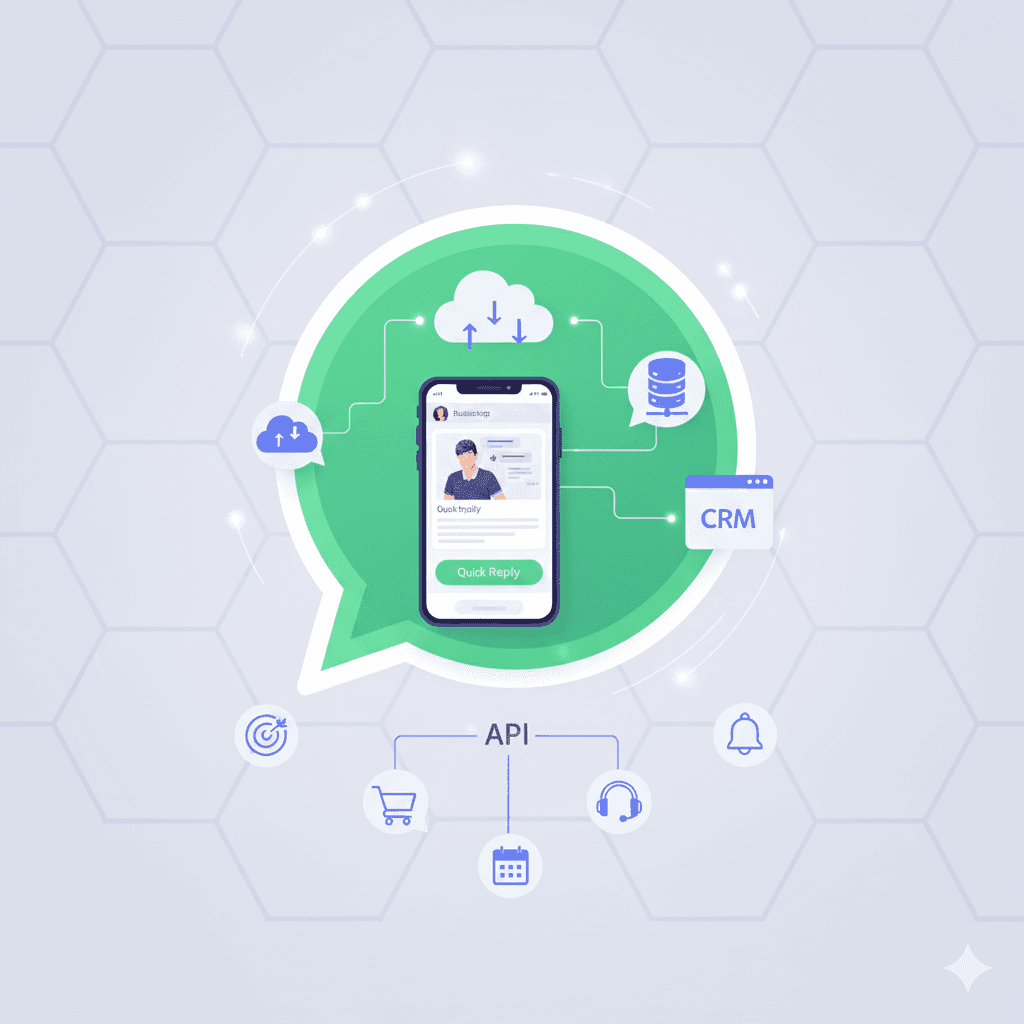
    This system works through integration between:

    • WhatsApp Business API,

    • an official payment provider,

    • and an automation platform like Cekat.ai.

    The combination of these three produces a faster, more measurable, and error-free checkout experience.

    How Payment via Chat Works: A Standardized Flow

    To make sure this flow isn’t just a cosmetic feature, let’s test the logic from a business perspective:

    1. The agent (human or AI) sends an automatic invoice on WhatsApp.

    2. The customer clicks the payment link without leaving the app.

    3. The system displays the amount, product details, and payment method.

    4. The customer completes payment via VA, e-wallet, card, or QRIS.

    5. A success notification comes into the business system in real time.

    6. Cekat.ai can then run automations such as:

      • updating order status,

      • sending the tracking number,

      • following up on failed payments,

      • or sending an upsell offer.

    The result: a low-friction transaction process that increases the chance of repeat purchases.

    How to Create a Payment Link on WhatsApp (2025)

    Here are the most commonly used technical steps for businesses — make sure to adapt them to your chosen payment provider.

    1. Choose an Official Payment Provider

    In 2025, payment providers commonly used with the WhatsApp API include:

    • Midtrans

    • Xendit

    • Doku

    • Stripe (for the global market)

    • Faspay

    • Dana / OVO / ShopeePay (via an aggregator)

    Choosing a provider determines:

    • the types of payment methods available,

    • admin fees,

    • and settlement speed.

    A common wrong assumption:
    “All providers are the same.”
    In reality, differences in transaction limits, server stability, and payment notification SLA greatly affect the customer experience.

    2. Set Up Automatic Payment Link Generation

    Once the API integration is complete, a payment link can be generated through:

    • the payment provider’s dashboard, or

    • automatically through an AI/automation system like Cekat.ai.

    The format is usually:
    https://pay.domain.com/invoice/12345

    The link contains:

    • product name,

    • amount,

    • invoice ID,

    • validity period,

    • and active payment methods.

    3. Send the Payment Link to the Customer’s WhatsApp

    Sending can be done:

    • manually (CS copy-pastes it), or

    • automatically (Cekat.ai’s AI WhatsApp agent).

    Send it using a template message or a regular message formatted like this:

    “Here’s the payment link for your order. Please click it and complete the payment so your order can be processed right away.”

    4. Customer Checks Out

    When the link is opened, the customer immediately sees:

    • the total amount due,

    • order details,

    • payment options (QRIS, e-wallet, VA, card).
      No account registration is required.

    This flow is a great fit for social commerce, resellers, and brands with high WhatsApp traffic.

    Example WhatsApp Checkout Flow (Step by Step)

    An example conversation flow from an agent (AI) to a customer:

    Agent:
    “Thanks for your order! Here’s a summary of your purchase:
    • Product: Premium Package
    • Total: Rp199,000
    Click the following link to pay: [Payment Link]”

    Customer:
    (clicks the link → selects QRIS)

    System:
    Payment successful.

    Agent:
    “We’ve received your payment! Your order is being processed. You’ll receive an automatic tracking update.”

    This flow summarizes the entire process without the customer ever leaving the conversation. That’s what makes it so conversion-friendly.

    How to Track Payments Automatically (2025 Reconciliation)

    Payment tracking should no longer be done manually. This is where the integration of WhatsApp + Payment Provider + Cekat.ai shows its strategic value.

    Automatic tracking covers:

    • detecting payment success/failed/expired,

    • triggering an automatic message when payment succeeds,

    • flagging customers who haven’t paid and sending reminders,

    • updating order status in the internal system,

    • a real-time dashboard for all invoices.

    A challenge that’s often overlooked:
    Businesses assume email notifications from the payment provider are enough.
    But customers now buy via WhatsApp, so notifications need to come back to WhatsApp to keep the funnel intact.

    Cekat.ai enables this through automation and an AI agent synced with payment providers.

    Payment via WhatsApp is no longer a nice-to-have feature — it’s an essential foundation for businesses relying on chat commerce in 2025. With a payment link, the checkout flow becomes faster, clearer, and error-free — which ultimately has a direct impact on sales growth.

    The right payment provider integration, combined with solid WhatsApp automation, delivers a better customer experience and more consistent conversion.

    Want an Automated & Integrated WhatsApp Checkout?

    Cekat.ai helps businesses create payment links, automatic invoices, real-time payment tracking, and an AI agent that fully handles chats, follow-ups, and order processing.

    The platform supports:

    • the official WhatsApp Business API,

    • verified payment providers,

    • end-to-end automation for social commerce.

    Explore the WhatsApp Payment Link & Checkout solution that’s faster, more efficient, and ready to use right away.
    Visit the Cekat.ai Social Commerce landing page to get started.

  • WhatsApp API Downtime Risk & Mitigation

    WhatsApp API Downtime Risk & Mitigation

    Key Advantages

    • Fault-Tolerant System Architecture: Safeguards outbound messaging through exponential backoff retry mechanisms and resilient dead-letter queues.
    • High-Throughput Webhook Processing: Ensures critical message callbacks (sent, delivered, read) process reliably during peak traffic surges.
    • Automated Multi-Channel Fallbacks: Reroutes transactional notifications to alternate channels during unexpected global messaging outages.
    • End-to-End SLA Observability: Delivers full telemetry visibility into webhook latency, error spikes, and resolution metrics.

    In modern enterprise operations, WhatsApp API reliability is far more than a routine technical concern; it represents a material business risk directly governing customer satisfaction, transaction completion rates, and brand reputation. Maintaining robust messaging uptime serves as the operational baseline for upholding customer support chat management and SLA benchmarks.

    This comprehensive guide details the core drivers of WhatsApp API downtime, best practices for implementing idempotent retry mechanisms, and multi-channel fallback strategies aligned with enterprise engineering standards.

    Why WhatsApp API Reliability Is Mission-Critical

    Many commercial organizations assume that the WhatsApp API maintains 100% uninterrupted uptime simply because billions of consumers use the consumer application daily. This assumption is flawed. The WhatsApp Business API is a complex, distributed ecosystem encompassing Meta cloud data centers, international telecom routing, Business Solution Provider (BSP) infrastructure, and internal business backends.

    Operating an enterprise WhatsApp Business API infrastructure demands robust engineering. High availability does not mean outages will never occur; rather, it denotes a system’s capacity to:

    • Queue and process messaging workloads consistently during volume spikes.
    • Recover automatically and rapidly following network connectivity drops.
    • Isolate technical disruptions to shield the end-user experience from degradation.

    Poor messaging reliability results in dropped order confirmations, broken webhook callbacks, and support backlogs that undermine your ability to cut CS response times.

    Primary Drivers of WhatsApp API Downtime and Delivery Failures

    1. Upstream Global Infrastructure Disruptions

    While rare, regional data center outages, routing anomalies, or Meta API maintenance windows can cause transient delivery delays or temporary request failures.

    2. Webhook Callback Processing Failures

    Webhooks serve as the foundational backbone for real-time WhatsApp API event ingestion (such as inbound inquiries and delivery receipts). If your backend listener experiences:

    • Database query execution timeouts.
    • Delays in returning an immediate HTTP 200 OK acknowledgment.
    • Server resource saturation during promotional surges.

    incoming event payloads can be dropped, creating the illusion of lost customer messages.

    3. Rate Limits and API Throttling

    Dispatching high-volume outbound campaigns without structured rate limiting can trigger Meta throttling thresholds. Ensure large-scale outreach follows proven guidelines on how to broadcast on WhatsApp without getting banned.

    4. Internal Backend Architecture Bottlenecks

    Technical bottlenecks often originate within internal enterprise stacks—such as unindexed CRM databases, congested message brokers, or unhandled exceptions within custom workflow automation engines.

    Idempotent Retry Mechanisms: The Core of Messaging Reliability

    A retry mechanism provides a systematic protocol to reprocess failed requests. However, poorly architected retries can overwhelm backend services during recovery periods.

    Three mandatory principles for reliable retry architecture:

    • Idempotency: Guarantees that repeating an identical API call multiple times produces only a single message dispatch, preventing duplicate customer notifications.
    • Exponential Backoff with Jitter: Incrementally expands retry intervals (e.g., 1s, 2s, 4s, 8s) with randomized timing to prevent thundering herd problems on recovering endpoints.
    • Dead-Letter Queues (DLQ): Segregates unresolvable payloads after maximum retry thresholds are reached for technical auditing without clogging active processing streams.

    Multi-Channel Fallback Strategies

    Retries alone cannot resolve extended upstream outages. Enterprise architectures must incorporate automated fallback pathways:

    • Automated Channel Rerouting: Redirects urgent transactional alerts to SMS or email through an integrated omnichannel application.
    • Human Agent Escalation: Routes stalled automation conversations directly into a centralized WhatsApp multi-agent inbox.
    • Graceful State Handling: Stores transactional events in pending queues and provides transparent delay notices to the customer.

    End-to-End Uptime Monitoring and Telemetry

    Operational reliability requires proactive observability. Standard monitoring best practices include:

    • Tracking webhook listener latency, HTTP status codes, and error percentages.
    • Synchronizing end-to-end message delivery lifecycle events inside your CRM application.
    • Configuring automated threshold alerts before minor service degradations impact customer-facing SLAs.

    Common Pitfalls in WhatsApp API Reliability Management

    Avoid these recurring architectural mistakes:

    • Relying exclusively on default platform retries without validating callback delivery status.
    • Executing heavy business logic synchronously inside the webhook receiver thread rather than offloading to an asynchronous message broker.
    • Mixing high-priority transactional alerts with bulk outbound marketing sent via WhatsApp blast tools within the same execution queue.
    • Failing to execute periodic chaos engineering and failure-recovery simulations.

    Frequently Asked Questions (FAQ)

    1. What causes WhatsApp API messages to fail or experience delivery delays?

    Message failures typically stem from upstream network disruptions, Meta rate limiting, backend webhook listener timeouts, or destination phone numbers being temporarily inactive.

    2. What is Idempotency in a WhatsApp API retry mechanism?

    Idempotency is an architectural guarantee ensuring that executing the same API request multiple times results in exactly one outbound message dispatch, preventing duplicate messages from reaching the recipient.

    3. When should an enterprise trigger a messaging fallback strategy?

    A fallback strategy should trigger automatically when retry attempts exceed predefined thresholds (typically 3 to 5 attempts) or when an active upstream service outage is detected on the primary messaging channel.

    Build Resilient WhatsApp API Architecture with Cekat.ai

    Operational downtime risks cannot be completely eliminated, but their business impact can be controlled through intelligent engineering. Enterprises that architect resilient, fault-tolerant messaging pipelines protect customer trust and strengthen long-term customer retention.

    The platform at Cekat.ai provides enterprise-grade infrastructure equipped with standardized retry handling, automated omnichannel fallbacks, and native CRM integrations. Explore our subscription tiers on our pricing and plans page or consult directly with our solutions engineering team today.

  • AI for Customer Service: How to Get the Optimal Hybrid AI and Human Team Working

    For many customer service teams, the challenge is no longer just “replying to chats faster.” The challenge is how to maintain service quality as conversation volume keeps rising, channels keep multiplying, customer expectations keep climbing, and the human team still has to stay focused on cases that truly require empathy, judgment, and business decisions.

    This is where the optimal hybrid AI and human customer service approach becomes important. Not to replace the CS team, but to split the workload more intelligently: an AI agent handles repetitive questions and tier-1 processes, while humans handle conversations that are more complex, sensitive, or high-value. With the right system, a business can speed up response times, keep answers consistent, and still deliver a humane customer experience.

    For CS managers and customer experience teams, hybrid AI customer service isn’t just an automation project. It’s a way to build a service system that’s more scalable, measurable, and ready to grow alongside the business.

    Why CS Teams Need a Hybrid System, Not Just a Chatbot

    Many businesses start using a chatbot to answer customer questions. But a standalone chatbot often stops at simple auto-replies. It can answer FAQs, but doesn’t always understand when a conversation needs to be escalated to a human. It can give product information, but isn’t necessarily able to read urgency, customer emotion, or the potential for escalation.

    Optimal customer service requires a more mature structure. AI needs to be placed as part of the service workflow, not just a message-reply tool. In a hybrid approach, the AI agent works as frontline support handling a large volume of repetitive conversations, while the human team steps in when the context requires negotiation, empathy, validation, or a decision that can’t be fully automated.

    At Cekat.AI, we see customer conversations as part of a customer journey that needs to be managed carefully. Every chat isn’t just a ticket to be closed — it’s also a source of insight, a retention opportunity, and even potential revenue that can be lost if follow-up and escalation processes don’t run well.

    AI Agent for Tier-1: Handling FAQs, Status, and Product Information Faster

    In a CS tier system, tier-1 is the first layer of service, usually made up of repetitive questions. Customers ask about operating hours, prices, product availability, payment methods, order status, refund policy, usage guides, or other basic information. Questions like these matter, but if all of them are handled manually, the CS team quickly gets overwhelmed.

    An AI agent helps take over the tier-1 workload by answering standard questions quickly and consistently. The impact isn’t just faster responses, but also a healthier workflow. The human team no longer gets drained answering the same question hundreds of times, so their energy can be redirected to cases that need more attention.

    On the customer experience side, this speed matters a great deal. Customers who wait too long for a simple answer can lose trust, switch to a competitor, or enter their next conversation already frustrated. With optimal hybrid AI and human customer service, a business can keep the customer’s early experience responsive without having to add agents linearly every time chat volume rises.

    Humans for Tier-2: Complaints, Negotiation, and Sensitive Situations

    Not every conversation is suited to AI. Serious complaints, angry customers, complicated refund requests, price negotiations, payment issues, non-standard technical problems, or cases that could damage brand reputation still need a human.

    This is where tier-2 becomes important. The human CS team acts as the problem solver handling deeper context. They can read the customer’s tone, make decisions based on policy, show empathy, and coordinate with internal teams such as sales, operations, finance, or fulfillment.

    A good hybrid approach doesn’t leave customers feeling “trapped with a bot.” Instead, AI should help speed up the process of reaching a human when it’s truly needed. AI can gather initial information, understand customer intent, record conversation context, and then hand the case off to a human agent with more complete data. The result: customers don’t need to repeat their problem from scratch, and human agents can jump straight to the core issue.

    A Good Escalation Flow Makes Hybrid CS More Seamless

    The key to successful hybrid AI customer service lies in the escalation flow. It’s not enough for AI to be smart at answering; AI also needs to know when to stop answering and hand the conversation over to a human.

    A good escalation flow usually starts with intent detection. When a customer asks something simple, the AI agent can answer directly. But when a customer shows signs of dissatisfaction, uses sensitive language, asks for compensation, or asks something outside the knowledge base, the system needs to route the conversation to the human team.

    This flow also needs to account for priority. VIP customers, customers with high-value transactions, or cases that have already exceeded SLA should get a faster escalation path. That way, the CS team isn’t just working through chats in the order they arrive, but based on urgency level and business impact.

    Measuring Hybrid CS Impact Through CSAT, AHT, and FCR

    Good customer service can’t be judged just by how many chats get replied to. CS managers need metrics that show quality, efficiency, and service effectiveness. In a hybrid system, three important metrics to monitor are CSAT, AHT, and FCR.

    CSAT, or Customer Satisfaction Score, helps a business read whether customers feel satisfied after interacting with CS. An AI agent can help maintain CSAT by giving fast responses to simple questions, while humans maintain interaction quality on cases that are more emotional or complex. This combination matters because customers want to be helped quickly, but still want to feel understood.

    AHT, or Average Handle Time, shows the average time needed to resolve a conversation. With AI handling tier-1 and gathering initial information before escalation, human agents don’t need to start from zero. This process can help reduce handling time without sacrificing answer quality.

    FCR, or First Contact Resolution, measures how often a customer’s problem gets resolved on the first contact. A good hybrid system helps increase FCR chances because simple questions get answered directly by AI, while complex cases get routed to the right agent with full context. The fewer times customers have to switch channels, repeat their story, or wait for manual follow-up, the better the experience they feel.

    Cekat.AI Helps Build a More Structured Hybrid Customer Service

    Cekat.AI helps businesses see customer service not as a pile of chats to be answered one by one, but as a workflow that can be organized, automated, and measured. An AI agent can handle tier-1 conversations like FAQs, status checks, product information, and basic guidance. When a conversation needs a human, the system can help the escalation process reach the right agent so customers still get proper handling.

    Beyond just a chatbot, Cekat.AI helps teams manage conversation, CRM, automation, and customer journey in one flow. This matters for CS managers who want to maintain SLA, reduce the team’s repetitive workload, read service performance, and make sure every customer conversation has a clear status.

    For customer experience teams, a system like this makes the customer experience more consistent. Customers get fast answers when their question is simple, but can still connect with a human when the problem needs a personal touch. Behind the scenes, the team gets a tidier process, data that’s easier to read, and a stronger foundation for improving service quality over time.

    Build Your Hybrid CS Team with Cekat.AI

    The future of customer service isn’t about choosing between AI or humans. What matters more is building a system that lets both work in the right roles. The AI agent handles volume, speed, and consistency. The human team handles empathy, complexity, and decisions that require context.

    With the optimal hybrid AI and human customer service approach, a business can reduce operational load, maintain customer experience quality, and make CS performance more measurable through CSAT, AHT, and FCR.

    Build your hybrid CS team with Cekat.AI and turn customer conversations into a service workflow that’s faster, more seamless, and ready to grow alongside your business.

  • Best Omnichannel CRM in Indonesia 2026: A Guide to Choosing a Platform

    Best Omnichannel CRM in Indonesia 2026: A Guide to Choosing a Platform

    An omnichannel CRM is a customer relationship management system that integrates all of a business’s communication channels, including WhatsApp, Instagram, email, and website chat, into a single centralized platform so a team can manage every customer interaction consistently, efficiently, and based on data, without needing to switch between different apps.

    Picture this situation: your customer service team receives a message from a customer on WhatsApp, then the same customer sends an email two hours later asking the same question because they didn’t get a quick response. Your team has no idea the WhatsApp message ever existed, so the customer has to repeat the whole story from scratch. This kind of experience happens every day at businesses that haven’t adopted an omnichannel CRM, and the impact is more serious than it looks: Salesforce research shows that 76% of consumers expect consistent interactions across every communication channel, yet only 54% actually experience that in practice.

    In the Indonesian market in 2026, where customers actively interact through WhatsApp, Instagram DM, Tokopedia, website chat, and even TikTok Shop at the same time, an omnichannel CRM platform is no longer a luxury but an operational necessity. This guide will help you understand what truly sets the best omnichannel CRM platforms apart, which criteria should be prioritized, and how to choose the solution that best fits the scale and needs of your business in Indonesia.

    What Is an Omnichannel CRM? How It Differs from a Regular or Multichannel CRM

    Before choosing a platform, it’s important to understand exactly what an omnichannel CRM means and why its definition is fundamentally different from a simple multichannel CRM.

    A multichannel CRM means a business is present on many different communication channels, but each channel operates separately without sharing data or context with the others. The team handling WhatsApp has no idea what the email team has already discussed with the same customer.

    An omnichannel CRM means all communication channels are integrated into a single system that shares data in real time. When a customer switches from WhatsApp to Instagram DM, the agent responding can immediately see the customer’s entire interaction history, preferences, order status, and prior conversation context, without needing to ask the customer to repeat information.

    Aspect

    Traditional CRM

    Multichannel CRM

    Omnichannel CRM

    Channel management

    One dominant channel

    Many channels, managed separately

    Many channels, fully integrated

    Conversation context

    Limited to a single channel

    Not shared across channels

    Synchronized in real time across channels

    Customer experience

    Depends on a single point of contact

    Inconsistent across channels

    Consistent and seamless across all channels

    Interaction history

    Manual, often incomplete

    Separate per channel

    Centralized and always complete

    Team efficiency

    Depends on manual volume

    Double workload across tools

    One dashboard for all channels

    Automation capability

    Very limited

    Limited per channel

    Integrated cross-channel automation

    Customer analytics

    Data siloed per channel

    Separate reports per platform

    Unified 360-degree customer view

    The difference between multichannel and omnichannel in a CRM context isn’t just about how many channels are supported, but about how integrated the experience feels to the customer and how efficient the operations feel to the team.

    Why an Omnichannel CRM Is a Necessity for Indonesian Businesses in 2026

    The behavior of Indonesian digital consumers is quite unique compared to other markets in Southeast Asia. Several factors are making the adoption of an omnichannel CRM increasingly urgent for businesses that want to stay competitive:

    WhatsApp’s dominance as the primary business communication channel. With over 130 million active users in Indonesia according to Meta’s 2025 report, WhatsApp isn’t just a personal messaging app anymore — it has become business communication infrastructure. Customers expect a response on WhatsApp, not just via email or a website form.

    Indonesian consumers are active on many platforms at once. A single customer might send a question via Instagram DM, continue the conversation on WhatsApp, and finally make a purchase through Tokopedia or a website. Without an omnichannel CRM, each of these touchpoints becomes a separate island of data that often results in an inconsistent experience.

    Message volume that keeps growing beyond what a manual team can handle. Growing businesses face a classic challenge: customer message volume grows far faster than the ability to add CS team members. An omnichannel CRM equipped with AI agent capabilities allows a business to scale its message-handling capacity without a proportional increase in headcount.

    Customer expectations for response speed keep rising. Google research shows that 60% of Indonesian consumers expect a response within an hour when contacting a business online. An omnichannel CRM platform with an integrated AI agent enables instant responses around the clock, without depending on the team’s working hours.

    Must-Have Features of the Best Omnichannel CRM for Indonesian Businesses

    Not every platform that claims to be an omnichannel CRM has equivalent capabilities. Here are the features that truly set the best omnichannel CRM platforms apart from solutions that only look omnichannel on the surface:

    Core Omnichannel CRM Features

    • Unified cross-channel inbox: All messages from WhatsApp, Instagram DM, Facebook Messenger, email, and website live chat land in one centralized dashboard. The team can respond across every channel from a single screen without opening different apps.

    • 360-degree customer profiles: Every customer has a unified profile that includes their entire interaction history, transactions, preferences, and status across all channels. No data is lost when a customer switches channels.

    • Trigger-based conversation flow automation: The ability to build automatic response flows triggered by specific behavior, such as an automatic follow-up if there’s no response within 30 minutes, or automatic assignment to the right agent based on the conversation topic.

    • Integrated AI agent: An AI agent capability that can automatically handle common questions, qualify leads, gather initial information, and hand the conversation off to a human agent when needed, rather than just a rule-based chatbot.

    • Team management and agent assignment: A smart conversation assignment system based on agent availability, expertise, or rules configured by a manager, along with the ability to monitor team performance in real time.

    • Analytics and performance reports: An analytics dashboard that displays key metrics such as average response time, conversation resolution rate, message volume per channel, and each agent’s performance.

    Features Specific to the Indonesian Market

    • Official WhatsApp Business API integration: Not just a basic WhatsApp connection, but integration through Meta’s official WhatsApp Business API, which enables template messages, structured broadcasts, and compliant conversation automation

    • Natural Indonesian language support: An AI agent capability to understand and respond in Indonesian, including informal variations, common abbreviations, and local idioms often used in everyday business conversations

    • Local platform integrations: Connectivity with platforms commonly used by Indonesian businesses such as Tokopedia, Shopee, local payment systems, and other popular tools

    • Scalability for high chat volume: The ability to handle spikes in message volume, for example during promotional campaigns or major sale days, without a drop in system performance

    Cekat.AI was built with all of these needs treated as top priorities, not add-on features. Official WhatsApp Business API integration, a native Indonesian-language AI agent, and an interface configurable without a technical team are the foundation of the platform, not optional extras.

    9 Criteria for Choosing the Best Omnichannel CRM for Your Business

    Choosing the right omnichannel CRM platform isn’t just about comparing features on paper. Here are nine criteria that need to be evaluated thoroughly before making a decision:

    Criteria

    Evaluation Question

    Weight for Indonesian Businesses

    WhatsApp API integration

    Does it use the official WhatsApp Business API? Does it support template messages, broadcasts, and automation?

    Very High – WhatsApp is the primary channel for Indonesian businesses

    Ease of implementation

    How long does it take to get up and running? Does it require a dedicated technical team?

    High – Most businesses don’t have a large in-house IT team

    AI agent capability

    Can the AI understand conversation context naturally? Can it run cross-system workflows?

    High – The AI agent is what sets a modern omnichannel CRM apart from a mere centralized inbox

    Scalability

    Does performance stay stable when message volume spikes drastically? How does the pricing structure scale as the business grows?

    High – Indonesian business message volume can spike drastically during promotional campaigns

    Depth of analytics

    Are real-time reports available for agent performance, response time, and volume trends per channel?

    Medium-High – Important for CS team management and operational decision-making

    Integration capability

    Can it connect with the CRM, e-commerce, payment systems, and tools already in use?

    Medium-High – Avoids data silos that would otherwise add operational complexity

    Pricing structure and transparency

    Is pricing transparent and predictable? Are there hidden costs based on message count or number of agents?

    Medium – Cost needs to be justifiable with measurable ROI

    Support and onboarding

    Is there structured onboarding available? Is support available in Indonesian?

    Medium – Onboarding quality determines the speed and success of adoption

    Data security and compliance

    Is data stored with encryption? Is there role-based access control for different teams?

    Medium – Increasingly important as data regulations in Indonesia develop

    Comparison of the Best Omnichannel CRM Platforms for Indonesian Businesses in 2026

    Below is a comparison of omnichannel CRM platforms relevant to businesses in Indonesia, evaluated based on capability, fit with the local market, ease of implementation, and pricing model:

    Platform

    Main Strengths

    Limitations

    Best Suited For

    Cekat.AI

    Native Indonesian-language AI agent, integrated WhatsApp Business API, no-code, full omnichannel inbox, sales and CRM automation in one platform

    Relatively new platform, integration ecosystem still growing

    Indonesian businesses of any scale that need an AI-agent omnichannel CRM with local support

    Qontak (Mekari)

    Experienced local player, WhatsApp API integration, strong reputation in the Indonesian enterprise segment

    Pricing tends to be higher for full features, longer adoption curve for SMEs

    Enterprise and mid-size companies that need a local solution with a long track record

    SleekFlow

    Clean interface, solid omnichannel features, marketplace integrations

    More focused on the regional Asia market, some AI features still in development for the Indonesian market

    Mid-size businesses with omnichannel messaging needs that aren’t overly complex

    Freshdesk / Freshsales

    Complete product ecosystem, strong integrations, global reputation

    Interface and support less optimized for the Indonesian business context, pricing in USD

    Companies already familiar with the Freshworks ecosystem that need a global solution

    Zendesk

    Most complete global enterprise platform, in-depth analytics, wide integration ecosystem

    Very high pricing, complex implementation, less optimized for WhatsApp-centric Indonesia

    Large enterprises with big CS teams and a need for in-depth analytics

    HubSpot CRM + Inbox

    Strong CRM, integrated marketing automation, user-friendly interface

    Cost rises significantly for full features, WhatsApp integration still limited natively

    Marketing-driven teams that need CRM and marketing automation in one ecosystem

    Why Cekat.AI Stands Out as the Best Omnichannel CRM for the Indonesian Market

    Several factors make Cekat.AI a particularly relevant choice for the Indonesian business context:

    • A native AI agent, not a bolted-on chatbot: Cekat.AI is built on AI agent architecture, not a conventional CRM with a chatbot feature added as an add-on. This means AI capability is part of every workflow, not a separate optional feature

    • A consistent WhatsApp-first approach: Deep official WhatsApp Business API integration makes Cekat.AI closely aligned with the reality of Indonesian business communication, where WhatsApp dominates customer interaction across every segment

    • No-code for non-technical teams: Customer service, sales, or operations teams can build, configure, and optimize AI agent flows without relying on a developer team

    • All-in-one to reduce tool sprawl: Omnichannel inbox, CRM, sales automation, customer service AI, and workflow automation are all available in one platform, reducing the complexity and cost of managing many separate tools

    How to Implement an Omnichannel CRM: A Step-by-Step Guide

    A successful omnichannel CRM implementation requires more than just signing up for a platform and connecting your communication channels. It requires careful planning, a phased approach, and a commitment to optimizing the system after go-live.

    • Map your existing communication channels. Before choosing a platform, identify every channel your business already uses and the message volume from each one. This data will help determine integration priorities and allocate AI agent capacity appropriately.

    • Audit your current customer service process. Document the existing message-handling flow: how messages are distributed to agents, how escalation happens, and where the most frequent bottlenecks occur. This becomes the foundation for building an effective automation flow.

    • Determine priority use cases for initial implementation. Choose two to three use cases with the biggest impact to implement first: for example, an AI agent for common FAQs, an automatic assignment system to route to the right agent, and follow-up notifications for customers who haven’t been handled for over an hour.

    • Configure channel integrations one at a time. Start with WhatsApp Business API integration as the priority, then gradually add other channels. A phased approach prevents excessive technical complexity in the early stage and lets the team adapt gradually.

    • Build a knowledge base for the AI agent. The quality of an AI agent’s responses depends heavily on the quality of the knowledge base it’s given. Document FAQs, business policies, product information, and standard procedures in a format the AI system can read and process.

    • Train the team and manage the change. Involve the CS and sales teams in the transition process. Show them how the omnichannel CRM makes their work easier, not replaces it. Good user adoption is a decisive success factor that’s often overlooked.

    • Monitor, evaluate, and optimize regularly. Track key KPIs such as average response time, resolution rate, and customer satisfaction (CSAT) on a regular basis. Use this data to keep refining the AI agent configuration, the assignment flow, and the communication strategy.

    With a platform like Cekat.AI, the implementation process can begin in a matter of days using ready-made flow templates and structured onboarding guidance, without needing a dedicated engineering team or a large setup cost.

    Cost Estimates and ROI Projection for an Omnichannel CRM

    Understanding the cost structure and potential return on investment is an important part of the decision-making process for adopting an omnichannel CRM. Here’s a rough estimate based on business scale:

    Cost Estimates by Business Scale

    • SMEs (1-10 CS agents): Ranges from IDR 300,000 to IDR 2,000,000 per month for an omnichannel CRM platform with basic to mid-tier features. Suitable for businesses just starting to centralize their communication channels and automate customer service.

    • Mid-size businesses (10-50 CS agents): Ranges from IDR 2,000,000 to IDR 10,000,000 per month depending on the number of agents, message volume, and integration needs. Investment in this range generally already provides access to AI agent features and more in-depth analytics.

    • Enterprise (50+ CS agents): Starting from IDR 10,000,000 per month, with possible additional costs for customization, special integrations, premium SLAs, and enterprise support.

    Factors That Affect ROI

    • Reduced average handling time per conversation through FAQ automation and initial responses from the AI agent

    • Increased message-handling capacity without a proportional increase in agents

    • Reduced unnecessary escalation rate through automatic resolution by the AI agent

    • Increased customer satisfaction that impacts retention and repeat transaction value

    • Reduced cost of tools that were previously used separately for each communication channel

    Many businesses report a positive ROI from omnichannel CRM implementation within the first 3-6 months, especially when the initial focus is directed at automating high-volume processes such as FAQ handling and routing conversations to the right agent.

    Challenges of Omnichannel CRM Implementation and How to Overcome Them

    Omnichannel CRM implementation comes with challenges that need to be anticipated from the early planning stage. Understanding these obstacles actually helps a business prepare the right mitigation strategy:

    • Adoption resistance from the CS team: Teams already used to the old way of working are often hesitant about system changes. The solution is to involve the team from the platform selection stage, provide adequate training, and demonstrate real benefits that make their daily work easier, not harder.

    • Customer data scattered across many systems: Migrating and consolidating data from various legacy systems into a new platform can be a complex process. The solution is to conduct a data audit first, determine which system is the source of truth, and choose a platform with broad integration capabilities.

    • AI agent configuration that takes time to optimize: An AI agent isn’t perfect from day one. It takes a calibration period of several weeks to optimize the knowledge base, adjust conversation flows, and improve responses based on real customer interactions.

    • Managing customer expectations during the transition: Customers may notice a difference during the transition period to the new system. Communicate the change proactively if needed, and make sure there’s a safety net for escalation to a human agent during the early implementation phase.

    • Choosing the right platform from the many available options: The number of platforms claiming to be an omnichannel CRM keeps growing. Use a structured evaluation framework like the one described earlier, and prioritize a trial or live demo before committing to a long-term contract.

    FAQ: Frequently Asked Questions About Omnichannel CRM

    What is an omnichannel CRM?

    An omnichannel CRM is a customer relationship management system that integrates all of a business’s communication channels, including WhatsApp, Instagram, email, and live chat, into a single centralized platform so every customer interaction can be managed consistently and based on data from one dashboard.

    What’s the difference between an omnichannel and a multichannel CRM?

    A multichannel CRM means being present on many channels that operate separately. An omnichannel CRM means all channels are integrated and share data in real time, so customers get a consistent experience and agents can see the entire interaction history from every channel in a single view.

    Which omnichannel CRM platform is best for Indonesian SMEs?

    For Indonesian SMEs, prioritize a platform with official WhatsApp Business API integration, one that doesn’t require a technical team for configuration, affordable pricing, and support in Indonesian. Cekat.AI is designed with these specific needs of the Indonesian market in mind.

    Does an omnichannel CRM need an IT team to implement?

    Not always. Modern omnichannel CRM platforms like Cekat.AI are designed to be implemented and configured by non-technical teams using a no-code interface. Implementation can be completed in a matter of days without needing a dedicated developer team.

    Can an omnichannel CRM connect with WhatsApp?

    Yes. The best omnichannel CRM platforms support official WhatsApp Business API integration from Meta, which allows managing WhatsApp conversations, sending template messages, and automating communication through WhatsApp from within the CRM platform.

    How much does omnichannel CRM implementation cost?

    For SMEs, costs range from hundreds of thousands to several million rupiah per month. For mid-size businesses, it’s between IDR 2 and 10 million per month depending on the number of agents and message volume. ROI is generally achieved within the first 3-6 months if implementation is focused on high-volume processes.

    Can an AI agent in an omnichannel CRM replace the CS team?

    An AI agent doesn’t replace the CS team, it expands their capacity and efficiency. AI automatically handles high-volume, repetitive questions, while the human CS team focuses on high-value conversations that require empathy and judgment.

    Which channels can be integrated into an omnichannel CRM?

    Modern omnichannel CRM platforms generally support integration with the WhatsApp Business API, Instagram DM, Facebook Messenger, email, website live chat, and in some cases e-commerce platforms such as Tokopedia or Shopee.

    How do you measure the success of an omnichannel CRM?

    Track key KPIs: average response time, first response rate, resolution rate, customer satisfaction (CSAT), message volume per channel, and each agent’s performance. Compare the metrics before and after implementation to measure the real impact.

    Are there data security risks with an omnichannel CRM?

    Risk can be minimized by choosing a platform that uses data encryption, role-based access control, and a transparent data retention policy. Make sure the platform you choose complies with security standards relevant to the regulations in effect in Indonesia.

    An omnichannel CRM is an unavoidable evolution for Indonesian businesses that want to deliver a consistent customer experience in today’s multi-channel era. It isn’t just about gathering all messages in one place, but about building a system that understands each customer thoroughly, responds correctly on every channel, and operates with an efficiency that manual processes simply cannot match.

    Choosing the best omnichannel CRM platform for a business in Indonesia means choosing a solution that truly understands the reality of the local market: WhatsApp dominance, the need for natural Indonesian language, ease of implementation without a large technical team, and an AI agent capability that isn’t just a rigid rule-based chatbot.

    In an increasingly competitive business environment, businesses that succeed in delivering a consistent, responsive customer experience across every channel will gain an advantage that’s directly reflected in customer retention numbers, service satisfaction, and team operational efficiency. The right omnichannel CRM platform is the foundation of that advantage.

    The earlier a business adopts an omnichannel CRM, the more customer data accumulates to optimize service, the more trained the AI agent becomes at understanding the specific business context, and the greater the competitive advantage built compared to competitors still managing customer communication separately and manually.

    Manage All Your Business Communication Channels from One Platform with Cekat.AI

    Cekat.AI delivers an omnichannel CRM solution designed specifically for the needs of Indonesian businesses. With an integrated AI agent, a unified inbox for all communication channels, official WhatsApp Business API integration, and sales automation and workflow automation capabilities, businesses can manage the entire customer journey from one platform without needing a dedicated technical team.

    • A centralized omnichannel inbox for WhatsApp, Instagram, email, and live chat in one dashboard

    • A native Indonesian-language AI agent that naturally understands conversation context

    • Official WhatsApp Business API integration for compliant, scalable business communication

    • Fast implementation without a developer team, with ready-to-use flow templates and structured onboarding guidance

    Businesses that integrate an omnichannel CRM into their operations earlier build a customer service standard that becomes increasingly difficult for competitors still relying on separate, unintegrated communication channel management to catch up with.

  • WhatsApp API: How to Handle Errors Automatically with an AI Agent

    WhatsApp API: How to Handle Errors Automatically with an AI Agent

    Executive Summary & Value Proposition

    • Automated Error Detection & Classification: Instantly categorizes temporary versus permanent dispatch failures in real-time to prevent dropped messages.
    • Adaptive Auto-Retry & Fallback Workflows: Executes dynamic retry intervals and reroutes payloads to secondary backup channels seamlessly.
    • Support Overhead Reduction: Empowers AI Agents to resolve delivery glitches independently while passing complex cases along with technical logs.
    • Messaging Infrastructure Reliability: Sustains high delivery performance even during rate limit caps or temporary network outages.

    In modern enterprise communications, the WhatsApp Business API acts as the backbone for customer touchpoints—handling transactional notifications, service confirmations, and support workflows. However, a persistent technical challenge remains: WhatsApp API errors. Failed dispatches, unconfirmed delivery statuses, or stalled conversations directly erode customer experience and revenue opportunity.

    This is where an AI Agent becomes transformative. Far beyond simple auto-replies, a well-designed AI Agent can detect, manage, and resolve WhatsApp API errors automatically before customers even notice an outage. This guide covers common error types, root causes, and how auto-retry, fallback, and human CS escalation workflows execute within AI systems.

    What Is WhatsApp API Error Handling?

    WhatsApp API error handling represents a systematic engineering workflow designed to identify, respond to, and recover from message dispatch or receipt failures. Lacking automated error recovery forces companies to rely on manual log audits—which are slow, expensive, and error-prone.

    With AI Agents, error recovery shifts from reactive troubleshooting to proactive, automated resolution powered by real-time system logs inside an omnichannel application.

    Common Types of WhatsApp API Errors

    Primary failure categories encountered across enterprise WhatsApp API deployments include:

    1. Message Delivery Failed Errors

    • Invalid or inactive recipient phone numbers.
    • User has blocked the business number or opted out.
    • Expired 24-hour customer care messaging window.

    2. Message Template Errors

    • Template not approved by Meta.
    • Dynamic template parameters mismatched or improperly formatted.
    • Incorrect category selection (Utility, Marketing, or Authentication).

    3. Rate Limit & Throttling Errors

    • Dispatch volumes exceeding Meta’s daily account messaging limits.
    • Traffic surges (burst traffic) lacking queue buffer management.

    4. Server & Network Errors

    • API gateway request timeouts.
    • Temporary network connection drops on internal backend servers.

    How AI Agents Handle Errors Automatically

    Handling Stage AI Agent Mechanism (Cekat.ai) Operational Result & Impact
    1. Detection & Classification Reads status codes to separate temporary vs. permanent errors. Prevents wasted retry attempts on invalid or blocked contacts.
    2. Adaptive Auto-Retry Resends failed messages dynamically using exponential backoff. Resolves temporary network drops automatically without human CS intervention.
    3. Fallback Strategy Reroutes payloads to secondary backup channels via fallback systems (SMS/Email). Ensures time-sensitive transactional notifications reach customers reliably.
    4. Smart Escalation Dispatches error context logs directly to a ticketing management system. Human CS teams focus exclusively on high-value, complex cases.

    Root Causes of WhatsApp API Failures

    Generally, messaging failures stem not just from isolated glitches, but from system design deficiencies, including:

    • Absence of automated retry logic algorithms.
    • Lack of error classification mechanisms (temporary vs. permanent).
    • Heavy reliance on manual IT log monitoring.
    • Disconnected workflows isolated from your CRM platform.

    Business Benefits of Automated Error Recovery

    Implementing AI-driven automated error handling delivers measurable operational ROI:

    • Reduced Failed Message Rates: Ensures critical dispatches like tracking numbers and receipts deliver successfully.
    • Operational Overhead Reduction: Eliminates manual log monitoring tasks for IT and support teams.
    • Sustained Response Speeds: Maintains continuous execution across all active workflow automation pipelines.

    Cekat.ai provides enterprise-grade AI Agents equipped with automated classification, adaptive retries, and fallback strategies. Build a resilient WhatsApp API messaging infrastructure today with Cekat.ai.


    Frequently Asked Questions (FAQ)

    1. Why do WhatsApp API message dispatches fail?

    Dispatch failures stem from invalid phone numbers, user blocks, expired 24-hour messaging windows, rejected Meta templates, or hitting daily API rate limits.

    2. Can WhatsApp API errors be handled automatically without IT intervention?

    Yes. Cekat.ai AI Agents feature built-in error classification, adaptive auto-retry algorithms, and automated fallback logic to resolve delivery issues independently.

    3. What is a Fallback strategy during a WhatsApp API failure?

    A Fallback strategy reroutes message dispatches to secondary communication channels (like SMS or Email) if the primary WhatsApp dispatch fails after maximum retry attempts.

    4. When does an AI Agent escalate a dispatch error to human support?

    An AI Agent escalates cases to human agents when errors are permanent, require manual account checks, or when auto-retry and fallback thresholds are reached.


  • WhatsApp API Compliance: Understanding Meta Policies, Risks, & Enforcement

    WhatsApp API Compliance: Understanding Meta Policies, Risks, & Enforcement

    Executive Summary & Value Proposition

    • Official Meta Policy Compliance: Master the regulatory framework and WhatsApp Commerce Policy to protect corporate channels from penalties or permanent suspensions.
    • Conversation Quality Management: Proactively track Quality Ratings and user block rates to preserve daily messaging capacity limits.
    • Compliance-by-Design Architecture: Integrate transparent consent workflows (opt-ins) leveraging an enterprise CRM platform and an AI Agent.
    • Sustainable Business Messaging: Eliminate operational risks and safeguard chat histories via centralized message routing through an omnichannel application.

    Deploying the WhatsApp API for corporate communication extends far beyond technology adoption and automation. Beneath the surface lies a strict regulatory framework established by Meta as the platform owner of WhatsApp. Compliance with these official policies determines whether your enterprise WhatsApp API implementation remains sustainable, secure, and immune to account bans.

    This guide explores how WhatsApp API compliance works, how Meta executes policy enforcement, and what key guidelines businesses must understand to ensure messaging infrastructure drives growth rather than operational risks.

    What Is WhatsApp API Compliance?

    WhatsApp API compliance refers to aligning your organization’s messaging practices with Meta’s official policy ecosystem, encompassing:

    • Messaging Policy: Rules governing permitted message categories, active conversation windows (24-hour window), and dispatch frequencies.
    • WhatsApp Commerce Policy: Regulations detailing permitted and restricted products or services across the platform.
    • User Privacy & Data Protection Regulations: Standards for managing customer contact information and chat logs securely.
    • User Experience (UX) Standards: Ensuring message relevance to prevent recipients from flagging content as unsolicited spam.

    Compliance is not an optional configuration. Meta’s automated security systems actively monitor business account behaviors, payload delivery patterns, template content, and real-time user feedback signals.

    Why Is Meta So Strict Regarding Compliance?

    A common misconception among business operators is: “As long as we use the official WhatsApp API, our account is completely safe.” In reality, the official API merely grants infrastructure access. Meta evaluates how your business behaves inside the platform.

    From Meta’s perspective, policy enforcement serves three primary objectives:

    1. Protect Users from Spam and Fraud: Maintain WhatsApp as a clean, trusted personal messaging environment.
    2. Preserve Ecosystem Conversation Quality: Ensure business interactions provide genuine value rather than intrusive noise.
    3. Sustain Long-Term Platform Trust: Protect WhatsApp’s global reputation as a secure communication channel.

    When a business violates these guidelines, consequences are rarely just administrative—they execute technically, ranging from messaging limit downgrades to total account termination.

    Core Pillars of WhatsApp API Compliance

    1. User Consent & Explicit Opt-In Workflows

    Every proactive outbound payload dispatched via an official wa blast platform must be grounded in explicit user opt-in. Organizations must be capable of verifying that recipients have:

    • Knowingly consented to receive communications via WhatsApp.
    • Understood the specific category of updates or promotions they will receive.
    • Access to an intuitive, frictionless opt-out mechanism at any time.

    Messaging databases lacking valid consent trigger high user block rates, rapidly leading to Meta compliance flags.

    2. Template Message & Policy Reviews

    Template messages represent Meta’s primary control point for business-initiated communications. Every template draft undergoes automated and manual reviews to verify:

    • Absence of deceptive, manipulative, or misleading promotional claims.
    • Compliance with security guidelines (no unsecure requests for sensitive personal data).
    • Correct classification under Meta’s category definitions (Utility, Authentication, or Marketing).

    Note that even pre-approved templates can be flagged or revoked automatically if they receive high user report rates during live dispatches.

    3. WhatsApp Commerce Policy

    Under the WhatsApp Commerce Policy, Meta strictly restricts specific product and service verticals. Prohibited or heavily regulated categories include illegal goods, tobacco products, prescription drugs, unverified supplements, gambling services, and adult content. Promoting restricted offerings constitutes a critical violation.

    4. Interaction Quality & User Feedback Signals

    Meta continuously evaluates your business account health using direct recipient feedback signals, including:

    • Quality Rating: Color-coded indicators (Green, Yellow, Red) reflecting user sentiment over rolling 7-day windows.
    • Block & Report Rate: The percentage of message recipients blocking or flagging your business number.
    • Support Response Velocity: How effectively your agents handle incoming replies using a ticketing management system.

    How Meta Executes Policy Enforcement

    Meta’s policy enforcement architecture operates in a multi-layered, automated, and continuous manner:

    Enforcement Stage Meta Automated Mechanism Impact on Business Operations
    1. Automated Detection AI algorithms identify sending spikes and user block anomalies. Account Quality Rating degrades from Green (High) to Yellow/Red.
    2. Messaging Limit Restrictions System automatically caps daily messaging volume tiers. Daily broadcast capacity drops (e.g., restricted from 10k to 1k/day).
    3. Account Suspension / Flagging Promotional templates freeze and the business number enters warning status. Inability to dispatch outbound initiated templates during penalty periods.
    4. Permanent Account Ban Total revocation of WhatsApp Business Account (WABA) access. Permanent phone number ban; chat histories and API connections severed.

    Business Risks of Non-Compliance

    Ignoring messaging compliance goes beyond dashboard warning alerts—it represents a severe threat to operational continuity:

    • Communication Channel Paralysis: Sudden shutdown of outbound sales campaigns and automated post-sales notifications.
    • Brand Reputation Damage: Getting labeled as spam damages buyer trust permanently.
    • System Integration Disruption: Messaging feeds disconnect from internal workflow automation and customer databases.
    • Expensive Recovery Overhead: Re-verifying business credentials and setting up new WABA channels incurs significant delays and costs.

    A Proactive Approach: Compliance-by-Design

    Mature organizations do not treat compliance as an afterthought checklist. Instead, they embed compliance-by-design into their architecture by:

    • Building transparent opt-in consent flows at the primary point of contact.
    • Executing precise customer segmentation to eliminate irrelevant broadcast blasts.
    • Deploying automated follow-ups governed by sensible messaging cadences.
    • Monitoring account Quality Ratings daily via analytics dashboards.

    Build Compliant, High-Impact Messaging with Cekat.ai

    Adhering to Meta policies is not a barrier to marketing innovation; it is the essential security framework that guarantees sustainable communication ROI. Rather than searching for platform workarounds, focus on building relevant, value-driven conversation channels.

    The Cekat.ai platform is engineered with a strict compliance-by-design methodology. Cekat.ai helps your organization manage official WhatsApp Business API licenses, monitor template quality, automate opt-in collections, and route conversations directly into CRM and AI Support systems—eliminating the risk of sudden account suspensions.

    Protect your enterprise messaging infrastructure and stay compliant with Meta policies using Cekat.ai today.


    Frequently Asked Questions (FAQ)

    1. What is the Quality Rating on the WhatsApp Business API?

    Quality Rating is Meta’s score reflecting how message recipients have reacted to your broadcasts over the past 7 days. Ratings range across Green (High Quality), Yellow (Medium Quality), and Red (Low Quality).

    2. Why was my WhatsApp API message template rejected by Meta?

    Rejections usually occur due to policy violations under the WhatsApp Commerce Policy, aggressive promotional language inside Utility templates, formatting errors, or requesting sensitive user credentials unsecurely.

    3. Can a permanently banned WhatsApp API number be restored?

    Accounts subjected to permanent bans due to severe or repeated compliance violations generally cannot be restored. Operating under strict compliance from day one is critical.

    4. How can I keep my user block and report rates low?

    Only target contacts who provided explicit opt-in consent, include clear opt-out keywords (e.g., reply STOP), segment your messaging lists, and avoid aggressive broadcast frequencies.


  • AI Agent Workflow Automation: How It Works, 5 Real Examples & 2026 Implementation Guide

    AI Agent Workflow Automation: How It Works, 5 Real Examples & 2026 Implementation Guide

    Many businesses have already tried automation. Tools are in place, workflows have been built. But the results often don’t feel significant yet.

    The problem usually isn’t the technology, it’s how it’s implemented. Automation that’s only static tends to become outdated quickly and can’t keep up with business dynamics.

    This is where AI agent workflow automation makes the difference. It’s not just about running commands, but being able to read the situation, make simple decisions, and keep running the process continuously.

    AI Agent Workflow Automation

    AI Agent workflow automation is a process where AI independently runs a series of business tasks based on a certain trigger — for example, when a prospect fills out a form, the AI automatically sends an offer, follows up 3 days later, and updates the CRM without any human involvement.

    Simply put, this is the evolution of AI workflow automation.

    If regular automation only follows instructions, an AI agent is able to:

    • Read data

    • Understand context

    • Make condition-based decisions

    This is what makes business process automation more relevant and effective in the real world.

    How AI Agent Workflow Automation Works

    To keep this from being too theoretical, here’s a flow that actually happens in everyday business.

    1. A trigger starts the process

    Every workflow starts from one event.

    Examples:

    • A form is filled out by a prospective customer

    • A message comes in from WhatsApp or email

    • A certain date, such as a due date

    This trigger becomes the starting point of the entire automation.

    2. AI reads and understands the data

    Once the trigger is active, the system doesn’t just record the data.

    The AI immediately analyzes:

    • Who this person is

    • What they need

    • How much potential value they represent

    This is the stage where the AI agent starts adding real value.

    3. The workflow runs automatic actions

    Next, the system carries out a series of actions.

    Examples:

    • Sending a personalized message

    • Updating the CRM

    • Sending a notification to the internal team

    All of this runs without manual intervention.

    4. AI makes condition-based decisions

    Not every user is treated the same.

    A simple example:

    • Hot leads go straight to the sales team

    • Cold leads enter automatic nurturing

    This is where the concept of trigger-based automation evolves into something smarter.

    5. The output is immediately felt

    The end result isn’t just data being stored.

    What’s really felt:

    • Faster responses to customers

    • Better-filtered leads

    • A tidier work process

    This is why business workflow AI is increasingly being adopted.

    5 Real Examples of AI Agent Workflow Automation

    To make it easier to picture, here are implementations commonly used across various businesses.

    1. Lead Qualification Workflow

    Trigger
    A prospect fills out a form on the website

    Action 1
    AI analyzes data such as industry, needs, and budget

    Action 2
    AI gives a score based on business criteria

    Condition
    If the score is high, it goes straight into the sales pipeline

    Output
    The team only focuses on truly promising leads

    2. Customer Onboarding Workflow

    Trigger
    A new customer registers or makes a purchase

    Action 1
    AI sends a relevant welcome message

    Action 2
    AI provides a product usage guide

    Condition
    If inactive for a few days, send a reminder

    Output
    Customers understand the product faster and stay active

    3. Abandoned Cart Recovery Workflow

    Trigger
    A user abandons their shopping cart

    Action 1
    AI sends an automatic reminder

    Action 2
    AI offers an incentive such as a discount

    Condition
    If there’s still no response, send a further follow-up

    Output
    Conversion increases from transactions that would have otherwise been lost

    4. Post-Purchase Follow-Up Workflow

    Trigger
    A transaction is completed

    Action 1
    AI sends a thank-you message

    Action 2
    AI asks for feedback or a review

    Condition
    If the response is positive, direct them toward a repeat order or referral

    Output
    Increases customer loyalty and value

    5. Renewal Reminder Workflow

    Trigger
    A subscription period is about to end

    Action 1
    AI sends a reminder before the due date

    Action 2
    AI offers renewal options

    Condition
    If not renewed yet, send a further notification

    Output
    Reduces churn without manual effort

    How to Set Up Your First Workflow

    Many people feel this is complex. But when broken down, the steps are actually quite clear.

    Step 1

    Identify the manual process that is repeated most often and takes the most time

    Step 2

    Determine the trigger that starts that process

    Step 3

    Map out the sequence of actions from start to finish

    Step 4

    Use a platform like Cekat.ai to build the workflow without coding

    Step 5

    Test it and monitor its performance regularly

    Starting simple is far more effective than jumping straight into something complex.

    Real Benefits for Business

    If implemented correctly, the impact is usually felt right away:

    • Customer response time is much faster

    • Team workload is reduced

    • Business processes are more consistent

    • Manual errors decrease

    • The business can grow more easily without adding a lot of resources

    This is why AI for workflow efficiency has become a focus for so many companies today.

    FAQ About AI Agent Workflow Automation

    1. Is it suitable for small businesses
    Yes. Small businesses can actually feel the impact even faster because their resources are limited

    2. What’s the difference from regular automation
    An AI agent can read conditions and make decisions, not just execute commands

    3. Do you need to know how to code
    No. Many platforms are already based on no-code AI workflows

    4. How long does implementation take
    A simple workflow can be built within a few hours

    5. Can every process be automated
    No. Focus on processes that are repetitive and pattern-based

    6. How do you measure success
    Use metrics such as conversion rate, response time, and work efficiency

    7. What’s the main risk
    A poorly designed workflow can feel irrelevant, so testing is important

    AI agent workflow automation helps businesses work smarter, not just faster.

    With a system that can understand conditions and run processes automatically, businesses can improve efficiency while maintaining the quality of customer interactions.

    The key isn’t how sophisticated the tools are, but how well the workflow is designed.

    Start Automating Your Workflow Now

    If you want to get started without technical complexity, Cekat.ai can help you build automated workflows with a more practical approach.

    You can start with one simple process, then develop it step by step. This way, the AI agent doesn’t just stay a concept — it truly works within your business operations.

  • AI SLA: How AI Agents Ensure Fast, Consistent Responses 24/7

    AI SLA: How AI Agents Ensure Fast, Consistent Responses 24/7

    Key Advantages

    • Instant SLA Response Velocity: Eliminates customer ticket queues by achieving first response times in seconds 24/7 across every touchpoint.
    • Sentiment-Aware Auto-Prioritization: Evaluates customer sentiment and commercial risk to escalate high-severity tickets to human agents automatically.
    • Context-Preserving AI Summaries: Generates instantaneous conversational summaries to reduce support agent handover latency.
    • Zero Human Error Consistency: Enforces standard operating answers grounded in centralized knowledge bases for continuous SLA compliance.

    In modern customer service, speed and consistency are no longer premium differentiators—they represent foundational customer expectations. This is where the Service Level Agreement (SLA) serves as a critical benchmark for support quality. However, meeting strict SLAs consistently around the clock is impossible when relying solely on human teams. Deploying advanced Agentic AI technology and autonomous AI Agents provides the operational infrastructure needed to preserve response times, uptime, and conversational quality at scale.

    This guide examines how AI SLA frameworks function, the role of AI Agents in guaranteeing SLA compliance, and why this strategy is vital for enterprises scaling operations. Explore related support operations in our guide on scaling customer support chat management and SLAs.

    What Is an SLA in Customer Service?

    A Service Level Agreement (SLA) is a formal, quantifiable commitment between a service provider and its customers defining mandatory support performance standards. In customer care, SLAs primarily measure four core pillars:

    • Response Time: The duration elapsed before an incoming customer inquiry receives an initial qualified reply.
    • Resolution Time: The total time required to diagnose and completely resolve a customer ticket.
    • Availability & Uptime: The operational accessibility of support channels, particularly outside standard business hours.
    • Response Consistency: The factual accuracy and standardized quality of technical guidance provided across interactions.

    In practice, SLA breaches rarely occur due to a lack of team dedication; they stem from human operational constraints: shift boundaries, unexpected ticket surges, and knowledge disparities across agents.

    The Inherent Challenges of Maintaining SLAs with Manual Teams

    Many organizations assume that expanding support headcount is the primary solution to missed SLAs. This assumption fails under operational scrutiny:

    1. Linear Cost Escalation: Headcount expansion increases payroll linearly without guaranteeing proportional gains in resolution speed.
    2. Knowledge Variances: Service quality fluctuates significantly during peak hours when agents experience cognitive fatigue.
    3. After-Hours Latency: Inbound inquiries submitted overnight or during weekends remain queued until the next business shift.
    4. Manual Triage Bottlenecks: Human agents struggle to identify critical commercial emergencies amidst hundreds of routine informational queries.

    At this stage, SLA compliance ceases to be a staffing issue—it becomes a systems architecture challenge.

    How AI Agents Guarantee SLA Compliance

    1. SLA Response Time: Instant Answers Without Queues

    AI Agents engage incoming inquiries within seconds, 24 hours a day, leveraging automated 24/7 AI working hours. This directly improves first response time metrics.

    Instead of placing customers in an idle queue, the AI Agent instantly identifies inquiry intent, delivers verified answers, and reassures the user immediately. Explore proven methodologies in our guide to cutting customer service response times.

    2. AI Summary: Accelerating Resolution Without Losing Context

    A primary driver of resolution SLA failures is context loss during ticket handoffs. AI Agents eliminate this friction by generating instantaneous, structured conversation summaries (AI summary).

    Key operational benefits include:

    • Support representatives avoid reading extensive chat logs from scratch.
    • Escalation handover latency is reduced by up to 70%.
    • Misunderstandings and repeated customer questions are eliminated.

    3. Auto-Prioritization: Directing Focus to Mission-Critical Issues

    Customer inquiries carry varying levels of commercial urgency. Integrated within complaint management systems, AI Agents execute automated triage by evaluating escalation keywords, emotional sentiment analysis, account value tiers, and potential business risk.

    Critical issues—such as payment checkout failures or severe service complaints—are routed to the top of the ticketing management system for immediate human intervention.

    4. Knowledge Base Grounding: Eliminating Human Error

    SLA compliance requires accurate, standardized responses. AI Agents formulate answers grounded exclusively in verified enterprise data from a centralized knowledge base. This eliminates fatigue, emotional variance, and subjective interpretations, ensuring SLA compliance remains uniform.

    Can AI Truly Meet Customer Service SLAs?

    Yes, AI can consistently meet and exceed enterprise SLA benchmarks when deployed as a coordinated conversational system rather than a primitive keyword script. Modern AI Agents reliably:

    • Guarantee first response times in under 30 seconds.
    • Maintain synchronized response quality across channels via an omnichannel application.
    • Automate and resolve up to 60% of repetitive tier-1 tickets.
    • Empower human teams within collaborative WhatsApp multi-agent workspaces.

    The optimal operational framework is a hybrid AI–Human model: conversational AI manages rapid initial engagement and routine resolutions, while human specialists focus on high-stakes, empathetic problem-solving.

    AI SLA: Transforming Support from a Cost Center to a Growth Engine

    Viewing AI solely as a cost-cutting mechanism is an outdated approach. In SLA governance, AI Agents serve as a growth enabler—allowing businesses to scale customer volume while protecting service standards. Consistent support excellence directly accelerates customer retention and long-term brand equity.

    Frequently Asked Questions (FAQ)

    1. What is the primary role of an AI Agent in Service Level Agreement (SLA) management?

    An AI Agent reduces first response times to seconds, resolves routine inquiries automatically 24/7, generates conversational handoff summaries, and auto-prioritizes critical tickets based on customer sentiment analysis.

    2. How does an AI Agent handle complex customer service tickets?

    When an inquiry exceeds automated parameters, the AI Agent compiles a structured context summary and executes an instant handover to the designated human agent without forcing the customer to repeat information.

    3. What distinguishes an AI Agent from a traditional chatbot in SLA compliance?

    Traditional chatbots rely on rigid keyword matching and static decision trees. In contrast, AI Agents leverage Natural Language Processing (NLP) to interpret customer intent, execute automated CRM actions, and adaptively prioritize tickets.

    Achieve Flawless SLA Performance with Cekat.ai

    If SLA response times, answer consistency, and 24/7 coverage remain operational bottlenecks for your support team, modernize your infrastructure. The platform at Cekat.ai provides enterprise-grade AI Agents and a no-code AI agent builder designed to meet your customer service commitments reliably.

    Explore our transparent plan tiers on our pricing and subscription page or consult directly with our growth solutions team today.

  • Efficient Chat Automation Strategy for Clinic Patient Follow-Up

    Efficient Chat Automation Strategy for Clinic Patient Follow-Up

    In an increasingly competitive health and beauty industry, service quality is a decisive factor in a clinic’s success. Good service is measured not only by the facilities available or the professionalism of medical staff, but also by how consistently a clinic maintains communication with its patients. One communication element that is often overlooked by many clinics is the follow-up process after a patient receives a service. In fact, good follow-up can increase patient satisfaction, encourage repeat visits, and even boost sales of add-on products. However, a challenge arises when follow-up is done manually — it’s time-consuming, prone to being missed, and ineffective at scale. This is why using AI technology, specifically through chat automation, has become a revolutionary solution for modern clinics.

    Through an approach centered on how to automate chat for patient follow-up at clinics, you can transform how a clinic interacts with patients into something more efficient, personal, and structured. With the help of an AI system like Cekat.ai, a process that once required a lot of manpower can now be simplified through automation. This article discusses in depth the strategy for implementing chat automation in patient follow-up, its benefits for clinic businesses, and practical tips to ensure implementation truly delivers optimal results.

    Why Is Patient Follow-Up So Important in the Health & Beauty Business?

    Patient follow-up isn’t just an administrative activity — it’s part of a critical business strategy. In the context of a beauty clinic or health service business, patients aren’t just one-time customers, but assets that need to be managed for the long term. Good follow-up can create an emotional bond between the patient and the clinic’s brand, which positively impacts patient loyalty and retention.

    Without an effective follow-up system, a clinic will struggle to remind patients about ongoing treatments they need, lose opportunities to sell add-on services, and experience a high rate of patient no-shows. Furthermore, the absence of professional follow-up can reduce a clinic’s credibility in patients’ eyes, as they may feel the clinic doesn’t care about the results of the treatment they’ve received. This is where chat automation becomes increasingly relevant for supporting communication that is effective, efficient, and personal.

    Comprehensive Benefits of Chat Automation for Clinic Patient Follow-Up

    Chat automation through AI brings a real transformation to how clinics manage customer service. Here’s an in-depth breakdown of its strategic benefits:

    1. Saves Time and Reduces Staff Operational Burden

    One of the biggest challenges many clinics face is limited human resources. Front office staff often have to split their focus between serving walk-in patients, answering phone calls, managing schedules, and doing follow-up. This condition risks lowering overall service quality. By implementing chat automation like Cekat.ai, a clinic can significantly reduce staff workload, as routine tasks such as appointment reminders, post-treatment follow-up, and sending information about new services can be handled automatically, without human intervention.

    2. Consistently Increases Patient Attendance Rates

    One cause of losses in clinic operations is patients who don’t show up without prior confirmation. This not only causes lost revenue but also disrupts doctors’ and therapists’ work schedules. Chat automation can systematically send schedule reminders, whether one day in advance or a few hours before the scheduled service. With regular, personalized reminders, patient attendance rates can increase by 30-40% compared to manual reminder methods.

    3. Delivers a More Personal Communication Experience

    One of the advantages of AI-based automation like Cekat.ai is its ability to personalize conversations. The chatbot doesn’t just send template messages — it can also greet patients by name, mention the services they previously took, and offer information relevant to their needs. This creates the impression that patients are being cared for personally, building trust and emotional closeness with the clinic.

    4. Increases Repeat Orders and Add-On Service Sales

    Automated follow-up can also be used for cross-selling or up-selling. For example, after a facial treatment session, the chatbot can recommend a relevant skincare product or offer a special discount for a follow-up treatment. This not only drives repeat orders but also increases average revenue per patient.

    5. Provides Real-Time Patient Data and Insights

    Cekat.ai is equipped with analytics features that provide comprehensive information about patient interactions with the chatbot. Clinics can see how patients respond to various follow-up campaigns, measure their engagement level, and identify service preferences based on communication history. This data can serve as the foundation for building more accurate and relevant marketing strategies going forward.

    Practical Steps to Implement Chat Automation Using Cekat.ai

    For chat automation to work effectively, it’s important to understand how to implement it systematically. Here are the steps your clinic can take using Cekat.ai:

    a. Fast and Efficient Multi-Platform Integration

    Cekat.ai enables fast integration with various communication platforms such as the WhatsApp Business API, Instagram, Facebook Messenger, and your clinic’s website. This gives patients the flexibility to choose the communication channel most convenient for them, while ensuring a consistent follow-up experience across all platforms.

    b. Building Responsive, Measurable Follow-Up Chat Flows

    With a flow builder feature, clinics can design various automated chat scenarios, such as:

    • Schedule reminders one day or three hours before an appointment, or post-treatment follow-up.

    • Automatic service satisfaction surveys.

    • Delivering post-treatment care information, such as precautions or additional tips.

    • Special promotions based on the patient’s service history.

    Every flow can be customized to a clinic’s specific needs without any coding skills required.

    c. Automatic Patient Segmentation Based on Preferences and History

    The automatic segmentation feature allows clinics to group patients into various categories, such as regular patients, new patients, inactive patients, and premium patients. Each segment can receive relevant follow-up, making communication more targeted and less intrusive.

    d. Smart Reminder and Smart Reply Features for Natural Conversations
    Cekat.ai doesn’t just send one-way messages — it can also automatically respond to patient questions. With Natural Language Processing technology, the chatbot can understand the context of a patient’s conversation, so the responses it gives sound more human and natural, rather than like a rigid bot message.
    e. Integrated Monitoring and Analysis of Follow-Up Performance

    Through the Cekat.ai dashboard, you can monitor all chat activity in real time. You can see how many messages were sent, read rates, click-through rates on promotions, and patient response rates to specific follow-ups. With this data, you can continuously optimize your follow-up campaigns.

    Success Case Study: Chat Automation in a Beauty Clinic

    Many clinics that have switched to chat automation report a significant improvement in business performance. One example is an aesthetic clinic in Jakarta that saw patient attendance increase by 38% within the first three months of implementing Cekat.ai. Beyond that, their repeat order rate for premium treatment services rose by up to 42% thanks to personalized follow-up. This case study shows that investing in chat automation isn’t just about saving on labor — it can genuinely accelerate business growth.

    Tips for Getting the Most Out of Chat Automation for Your Clinic

    To ensure chat automation implementation truly delivers maximum results, here are some practical tips you can apply:

    • Avoid sending messages too frequently — 2-3 times per follow-up cycle is enough.

    • Create varied follow-up messages that are educational, not just promotional.

    • Always make sure there’s an option to reach a human customer service agent for patients who need special handling.

    • Update your chat templates regularly to reflect changing service trends.

    • Run A/B testing on your follow-up campaigns to find out which strategy works best.

    Build a Modern Clinic with Chat Automation

    Digital transformation in the clinic business is no longer optional — it’s an urgent necessity. Through a strategy centered on how to automate chat for patient follow-up at clinics, you can not only improve operational efficiency but also build better relationships with patients. Chat automation allows your clinic to deliver faster, more personal, and more professional service without adding to staff workload. Cekat.ai offers a complete solution for these needs, with AI-based technology that adapts to the needs of the modern clinic.

    Clinics that can effectively adopt chat automation will have a competitive edge, be more trusted by patients, and be able to increase revenue while keeping operational costs under control. Now is the time to optimize your clinic’s potential with smart, effective AI technology.

  • WhatsApp API Webhook: How It Works & Example Flow

    WhatsApp API Webhook: How It Works & Example Flow

    Executive Summary & Value Proposition

    • Event-Driven Real-Time Communication: Automatically dispatches inbound messages and status updates without system overhead from repetitive polling.
    • Accurate Message Lifecycle Tracking: Track message statuses from sent, delivered, read, to failed with precision for SLA auditing.
    • Integrated Workflow Automation Trigger: Acts as the core trigger for processing AI Agent logic, ticketing workflows, and records inside your CRM application.
    • Scalable & Reliable Architecture: Designed with idempotency principles and asynchronous processing to maintain reliability during chat traffic spikes.

    In the architecture of the WhatsApp API, webhooks are frequently viewed merely as a technical connector between Meta endpoints and backend infrastructure. While this assumption sounds plausible, it oversimplifies their core function. Webhooks are not just about receiving data payload drops—they form the backbone of real-time communication, message status synchronization, and business process automation. Without a properly architected webhook endpoint, WhatsApp API integrations remain fragile, hard to scale, and vulnerable to operational downtime.

    This technical guide explores WhatsApp API webhooks practically: covering HTTP callbacks, event categories, JSON payload structures, and end-to-end implementation flows for modern CRMs, AI chatbots, and omnichannel support desks.

    What Is a Webhook in the WhatsApp API?

    A webhook is an HTTP-based callback mechanism utilized by the WhatsApp Business Platform to automatically transmit event notifications to a business server when specific triggers occur.

    Unlike traditional polling architectures (periodically pulling data), webhooks operate in an event-driven model:

    • WhatsApp Platform → Detects a conversation or status event.
    • WhatsApp Platform → Dispatches an HTTP POST JSON payload to your webhook endpoint.
    • Business Infrastructure → Processes the payload in real-time.

    A critical assumption to test: Many engineering teams assume webhooks guarantee instant real-time delivery. In reality, webhooks operate in near real-time, but delivery speeds remain dependent on network stability, retry mechanics, and receiver endpoint processing capacity.

    The Role of Webhooks in WhatsApp API Architecture

    In modern enterprise workflow automation, webhooks serve as:

    1. Event Source of Truth: All inbound user messages, delivered receipts, read statuses, and delivery failures originate directly from Meta webhook events.
    2. Automation Triggers: AI routing workflows, agent assignments, helpdesk ticket creation, and CRM pipeline updates execute in response to incoming webhook events.
    3. Observability Layer: Lacking webhooks, enterprises maintain zero visibility over message lifecycles and delivery SLA metrics.

    A healthy skeptical outlook: If your webhook listener experiences downtime, your entire WhatsApp communication ecosystem goes blind. Review technical mitigation steps in our guide on fallback systems when WhatsApp API fails.

    WhatsApp API Webhook Event Categories

    WhatsApp API webhooks transmit several critical event categories, including:

    1. Incoming Message Events

    Triggered whenever a user sends a message to your business phone number. Payload types include:

    • Plain text messages.
    • Rich media (images, PDF documents, audio, videos).
    • Interactive button replies (Quick Reply selections or List Menu options).

    This event serves as the primary entry point for AI intent classification, customer support routing, and CRM logging.

    2. Message Status Events

    Status events update the delivery lifecycle of outbound messages, including:

    • sent — Message successfully departed Meta server endpoints.
    • delivered — Message arrived at the recipient’s mobile device.
    • read — Message was opened and read by the user.
    • failed — Message delivery failed (e.g., inactive number or insufficient balance).

    Tracking these lifecycle events is essential for support SLA audits, transactional notification verification, and broadcast campaign analytics.

    Common mistake: Assuming a sent status implies the recipient has received or read the message. Statuses must be parsed sequentially according to payload timestamps.

    3. Template & System Events

    System events cover template message status updates (approval or rejection), tier limit notifications, and phone number quality rating shifts. Monitoring these updates is vital for maintaining account health and compliance.

    Webhook Payload Structure (JSON Schema)

    Every webhook notification arrives formatted as a structured JSON payload. Conceptual components include:

    • Metadata: WhatsApp Business Account ID (WABA ID) and phone number parameters.
    • Contacts: Sender profile details (display name and phone number).
    • Messages / Statuses: Core objects containing message content or status updates along with timestamps.

    Poor parsing implementations (such as parsing JSON payloads without validation) cause duplicate record processing, misinterpreted events, and hard-to-trace application bugs.

    Callback Mechanism & Reliability

    WhatsApp API webhooks utilize HTTP POST callbacks backed by an automated retry mechanism from Meta whenever delivery failures occur:

    • When your listener endpoint fails to respond with an HTTP 200 OK status.
    • When connection timeouts occur.
    • When backend servers return HTTP 500 or 503 error codes.

    Essential architectural requirements:

    • Webhook endpoints must be idempotent (capable of receiving identical message IDs repeatedly without creating duplicate records).
    • Infrastructure must process events that arrive out of chronological order gracefully.

    End-to-End WhatsApp API Webhook Flow Example

    Here is an end-to-end operational flow of webhook processing within an integrated ecosystem:

    User Dispatches WhatsApp Message

    WhatsApp API Sends Incoming Message Event to Webhook Endpoint

    Backend Receives Payload → Verifies Signature & Responds 200 OK

    Payload Enters Message Queue (Asynchronous Processing)

    Worker Executes AI Intent Detection / Routes to CS via Omnichannel Application

    Delivery Status & Chat History Sync Automatically to CRM

    Best Practices for Webhook Implementation

    To ensure your webhook architecture scales seamlessly under heavy traffic, adhere to these core engineering guidelines:

    • Signature & Source Verification: Validate the X-Hub-Signature-256 header on every request to confirm the payload originates strictly from Meta servers.
    • Asynchronous Processing (Queue-Based): Decouple payload reception from business logic execution using a Message Queue (e.g., Redis or RabbitMQ) so HTTP 200 OK responses return instantly.
    • Raw Payload Logging: Store unprocessed JSON payloads in cold storage for debugging and audit logs.
    • Dead-Letter Queue Handling: Implement dedicated dead-letter queues for unparseable payloads to prevent queue blockages.

    Build Reliable Webhook Architecture with Cekat.ai

    WhatsApp API webhooks are not a minor implementation detail—they form the event-driven foundation determining the stability, scalability, and intelligence of your business messaging operations. Master HTTP callbacks, event lifecycles, and payload parsing to build production-ready integrations.

    The Cekat.ai platform helps enterprises design and manage secure, scalable, AI-ready WhatsApp API webhook architectures. From automated JSON payload parsing and real-time status tracking to seamless AI-to-human escalation workflows, Cekat.ai ensures every event callback drives real business value.

    Optimize your WhatsApp API technical architecture today with Cekat.ai.


    Frequently Asked Questions (FAQ)

    1. Why must WhatsApp API webhook endpoints return an HTTP 200 OK status quickly?

    Meta considers a request timed out if your endpoint fails to respond within a few seconds. Delayed responses cause Meta to flag your server as failing and trigger repeated retries, leading to duplicate event processing.

    2. What is idempotency in WhatsApp webhook processing?

    Idempotency is the ability of backend systems to process payloads bearing identical message IDs multiple times without creating duplicate side effects, such as sending duplicate auto-replies to buyers.

    3. How do I verify that a webhook payload was dispatched legitimately by Meta?

    Verify the X-Hub-Signature-256 header sent with the HTTP request by computing an SHA256 HMAC signature using your Meta App Secret as the cryptographic key.

    4. Can webhooks handle incoming media files and image attachments?

    Yes. The webhook payload transmits a media object containing a media ID and mime-type. Your backend uses this media ID to download the physical file via Meta’s official media API endpoints.