Author: Cekat AI

  • WhatsApp as a Customer Retention Tool: Practical Strategies for 2025

    WhatsApp as a Customer Retention Tool: Practical Strategies for 2025

    Key Advantages

    • Superior Read Velocity (Up to 98% Open Rate): Connects directly with buyers inside their personal chat feeds, ensuring promotional notices and service updates are read promptly.
    • Cost-Efficient Retention Economics: Retaining existing customers costs 5x less than continuously funding aggressive top-of-funnel customer acquisition campaigns (CAC).
    • CRM-Powered Automated Personalization: Dispatches restock alerts, loyalty rewards, and milestone offers automatically based on historical transaction data.
    • Proactive 24/7 Customer Care: Resolves inquiries and post-purchase concerns instantly using intelligent conversational AI without shift boundaries.

    In the modern commercial landscape, customer retention is no longer a passive post-purchase consideration—it is the foundational engine of sustainable business profitability. Amidst a crowded messaging ecosystem, WhatsApp has emerged as the most strategic channel for nurturing customer relationships with speed and contextual relevance. Understanding holistic customer retention strategies empowers organizations to build lasting buyer loyalty.

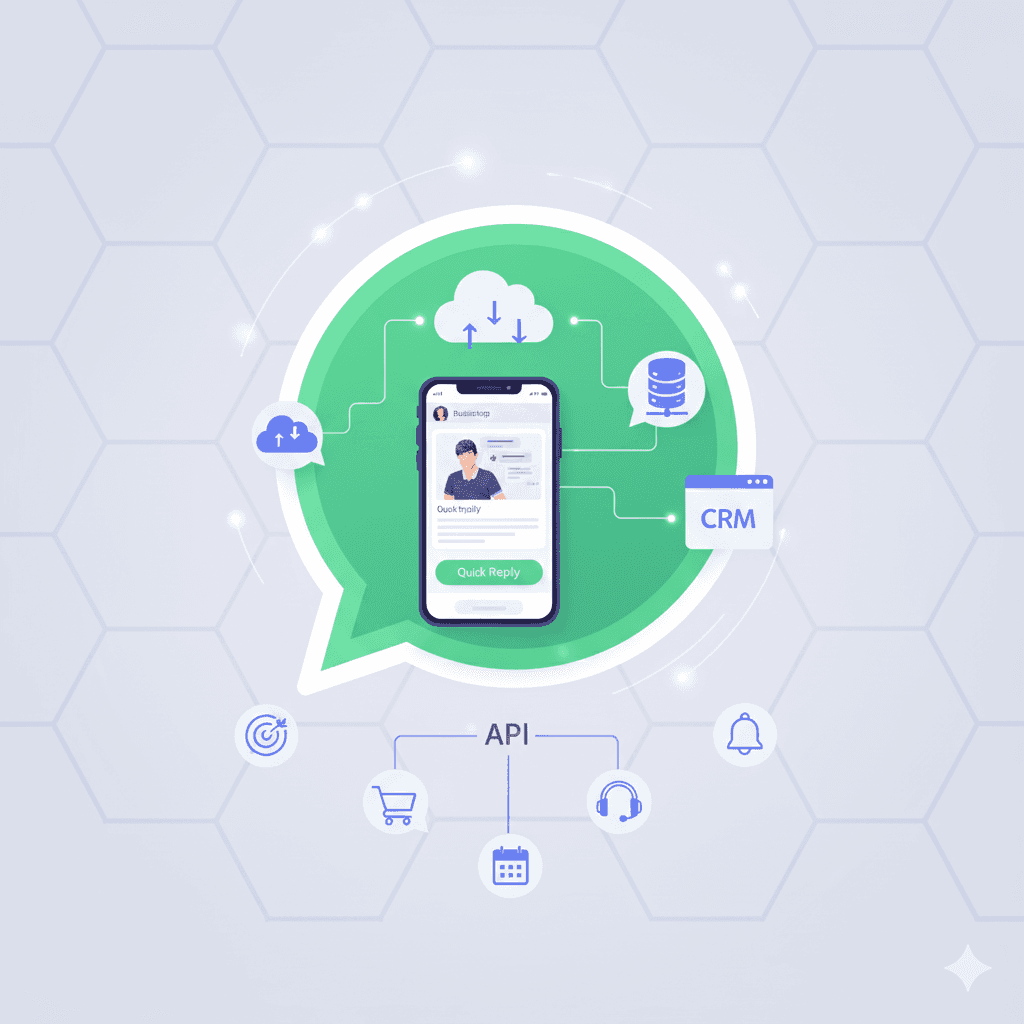
    By combining the official WhatsApp Business API, native CRM applications, and conversational AI from Cekat.ai, enterprises can architect an automated, data-driven retention engine at scale.

    This guide provides a comprehensive overview of leveraging WhatsApp as a primary customer retention channel, actionable implementation steps, and the role of conversational AI in maximizing Customer Lifetime Value (CLV).

    Why Customer Retention via WhatsApp Is Indispensable

    Rising digital advertising costs have driven Customer Acquisition Cost (CAC) to record highs. Industry benchmarks consistently prove that retaining existing customers is 5 times more cost-effective than acquiring new buyers from scratch. Explore foundational frameworks in our guide on how to increase customer retention.

    With over 2.5 billion global active users, WhatsApp represents an optimal channel because consumers prefer resolving inquiries inside rapid, conversational messaging threads.

    Connecting the WhatsApp Business API with an integrated CRM unlocks vital commercial capabilities:

    • Capturing and updating customer behavioral properties automatically.
    • Dispatching segmented outbound campaigns that adhere to how to broadcast on WhatsApp without getting banned.
    • Managing automated customer reactivation sequences and loyalty incentives systematically.

    Strategic Advantages of WhatsApp for Customer Retention

    The core advantage of WhatsApp lies in its conversational intimacy and rapid bilateral engagement, creating natural dialogue that helps businesses resolve friction quickly.

    1. Direct Personal Engagement: Inbound messaging threads generate open rates of up to 98%, vastly outperforming traditional email marketing funnels.
    2. Humanized Automation: Deploying WhatsApp AI chatbots allows brands to resolve recurring inquiries instantly while preserving natural conversational warmth.
    3. Real-Time Feedback & Resolution: Customers share feedback immediately, enabling support teams to execute rapid interventions using proven sales follow-up techniques.
    4. Data-Driven Personalization: Past purchase patterns enable businesses to deliver timely reorder suggestions and consultative upselling recommendations.

    Actionable Strategies to Drive Retention via WhatsApp

    To maximize repeat purchase frequency and brand loyalty, structure your customer retention workflows around these four practical pillars:

    1. Segmented Re-Engagement Broadcasts

    Dispatch targeted outbound campaigns strictly to refined audience cohorts using customer segmentation software:

    • Schedule automated replenishment reminders (reorder alerts) when consumable products approach replenishment cycles.
    • Deliver exclusive birthday incentives and anniversary discounts.
    • Announce new variant drops tailored to verified historical category preferences.

    2. Integrated In-Chat Loyalty & Reward Workflows

    Modern loyalty programs no longer require standalone apps or physical cards. Using integrated messaging workflows, buyers can:

    • Check accumulated reward balances directly inside WhatsApp.
    • Receive automated milestone notifications upon unlocking VIP membership tiers.
    • Redeem digital vouchers instantly during subsequent purchases.

    3. Automated Post-Purchase Follow-Ups

    Following transaction completion, activate automated follow-up workflows to nurture buyer satisfaction:

    • Dispatch tracking links, receipt confirmations, and onboarding check-ins.
    • Trigger automated customer satisfaction surveys (CSAT / NPS).
    • Provide essential product care guidelines and usage tutorials.

    4. Unified Omnichannel Customer Support

    Continuous support coverage ensures no inquiry is neglected. Utilizing an integrated omnichannel application synchronizes customer threads across WhatsApp, Instagram DMs, and live chat into a single unified workspace.

    The Power of AI & CRM in Retention Management

    Without centralized data telemetry, messaging campaigns risk becoming uncoordinated broadcasts. AI and CRM integration bridges the gap between raw messaging and predictable retention:

    • Predictive Churn Detection: Machine learning algorithms evaluate engagement pacing to flag dormant accounts, triggering proactive re-engagement workflows before churn occurs.
    • Seamless Multi-Step Automations: Deploying workflow automation synchronizes order tracking, fulfillment alerts, and ticket escalation without manual intervention.
    • 360-Degree Customer Intelligence: Centralizing interaction histories gives sales and support teams full behavioral context before initiating conversations.

    Frequently Asked Questions (FAQ)

    1. How can businesses drive customer retention via WhatsApp?

    Deploy the official WhatsApp Business API to dispatch segmented broadcasts, activate automated post-purchase check-ins, manage in-chat reward programs, and integrate conversations with a centralized CRM to deliver personalized experiences.

    2. Why is WhatsApp more effective for customer retention than email?

    WhatsApp delivers open rates of up to 98% and substantially faster response times because messages land directly in personal chat threads rather than cluttered email promotion or spam folders.

    3. How can businesses prevent retention messages from being marked as spam?

    Ensure all contacts have provided explicit opt-in consent, maintain a disciplined broadcast cadence (1–2 targeted messages per month per cohort), segment contacts by verified purchasing behavior, and include clear value propositions.

    Scale Customer Retention with Cekat.ai

    WhatsApp has evolved into a high-impact conversational revenue engine designed for long-term customer relationship management. Powered by the WhatsApp Business API, CRM integrations, and AI Agents from Cekat.ai, your organization can automate customer retention workflows while preserving authentic human connection.

    Explore our flexible subscription tiers on our pricing and subscription page or consult directly with our growth solutions team today.

  • AI Agent for Retail: From Stock Questions to Customer Loyalty Programs

    In the retail business, many sales opportunities are lost not because customers aren’t interested, but because the response comes too late, stock isn’t confirmed quickly enough, promos don’t get communicated, or old customers never get reactivated. For retail store owners and retail managers, this problem shows up in daily operations: WhatsApp chats pile up, Instagram DMs go unanswered, questions come in from the website outside working hours, while the store team still has to serve customers who walk in.

    This is where an AI agent for retail stores handling stock and customer loyalty becomes increasingly relevant. Not just as a chatbot that answers messages, but as a system that helps stores manage the customer journey from the first question all the way to repeat purchases. For both offline and online retail, an AI agent can become a customer service layer that makes the business feel more responsive, personal, and consistent — like enterprise-grade customer service.

    AI for Retail Is No Longer Just Auto-Reply

    Retail has a unique character. Customers often come with fast needs: asking about stock in a certain size, a certain color, the nearest branch, today’s promo, how to claim points, or when their favorite product will be restocked. If the answer is late, customers can immediately move to another store.

    AI for retail helps businesses handle conversations like these automatically, while still keeping them tied to the business process. When customers ask via WhatsApp, Instagram, or the website, an AI agent can understand customer intent, give an answer based on available data, and then guide the customer to the next step: checking product availability, claiming a promo, signing up for the loyalty program, or making a purchase.

    At Cekat.AI, we don’t see customer conversations as just incoming chats. Every chat is a demand signal. If managed well, a chat can become a source of insight, conversion, retention, and repeat orders.

    Product Stock Chatbot for Answering Customer Questions Faster

    One of the most common questions in retail is about stock. “Is size M still available?” “Is black in stock?” “Does the Jakarta branch have this item?” “Can this product be shipped today?” Simple questions like these often seem small, but if not answered quickly, the impact hits sales directly.

    With a product stock chatbot, an AI agent can help customers get availability information faster. For online stores, customers can ask via WhatsApp or the website before checkout. For offline stores, customers can check branch stock before coming in person. This makes the shopping experience more efficient and reduces friction before a purchase.

    Operationally, the retail team no longer has to answer repetitive questions one by one. Admins can focus on conversations that need more complex handling, such as complaints, negotiations, or customers with potential for a large purchase. This is the important shift: an AI agent doesn’t replace the team — it helps the team work in a more scalable way.

    Consistent Retail Promo Information Across WhatsApp, Instagram, and the Website

    Retail promos often fail to reach their full potential not because the offer isn’t attractive, but because the information isn’t communicated consistently. A customer asks on Instagram and the admin answers in one format. Another customer asks on WhatsApp, but the admin forgets to mention the promo’s terms. On the website, the information may not be updated yet.

    An AI agent helps make retail promo information tidier across multiple channels. Customers can ask about discounts, bundles, vouchers, free shipping, or member-only promos, and get a consistent answer aligned with the campaign currently running. For retail managers, this matters because a campaign’s success depends not only on the promotional material, but also on how the conversation is executed once a customer shows interest.

    With Cekat.AI, businesses can manage cross-channel conversations in one more structured flow. WhatsApp, Instagram, and the website no longer run in isolation. All of them become part of a customer journey that can be read, responded to, and followed up on in a more measurable way.

    Automated Loyalty Programs to Drive Repeat Orders

    Retail can’t rely on new customers alone. Healthier growth comes from customers who come back to buy again, recommend the store, and feel they have a reason to keep engaging with the brand. This is where an automated loyalty program plays a strategic role.

    An AI agent can help customers check their points, understand how to earn rewards, learn about member-only promos, or receive reminders to redeem points before they expire. This process turns the loyalty program from a passive feature into an active part of the customer experience.

    For example, a customer who just finished a transaction can automatically receive information about how many points they earned. When their points are enough to redeem, the AI agent can send a relevant notification. When there’s a member-only campaign, customers can receive a message that feels personal, not a generic broadcast.

    For retail store owners, the impact isn’t just that customers feel looked after. A loyalty program that runs automatically helps open up repeat order opportunities, increase retention, and extend the customer’s relationship with the brand.

    Restock Notifications to Capture Unconverted Demand

    In retail, being out of stock doesn’t always mean permanently losing a sale. The problem is, many stores don’t have a tidy system for recording which customers showed interest in a product that was out of stock. As a result, once the product is restocked, the team doesn’t know who to reach out to again.

    An AI agent can help turn the “out of stock” moment into a follow-up opportunity. When a customer asks about a product that isn’t available, the AI agent can record the customer’s interest, save their contact information, and then send a restock notification once the product is available again.

    This scenario matters for fashion stores, cosmetics, electronics, home goods, and specialty stores. Customers who have already shown high intent aren’t just left to disappear. They enter a tidier workflow, giving the retail team a much better chance of converting delayed interest into a transaction.

    Birthday Rewards That Make Customers Feel Remembered

    Personalization doesn’t have to be complicated. For retail, something as simple as a birthday reward can be an effective way to maintain the relationship with customers. But if done manually, it’s easy to miss. Customer birthday data might be scattered, the admin might forget to send the message, or the campaign might only run sporadically without consistency.

    With an AI agent and automation, birthday rewards can be sent automatically through the channel closest to the customer, such as WhatsApp. The message can include a birthday greeting, a special voucher, product recommendations, or an invitation to visit the physical store.

    This approach makes customers feel remembered, while also giving them a natural reason to shop again. For retail, a birthday reward isn’t just a service gesture — it’s part of a retention strategy that can be run more consistently.

    Offline and Online Retail Need Connected Customer Service

    Many retailers today are no longer purely offline or purely online. Customers might see a product on Instagram, ask about it via WhatsApp, check the website, and then come into the store. Conversely, a customer who visits the store in person might want to receive promo updates via WhatsApp after their transaction.

    The challenge is, a customer journey like this is often disconnected. Customer data isn’t saved neatly, conversation history isn’t readable, and follow-up depends on the admin’s own initiative. This is where an AI agent for offline and online retail businesses becomes important.

    Cekat.AI helps businesses see conversations as part of a bigger system: omnichannel, CRM, automation, campaign workflow, and customer journey. So customers aren’t treated as a new chat every time they switch channels. A business can build service that’s more consistent, from stock questions all the way to the customer loyalty program.

    Compete with Enterprise-Grade Customer Service Without Complex Structure

    In the past, a fast, personal, and integrated customer service experience was something only big companies could pull off. They had large teams, complex CRM systems, and mature service workflows. But small and mid-sized retailers now need to deliver that same standard of service too, because customer expectations have changed.

    Customers don’t compare your store only against competitors your size. They compare your shopping experience against big brands, marketplaces, and digital services that always respond fast. That’s why retail needs a system that helps a small team look more prepared, more responsive, and more organized.

    An AI agent lets retailers build that experience without massively increasing operational load. Stock questions get answered faster. Promos get explained more consistently. The loyalty program runs more actively. Restocks aren’t just waited for — they’re announced. Birthday rewards don’t depend on an admin’s memory — they run automatically.

    Build Customer Loyalty with Cekat.AI

    A strong retailer isn’t just one with great products. A strong retailer is one that can keep customer conversations alive, relevant, and leading toward a long-term relationship. From automated product stock checks and promo information to loyalty point programs, restock notifications, and birthday rewards, an AI agent helps retail businesses turn daily interactions into a more measurable process.

    With Cekat.AI, offline and online retail stores can build a customer service system that’s faster, more connected, and more scalable across WhatsApp, Instagram, and the website. Not just replying to chats, but managing the customer journey from the first intent all the way to the next repeat order.

    Build customer loyalty with Cekat.AI.

  • Saving Time and Cost: Automating Initial Chat Intake and Lead Qualification with Cekat.AI

    Saving Time and Cost: Automating Initial Chat Intake and Lead Qualification with Cekat.AI

    In today’s competitive service business landscape, speed and efficiency in responding to prospective customers are no longer just a nice-to-have, they are a critical factor for staying in business. Many companies still rely on manual processes to respond to initial questions and qualify leads, which often consumes a great deal of time, effort, and money. Every delayed interaction has the potential to reduce conversion opportunities and damage the customer experience. On top of that, sales teams often face a heavy workload, having to filter out unpromising leads and handle repetitive questions that could actually be automated. This is where Cekat.AI comes in as a smart solution, allowing service businesses to save hundreds of work hours and millions of rupiah in managing initial inquiries and lead qualification, while keeping communication with prospective customers consistent and professional.

    Challenges Service Businesses Face in Managing Leads

    Service businesses have specific characteristics that make the lead qualification process more complex compared to product-based businesses. Some of the main challenges include:

    1. Fast Response to Customer Questions
      Prospective customers usually reach out to a business to get information about services, pricing, schedules, or procedures. A slow response can push them to look for alternatives, while the same questions are often repeated by many prospects. This creates a heavy workload for the customer service team and reduces operational efficiency.

    2. Accurate Lead Qualification
      Not every prospective customer has needs or financial capacity that matches the services offered. Manually filtering relevant prospects takes time and risks missing potential leads if information isn’t recorded properly. Failure to qualify leads properly can also result in suboptimal resource allocation.

    3. High Operational Costs
      Manually managing inquiries and lead qualification means a business has to add customer service or sales staff, pay salaries, and cover training costs. The more interactions that need to be handled, the higher the costs incurred, without any guarantee of a significant increase in conversions.

    According to a Salesforce report, 79% of customers expect a fast response from businesses, and a delay in responding can reduce conversion opportunities by up to 60%. This shows that the effectiveness of the initial interaction is a critical factor in retaining leads and increasing revenue.

    How Cekat.AI Changes the Way Businesses Manage Leads

    Cekat.AI is an AI platform specifically designed for service businesses. This platform can not only answer prospective customers’ initial questions quickly and accurately, but can also perform automatic lead qualification, allowing the sales team to focus on high-quality leads. Here’s a detailed look at its features and benefits:

    1. Automating Initial Chat Intake

    Cekat.AI’s initial chat automation feature allows businesses to give instant answers to customer questions. This AI can understand the context of the conversation and provide responses that match the customer’s needs. Its key benefits include:

    • Time Efficiency: With AI handling initial chats, the customer service team can save hundreds of work hours per month. Customers don’t have to wait long to get the answers they need.

    • Consistent Communication: The answers given are always accurate and aligned with business standards, reducing the risk of human error or incomplete information.

    • Scalability: Businesses can serve many prospects at once, even when the volume of questions spikes dramatically, without needing to add staff.

    With this approach, service businesses can maintain service quality while increasing customer satisfaction from the very first interaction. This matters because a positive initial interaction can increase the likelihood that a prospect moves on to the purchase stage.

    2. Automatic Lead Qualification

    One of the biggest challenges in a service business is determining which leads are worth following up on. Cekat.AI solves this problem by automatically processing prospective customer data through an interactive chat that:

    • Gathers Key Information: The AI asks key questions such as service needs, budget, location, and time preferences.

    • Assesses Lead Potential: Based on the answers given, the AI evaluates whether the prospect fits the business’s target profile.

    • Filters Out Less Relevant Prospects: Prospects that don’t meet the criteria can be processed differently or archived, so the sales team can focus only on high-value leads.

    The result is high efficiency in the sales process and savings in operational costs, since the sales team’s resources are used optimally on truly promising prospects.

    3. In-Depth Analytics and Insights

    Beyond automation and qualification, Cekat.AI provides detailed analytics reports and insights on lead interactions, question trends, and prospective customer behavior patterns. The benefits of this feature include:

    • Optimizing Offer Strategy: Businesses can adjust their offers and service packages to match market needs.

    • Improving Marketing Effectiveness: Understanding common questions and customer needs helps design more targeted promotional content.

    • Improving Internal Processes: AI insights can be used to identify bottlenecks in the sales process and improve operational efficiency.

    With AI-driven data, business decisions become faster, more accurate, and more evidence-based, minimizing the risk of mistakes and increasing growth opportunities.

    The Added Value of Cekat.AI for Service Businesses

    Implementing Cekat.AI brings several strategic advantages to service businesses, including:

    • Time Savings: Automation reduces manual work and allows the team to focus on more strategic activities.

    • Cost Savings: Reduces the need for additional staff, while optimizing the use of existing resources.

    • Increased Customer Satisfaction: Fast, accurate responses improve the customer experience and business reputation.

    • Higher Conversion Rate: Automatic lead qualification ensures the sales team follows up on high-quality leads, increasing the chances of closing deals.

    • Scalability and Flexibility: AI can be integrated with various communication platforms such as WhatsApp, a website, and social media, without disrupting the business’s existing workflow.

    In service businesses, efficiency and effectiveness in responding to prospective customers are key to maintaining a competitive edge. Cekat.AI enables businesses to save hundreds of work hours and millions of rupiah, while ensuring initial interactions with prospects are handled quickly, accurately, and professionally. With initial chat automation, automatic lead qualification, and AI-driven analytics insights, service businesses not only improve operational efficiency but also strengthen the customer experience and long-term growth opportunities.

    Implementing Cekat.AI isn’t just about technology, it’s a smart strategy for facing market competition, optimizing resources, and ensuring the business stays relevant in an ever-evolving digital era.

    References

    1. Salesforce. State of the Connected Customer. Salesforce Research, 2023.

    2. Harvard Business Review. The Impact of AI on Sales and Customer Service. HBR, 2022.

    3. McKinsey & Company. The Future of Customer Service Automation. McKinsey Insights, 2023.

    4. Google AI Overview Guidelines. AI-Powered Customer Service Solutions. Google, 2024.

  • Billing and Payment Reminder Automation: Reduce Late Payments with AI

    Late payments are often not just a finance problem, but a workflow problem. The invoice has been created but not sent on time. A reminder was planned but forgotten. The customer actually intended to pay, but the billing message got buried in email, chat, or their daily workload.

    For many businesses, overdue payments don’t always happen because the customer refuses to pay. Often, the delay happens because the billing process is still too manual. The finance team has to check invoices one by one, send reminders periodically, adjust the tone of the message, then follow up again when payment still hasn’t come in.

    At Cekat.ai, we see AI-powered payment reminder automation to reduce late payments as an important strategy for keeping business cash flow healthy. With automated payment reminders, invoices can be sent faster, reminders run on schedule, and the finance team can focus on payment cases that genuinely need human intervention.

    Why Are Manual Payment Reminders Often Ineffective?

    Manual payment reminders usually depend on memory and team capacity. When there are only a few invoices, this process might feel safe enough. But as the number of customers grows, the risk of a missed reminder gets bigger. Some invoices haven’t been followed up, some customers haven’t been sent a reminder, and some overdue payments are only noticed well after the due date has passed.

    Another problem lies in communication consistency. A reminder sent too early can feel intrusive. A reminder sent too close to the due date can be too late. A reminder that’s too harsh from the start can damage the customer relationship. On the other hand, a reminder that’s too soft after the payment is overdue can make the billing not feel urgent.

    An effective payment reminder needs the right timing, context, and tone. This is why automation matters. A system can help ensure every customer receives a reminder at the right time, with a relevant message, and a gradual tone escalation based on payment status.

    A More Structured Billing Automation Strategy

    In a more organized workflow, the billing process starts as soon as the invoice is created. After a transaction, subscription, booking, or service is confirmed, the invoice can be sent automatically via WhatsApp or another channel the customer commonly uses. The first message should not immediately feel like harsh collection, but rather a professional confirmation that makes it easy for the customer to pay.

    After the invoice is sent, the system can run automatic reminders based on the due-date timeline. A reminder 7 days before (H-7) can serve as a light, early reminder. A reminder 3 days before (H-3) can start emphasizing that the payment deadline is getting closer. A reminder on the due date (H-0) is used to remind the customer that payment is due today. If payment still hasn’t come in after the due date, the system can activate overdue follow-up with a tone that escalates gradually.

    With this flow, the billing process no longer depends entirely on manual follow-up. The finance team can still monitor payment status, but most of the basic communication can run automatically.

    Automated Payment Reminder Flow with AI

    The payment reminder automation flow can start from invoice creation. Once the invoice is issued, the system sends an automatic message to the customer containing a billing summary, the amount, the due date, and a payment link. If the customer has already paid, the payment status is updated and the reminder stops. If not, the system continues the reminder according to schedule.

    The flow can be illustrated like this:

    Invoice Created → Invoice Sent via WhatsApp → Reminder H-7 → Reminder H-3 → Reminder H-0 → Check Payment Status → If Not Paid, Overdue Follow-Up → If Still No Response, Escalate to Finance Team

    This flow helps businesses keep the payment collection process consistent. Customers get clear reminders, while the finance team doesn’t have to send messages one by one every day.

    H-7 Reminder: A Light, Early Reminder

    The H-7 reminder should be written with an informative, helpful tone. At this stage, the customer isn’t late on payment yet, so the message doesn’t need to sound urgent. The goal is to remind them that the invoice is available and payment can be made before the due date.

    A template that can be used:

    “Hello [Name], we would like to remind you that invoice [Invoice Number] for [Amount] will be due on [Date]. To make the payment process easier, you can pay through the following link: [Payment Link]. Thank you.”

    This message is simple, professional, and gives the customer room to complete the payment without excessive pressure.

    H-3 Reminder: Starting to Build Urgency

    By H-3, the reminder needs to be a bit firmer since the due date is getting closer. The message should still be polite, but should start emphasizing that payment needs to be completed soon so the service, order, or partnership can keep running smoothly.

    A template that can be used:

    “Hello [Name], invoice [Invoice Number] for [Amount] will be due in 3 days, on [Date]. Please make the payment before that date so the service process continues without disruption. Payment link: [Payment Link].”

    At this stage, AI can adjust the message based on context. For example, for B2B customers, the tone can be more formal. For retail customers, the tone can be more concise and conversational.

    H-0 Reminder: Reminder for Today’s Due Date

    The H-0 reminder is the message sent on the due date itself. The goal is to make sure the customer doesn’t miss the payment that day. The message needs to be clear, direct, and include easily accessible payment information.

    A template that can be used:

    “Hello [Name], we would like to remind you that invoice [Invoice Number] for [Amount] is due today. Please complete the payment through the following link: [Payment Link]. If payment has already been made, please disregard this message. Thank you.”

    The line “if payment has already been made” is important for keeping the customer experience positive. It keeps the reminder from feeling accusatory, especially if the payment has already been processed but the system hasn’t updated yet.

    Overdue Follow-Up: Gradual Tone Escalation

    If payment still hasn’t come in after the due date, the workflow can move into the overdue phase. At this stage, the message tone needs to escalate gradually. The first reminder after becoming overdue can still be polite and informative. If there’s still no response, the next message can be firmer. If there’s still no payment, the conversation can be escalated to the finance team.

    Early-stage overdue template:

    “Hello [Name], we notice that invoice [Invoice Number] for [Amount] has passed its due date of [Date]. Please help us complete the payment through the following link: [Payment Link]. If there’s an issue, please let us know so our team can assist.”

    Later-stage overdue template:

    “Hello [Name], we’re following up again that invoice [Invoice Number] is still recorded as unpaid after passing its due date. Please make the payment as soon as possible or contact our team if there is an issue with the payment process.”

    With gradual tone escalation, businesses can maintain firmness without immediately damaging the customer relationship. AI helps send messages according to the phase, while a human steps in when a case needs negotiation, clarification, or a special decision.

    Payment Integration Makes Reminders More Accurate

    Payment reminder automation becomes far more effective when connected to the payment system. Without integration, a reminder can still be sent even though the customer has already paid. This can create a poor experience and make the customer feel unnoticed.

    With payment system integration, the workflow can read invoice status automatically. If payment has been received, the reminder stops. If payment hasn’t come in, the reminder keeps running. If a payment fails, the system can send re-direction or forward the conversation to the finance team.

    This integration is important for businesses with high transaction volume, such as subscription services, B2B services, clinics, education, rentals, distributors, and other invoice-based businesses. The more invoices a business manages, the greater its need for a system that can read payment status in real time.

    The Impact of Payment Automation on Overdue Rates

    Businesses that use automated payment reminders can significantly reduce overdue payments, even by around 60-70% if the workflow is well designed. This impact usually comes from three things: reminders are sent more consistently, customers get clearer payment information, and the finance team can handle genuinely problematic cases faster.

    However, the best results don’t come from automation alone. The message strategy also has to be right. Reminders must be sent at the right time, not too often, not too harsh from the start, and should still make it easy for the customer to pay. The payment link must be clear, the amount must be accurate, and the message must state the due date specifically.

    When these elements work together, automated payment reminders not only reduce overdue payments but also improve the overall payment experience.

    Cekat.ai for More Practical Payment Automation

    Cekat.ai helps businesses build payment automation from the conversation channel closest to the customer, including WhatsApp. Invoices can be sent automatically, reminders can run based on the due-date timeline, and overdue follow-up can be built with a more structured tone escalation.

    With AI and workflow automation, businesses can set up payment communication flows without having to send messages manually one by one. When a customer responds, AI can help read the context, answer basic questions, or forward the conversation to the finance team if there’s a payment issue.

    For business owners, this helps keep cash flow more stable. For finance teams, this reduces repetitive work and makes the payment collection process easier to monitor. For customers, this creates a payment experience that’s clearer, faster, and less confusing.

    A Payment Reminder Is Not Just About Collecting, It’s About Protecting Cash Flow

    Effective billing is not just about reminding customers to pay. More than that, a payment reminder is part of cash flow management. The more organized the reminder process, the smaller the risk of late payment, the lighter the burden on the finance team, and the healthier the business’s cash flow.

    With AI-powered payment reminder automation to reduce late payments, businesses can turn the payment collection process from reactive into proactive. Invoices are sent on time, reminders run automatically, overdue cases are handled faster, and escalation to a human is only done for cases that genuinely need special attention.

    If your business wants to reduce overdue payments without adding to the finance team’s workload, it’s time to build a smarter payment automation workflow.

    Reduce overdue payments with Cekat.ai’s payment automation.

  • When Should a WhatsApp Chat Be Escalated to a Human?

    When Should a WhatsApp Chat Be Escalated to a Human?

    A hybrid AI–human flow on WhatsApp API isn’t just about automation — it’s about making the right decision. This article covers when, why, and how a WhatsApp chat needs to be escalated from AI to a human agent so that service quality, customer satisfaction, and operational efficiency are all maintained.

    Why Escalation Is a Critical Issue on WhatsApp API

    A common assumption businesses make is: the more chats handled by AI, the more efficient operations become. The problem is, this assumption isn’t always true. AI does excel at repetitive questions, but WhatsApp is a personal channel, not just a ticketing system.

    If escalation isn’t properly managed:

    • AI may answer out of context (hallucination).

    • Customers feel like they’re “talking to a machine” when they actually need empathy.

    • SLAs look achieved on paper, but fail in terms of experience.

    In other words, escalation isn’t an AI failure — it’s part of a mature system design.

    What Does Escalation Mean on WhatsApp API?

    In the context of WhatsApp API, escalation is the process of human handover:
    transferring a conversation from AI/bot to a human agent based on specific rules.

    Unlike conventional live chat, escalation on WhatsApp must be:

    • Real-time and contextual

    • Non-disruptive to the conversation flow

    • Still compliant with the 24-hour window rule

    An Assumption Worth Testing: Does AI Always Know When to Stop?

    No. AI doesn’t naturally understand the limits of its own competence. Without explicit rules, AI will keep trying to answer — even when its confidence in the answer is low.

    This is where escalation rules become critical.

    Escalation Rules Every WhatsApp API Setup Must Have

    1. Intent Detection Failure

    If the user’s intent:

    • Can’t be classified

    • Conflicts between multiple intents

    • Keeps changing repeatedly within a single session

    then the chat should be escalated immediately.

    Why?
    Intent errors are the root cause of irrelevant answers. Letting AI “guess” only makes the UX worse.

    2. Negative Sentiment Detection

    AI needs to monitor for:

    • An angry tone

    • Frustration

    • Churn threats (“I want to cancel,” “this is the last time”)

    Once sentiment crosses a certain threshold, human handover must be triggered automatically.

    Important note:
    Delaying escalation in an emotional situation only increases the burden on CS further down the line.

    3. Explicit Requests to Speak with a Human

    Phrases like:

    • “I want to talk to CS”

    • “Please connect me to an admin”

    Need no further analysis.
    Escalation must be instant, with no additional clarification from AI.

    Refusing or delaying such a request is a serious UX mistake.

    4. High-Risk Use Cases

    AI must not make the final decision on:

    • Transaction disputes

    • Refunds & chargebacks

    • Sensitive customer data

    • Financial or legal decisions

    Here, escalation isn’t optional — it’s a design requirement.

    5. Conversation Loops & Repetitive Answers

    If AI:

    • Repeats the same answer

    • Makes no progress

    • Forces the user to repeat their question

    Then the system must read this as a failure signal, not just a “long chat.”

    A Healthy Hybrid AI–Human Flow

    A more accurate approach is:

    • AI as a filter & router

    • Humans as the resolvers of complex cases

    AI handles:

    • FAQs

    • Order status

    • Initial validation

    Humans handle:

    • Emotion

    • Negotiation

    • Non-standard decisions

    With this flow, AI doesn’t “replace” CS — it increases their capacity.

    The Impact of Proper Escalation on SLA & Cost

    A common counterargument:
    “Escalating too quickly raises CS costs.”

    In reality:

    • Delayed escalation = longer chat duration

    • Longer duration = higher agent load

    • Higher load = worse SLA

    Timely escalation actually reduces long-term costs.

    Escalation on WhatsApp API isn’t a sign that AI has failed — it’s an indicator of mature system design.
    Without clear escalation rules — based on intent, sentiment, risk, and conversation behavior — AI just becomes a new bottleneck wearing the face of automation.

    A healthy hybrid AI–human flow ensures:

    • AI operates within its limits

    • Humans focus on what truly requires a human

    Build Smart AI Escalation with Cekat.AI

    Cekat.AI helps businesses build precise WhatsApp API escalation rules, not just a generic chatbot. With an AI-first approach combined with human handover based on intent and sentiment detection, Cekat.AI ensures every chat is handled by the right entity — AI when it’s efficient, humans when they’re needed.
    It’s time to turn escalation from an operational problem into a service advantage.

  • Scaling WhatsApp API for High Traffic

    Scaling WhatsApp API for High Traffic

    Executive Summary & Value Proposition

    • Anti-Downtime Architecture: Prevents delivery failures, request timeouts, and rate limit bans during sudden traffic bursts.
    • Priority-Based Queue Management: Separates critical message traffic (OTPs & payment receipts) from bulk promotional broadcasts.
    • Adaptive Concurrency & Retries: Dynamically adjusts worker threads using exponential backoff patterns to maintain API stability.
    • Revenue & SLA Protection: Guarantees that all customer transactions, alerts, and conversations powered by an AI Agent deliver reliably 24/7.

    As digital enterprises grow, the WhatsApp Business API becomes the core communication backbone—handling transaction notifications, customer support, and AI-driven workflows. However, many engineering teams mistakenly assume that WhatsApp API integration is purely plug-and-play. At low volumes, this approach works; at high traffic levels, the assumption collapses.

    Scaling the WhatsApp API isn’t just about adding more servers. The real engineering challenge lies in queue management, concurrency control, load handling, and system resilience against sudden messaging spikes. This article covers the technical and architectural strategies required to keep your WhatsApp API reliable and cost-effective at enterprise scale.

    Why Is Scaling the WhatsApp API a Major Challenge?

    Before implementing solutions, it’s essential to test common assumptions made at the system design level:

    • “The WhatsApp API automatically auto-scales capacity.”
      Not entirely true. While Meta’s cloud infrastructure is massive, rate limits, concurrency caps, and throughput limits must be managed independently from your application side.
    • “Bottlenecks only occur during extreme traffic.”
      In reality, outages frequently happen at moderate traffic levels when systems lack modular queuing—such as during marketing pushes, flash sales, or bulk OTP dispatches.
    • “Scaling simply means adding more worker nodes.”
      Without proper queue architecture and concurrency bounds, adding worker nodes accelerates failure rates (causing thread overload, message drops, and retry storms).

    Conclusion: scaling the WhatsApp API is a system architecture problem, not just a hardware capacity issue.

    The 3 Engineering Pillars for High-Traffic WhatsApp API Scaling

    Architecture Pillar Primary Function Impact Without Optimization
    1. Queue Management Buffers traffic bursts and enforces message priority dispatching. Server request timeouts, dropped payloads, and unordered messages.
    2. Concurrency Control Manages parallel processing threads dynamically against Meta rate limits. Temporary API rate limit bans (HTTP 429) and spike error rates.
    3. Load Handling & Circuit Breaker Isolates downstream faults to sustain steady throughput. Complete server crashes, lost payload logs, and live-chat outages.

    The Role of Queue Management in WhatsApp API Scaling

    A message queue acts as a buffer between inbound request spikes and downstream execution limits. Without proper queuing, request timeouts and processing failures multiply rapidly during peak hours.

    Best practices for effective queue engineering include:

    1. Queue Segmentation (Priority Queuing):
      • OTPs & Critical Alerts → High-Priority Queue (processed instantly in < 2 seconds).
      • Marketing & Promotional Broadcasts → Low-Priority Queue (processed gradually).
    2. Idempotency Enforcement: Applying unique idempotency keys to every message payload to prevent duplicate deliveries during retries.
    3. Backpressure Handling: When Meta API response latency slows down, the queue absorbs the pressure without crashing your primary backend.

    High-Traffic WhatsApp API Architecture Diagram

    flow

    Concurrency: Balancing Speed with System Stability

    Concurrency refers to the number of message dispatch threads running in parallel. If set too low, your queue backs up. If set too high, you exceed Meta’s API thresholds, triggering account bans.

    Recommended concurrency handling strategies include:

    • Dynamic Concurrency: Real-time worker thread scaling based on live latency and error feedback loops.
    • Rate-Aware Worker Pools: Workers temporarily pause dispatches automatically when approaching API rate limit ceilings.
    • Adaptive Retry Strategy: Employing an exponential backoff algorithm (increasing delays between retries) to avoid retry storms.

    The Business Cost of Poor Architecture Scaling

    Infrastructure scaling failures directly impact business revenue and customer retention:

    • Delayed OTPs: Users fail to authenticate, causing checkout abandonments and customer churn.
    • Failed Transaction Alerts: Erodes customer trust in your service reliability.
    • Stalled Marketing Campaigns: Promotional budgets are wasted as limited-time offers miss their window.
    • CS Queue Overloads: Support agents in your CRM platform become overwhelmed with technical complaints.

    Scale Your WhatsApp API Infrastructure with Cekat.ai

    Cekat.ai provides enterprise-ready WhatsApp API infrastructure designed for scale. Featuring smart queue management, adaptive concurrency algorithms, workflow automation, and seamless AI agent integrations, Cekat.ai ensures your messaging platform remains rock-solid during peak traffic surges.

    Scale your WhatsApp Business API reliably with Cekat.ai.


    Frequently Asked Questions (FAQ)

    1. Why does a WhatsApp API system need Queue Management?

    Queue Management acts as a buffer during traffic spikes. Without a queue, your primary server can crash or time out by attempting to process more parallel requests than the API or database can handle.

    2. What is Exponential Backoff in WhatsApp message dispatches?

    Exponential Backoff is a retry strategy where the system increases the wait time exponentially between consecutive failed message attempts, preventing server overload (retry storms) on API endpoints.

    3. How does Cekat.ai handle high-volume bulk messaging (burst traffic)?

    Cekat.ai uses Queue Segmentation and dynamic concurrency limits. Time-sensitive transactional messages (like OTPs) receive high-priority routing, while marketing broadcasts process smoothly in the background without degrading system stability.

    4. What are the throughput limits for the WhatsApp Business API?

    Throughput limits depend on your Meta WhatsApp Business API account tier (ranging from 80 messages/second to enterprise tiers). Cekat.ai manages infrastructure throughput automatically to stay within safe Meta rate limits.


  • How to Avoid Spam Flags on WhatsApp API

    How to Avoid Spam Flags on WhatsApp API

    Executive Summary & Value Proposition

    • Account Reputation Protection: Prevents quality rating downgrades, messaging limit caps, and permanent Meta account suspensions.
    • Transparent Consent & Opt-In: Ensures every outbound campaign complies with official Meta policy via clear user consent and easy opt-out paths.
    • Engagement-Driven Mitigation: Leverages reply rate tracking and AI Agent sentiment analysis to maintain natural dispatch patterns.
    • Segmentation & Throttling Controls: Regulates dispatch pacing to prevent customers from feeling bombarded.

    Adopting the WhatsApp Business API opens massive opportunities for enterprises to build direct, fast, and personalized customer relationships. However, a common misconception persists: as long as you use the official API, your messages are 100% immune to spam flags. This is factually incorrect.

    Meta evaluates business account health not just by official API status, but primarily by dispatch behaviors and user feedback signals. Triggering spam flags leads to messaging rate limit caps, quality tier downgrades, and permanent account bans. Understanding Meta’s spam policy is a vital long-term business strategy.

    What Is a Spam Flag on the WhatsApp API?

    A spam flag is a negative quality signal generated when Meta’s automated algorithms or direct user reports flag your business messages as irrelevant, intrusive, or unwanted. Detection is heavily behavior-based rather than relying solely on static rules.

    Many businesses assume that an approved message template guarantees delivery safety. In reality, template approval is merely an initial policy check. True evaluation occurs when real users interact with your messages.

    The 4 Pillars of WhatsApp API Spam Policy

    Policy Pillar Meta Evaluation Focus Recommended Best Practices
    1. Consent & Opt-In Explicit user permission prior to receiving broadcasts. Implement clear opt-in touchpoints & simple “STOP” opt-out mechanisms.
    2. Message Relevance Contextual alignment with recent user actions. Dispatch trigger-based notifications aligned with user lifecycle stages.
    3. Engagement Signals Reply rates, click-through rates, and block metrics. Use an integrated CRM system to purge inactive contact lists.
    4. Template Quality Copywriting tone, CTA placement, and brand identification. Avoid overly aggressive sales language, ALL-CAPS, or misleading claims.

    1. Explicit Consent & Clear Opt-In

    User consent is not a mere legal formality. Businesses must ensure customers fully understand what type of messages they will receive. Avoid ambiguous bundled opt-ins and always provide a straightforward opt-out mechanism.

    2. Message Relevance & Timing Context

    Even legitimate messages are perceived as spam if sent without proper timing context. For example, blasting a promotional offer to a customer who currently has an open technical complaint ticket will trigger immediate negative feedback.

    3. Engagement Rates as Quality Signals

    Meta continually measures user engagement metrics including open rates, response rates, and block frequencies. Low response rates combined with rising block rates automatically degrade your account quality rating.

    4. Contextual Message Templates

    Every WhatsApp broadcast template must clearly state why the recipient is receiving the message (e.g., referencing a recent purchase, account update, or explicit inquiry).

    Actionable Strategies to Prevent Spam Flags

    • Strict Contact Segmentation: Organize customer lists within your omnichannel application based on interaction history rather than blasting unsegmented contact lists.
    • Paced Dispatching (Throttling): Regulate message dispatch intervals using workflow automation to mimic natural communication traffic.
    • Routine Campaign Audits: Continuously monitor response analytics. If engagement metrics decline, immediately refine your template copywriting.

    Build Safe and Sustainable Messaging with Cekat.ai

    Avoiding spam flags on the WhatsApp API is fundamentally about building long-term trust with your audience. Every message sent shapes your brand reputation across customer perceptions and Meta’s compliance algorithms.

    Cekat.ai empowers enterprises to build compliant, engagement-driven WhatsApp API strategies optimized for user experience (UX). Safeguard your WhatsApp messaging operations with Cekat.ai.


    Frequently Asked Questions (FAQ)

    1. Why can official WhatsApp API messages still get flagged as spam?

    Even on official API endpoints, Meta evaluates user reactions. If messages are dispatched without explicit opt-in, lack contextual relevance, or prompt high user block rates, the account will be flagged for spam.

    2. What happens when a WhatsApp API account quality rating drops?

    Consequences include reduced daily messaging tier limits, delayed message deliveries, template rejection penalties, and potential temporary or permanent account suspensions.

    3. How do I build a compliant WhatsApp opt-in process?

    Compliant opt-ins require explicit user actions, such as checking an un-prechecked agreement box on a web form, initiating a chat inquiry directly, or confirming subscription via SMS/email.

    4. How does Cekat.ai mitigate WhatsApp API spam risks?

    Cekat.ai offers integrated CRM list segmentation, message throttling controls, official template management, and real-time engagement analytics to proactively safeguard your account health.


  • Omnichannel Inbox vs AI-First Inbox: Which One Fits Your Business Better?

    Omnichannel Inbox vs AI-First Inbox: Which One Fits Your Business Better?

    Amid rising digital conversation volume—WhatsApp, Instagram, email, live chat, and marketplaces—many businesses feel they’ve “leveled up” simply by using an omnichannel inbox. But an important question often goes untested: is unifying all channels really enough to address today’s customer journey complexity?

    This article breaks down the difference between a traditional omnichannel inbox and an AI-first inbox—not just in terms of features, but in mindset, operational efficiency, and impact on customer experience and business cost.

    What Is an Omnichannel Inbox?

    An omnichannel inbox is a system that combines multiple communication channels (WhatsApp, Instagram, Facebook, email, live chat) into a single dashboard so the CS team doesn’t have to switch between apps.

    A common assumption that’s rarely tested:

    “Once all channels are unified, the customer service problem is solved.”

    In reality, omnichannel only unifies the interface, it doesn’t reduce the cognitive load on the humans behind it.

    Limitations of a Traditional Omnichannel Inbox

    A conventional omnichannel inbox is still heavily human-dependent:

    • Agents must read the entire conversation manually

    • Ticket routing is often based on static rules or manual assignment

    • No context understanding across conversations

    • Hard to scale without adding more agents

    • Response time is heavily dependent on working hours & CS workload

    Put simply: omnichannel makes things tidy, but not necessarily smart.

    What Is an AI-First Inbox?

    An AI-first inbox isn’t just an inbox “with AI added on”—it’s a system designed from the ground up with AI as the core decision-maker, and humans as strategic overseers.

    An AI-first inbox shifts repetitive, heavy work from humans to machines, such as:

    • Auto-intent detection (order, complaint, refund, information)

    • Auto-routing to the right agent or AI agent

    • Automatic conversation summary (no need to read long chats)

    • Context- and history-based suggested responses

    • Prioritization based on urgency & sentiment

    The critical question is no longer:

    “Which channel did this come in on?”
    but rather
    “What does the customer mean, and who (or what) is best suited to handle it?”

    Comparison: Omnichannel vs AI-First Inbox

    Aspect

    Traditional Omnichannel Inbox

    AI-First Inbox

    Main focus

    Channel consolidation

    Automatic understanding & action

    Routing

    Manual / static rules

    AI-based auto-routing

    Agent workload

    High

    Much lower

    Scalability

    More agents = more cost

    Volume grows without linear cost

    Response time

    Human-dependent

    Near real-time

    Conversation insight

    Minimal, manual

    Automatic & structured

    Growth readiness

    Limited

    Scale-ready

    Tested logically, omnichannel solves an old operational problem, while an AI-first inbox solves the modern business growth problem.

    Which One Fits SMEs Better?

    Many SMEs assume an AI-first inbox is only for enterprises. This assumption needs correcting.

    SMEs actually benefit the most from an AI-first inbox, because:

    • Small teams — hiring many CS staff isn’t feasible

    • Fluctuating chat volume — hard to schedule manually

    • Owners often jump in directly — AI helps maintain consistency

    An AI-first inbox lets SMEs:

    • Respond quickly without needing to always be online

    • Handle orders, FAQs, and status automatically

    • Focus on sales and core operations

    With the right approach, an AI-first inbox isn’t an added cost—it’s a replacement for expensive operational overhead.

    People Also Ask

    What is an AI-first inbox?

    An AI-first inbox is a conversation management system that uses AI as the core process—from understanding customer intent and determining priority to providing automatic responses or escalation—rather than simply merging communication channels.

    Does an AI-first inbox replace human customer service?

    No. An AI-first inbox reduces repetitive work, not human empathy. Human agents still play a role in complex, emotional, or high-value cases, working with context already summarized by AI.

    An Alternative View: How Long Is Omnichannel Still Relevant?

    An omnichannel inbox is still relevant if:

    • Chat volume is low

    • Question complexity is minimal

    • There’s no plan to scale in the near future

    However, once a business starts growing, omnichannel without AI will quickly become a bottleneck. Not because the technology is bad, but because its design was born from an era before AI became a core competency.

    The Right Question Isn’t “Which Inbox,” but “How Does It Work”

    The omnichannel vs AI-first inbox debate often gets stuck on features. What matters more is how your business will operate going forward.

    • If your goal is just to tidy up channels — omnichannel is enough

    • If your goal is to improve efficiency, speed, and scale — an AI-first inbox is the foundation

    If you want an inbox that doesn’t just receive messages, but understands, prioritizes, and acts automatically, it’s time to switch to the AI-First Inbox from Cekat.ai.

    Cekat.ai is designed to help businesses—from SMEs to enterprises—manage conversations intelligently and efficiently, ready to grow without adding operational complexity.

  • AI Agent Technology as a Productivity Driver for Customer Service and Sales Teams

    AI Agent Technology as a Productivity Driver for Customer Service and Sales Teams

    Amid the dynamics of the modern business world, one of the biggest challenges many companies face is how to deliver fast, accurate, and relevant service to customers. The digital era has changed customer expectations, with people now demanding instant responses and personalized service regardless of time or location. On top of that, increasingly intense competition requires companies to move more nimbly, more efficiently, and more productively to serve the market. One technology that has emerged as a revolutionary solution to these challenges is the AI Agent. So, how can AI improve the productivity of customer service and sales teams? This article discusses in depth how AI Agent technology has become a key driver of business productivity, particularly in boosting the performance of customer service and sales teams.

    By implementing an AI Agent, companies can automate various operational tasks that previously consumed a lot of team time. Far from being just a tool, an AI Agent can transform the way work is done into something smarter, more structured, and more measurable. Through a combination of artificial intelligence, machine learning, and natural language processing, an AI Agent delivers responsive customer service capabilities while driving stronger sales results. This article also covers the real benefits of using an AI Agent, and why this technology has become an absolute necessity for companies that want to keep growing and competing optimally in the digital era.

    Why Is an AI Agent Important for Business?

    AI Agent technology exists to meet a company’s need to increase service speed while maintaining the quality of customer interactions. In a competitive business environment, customers judge not just the product, but also the service experience they receive. An AI Agent acts as an AI-based virtual assistant that can automatically handle customer questions, requests, and even complaints across various communication channels, from chat, email, and social media to interactive phone systems.

    Besides reducing human workload for routine activities, an AI Agent also allows a business to provide round-the-clock service without any gaps. Another advantage is that an AI Agent continues to learn from customer interactions, so the longer it’s used, the smarter it becomes at understanding customer needs. Companies can tailor an AI Agent to match their brand’s character and customer preferences, so service remains humanlike even though it’s managed by an automated system.

    Based on various industry studies, companies that adopt an AI Agent have proven capable of increasing operational efficiency, saving on customer service costs, boosting sales conversion, and building customer loyalty through fast, consistent service.

    How Can AI Improve Team Productivity?

    Here’s a complete explanation of how an AI Agent can genuinely and measurably boost the productivity of customer service and sales teams.

    1. Automation of Routine and Repetitive Tasks

    Customer service teams are often bogged down with basic, repetitive requests, such as questions about product pricing, order status, shipping information, and account password resets. This reduces the time that could be used to handle complex complaints or create high-value interactions.

    With an AI Agent, companies can automate all of these standard interactions. The AI answers routine questions quickly and accurately without needing human intervention. Besides reducing the customer service team’s workload, this automation also allows them to focus on developing a more strategic approach, such as nurturing customer relationships or handling specific complaints that require human empathy and expertise.

    2. Instant, Non-Stop 24-Hour Response

    One of the biggest challenges in managing customer service is limited working hours. Not every business can operate customer service 24 hours a day, while customers — especially in online businesses — often transact outside conventional working hours.

    An AI Agent provides an instant service solution around the clock without any working-hour limitations. Customers can interact with the system anytime, whether in the middle of the night or on a holiday. This helps reduce the risk of losing sales prospects and increases customer satisfaction, since they don’t have to wait long to get an answer.

    3. Improved Data Accuracy and Service Personalization

    An AI Agent has the ability to collect data from every customer interaction, then analyze it in real time to generate valuable insights. This system not only remembers a customer’s interaction history, but can also detect patterns in customer needs, product preferences, and potential upselling opportunities.

    With this capability, an AI Agent can automatically deliver more relevant product recommendations. For example, a customer who previously often asked about discounted products will automatically receive a notification when a new promotion becomes available. This kind of service personalization contributes to higher sales conversion while also building long-term customer loyalty.

    4. Efficiency in Training New Teams

    Training a new customer service or sales team usually takes a long time and no small amount of money. Besides manual training, new employees also need time to adapt and understand service SOPs.

    With an AI Agent in place, the training process can be sped up, as the AI can serve as an interactive guide for new employees. Employees can learn directly through the AI system about various customer interaction scenarios, problem-handling procedures, and how to give answers that meet company standards. The result: employees become productive faster, with fewer mistakes.

    5. Faster, Data-Driven Decision Making

    An AI Agent doesn’t just work to answer customer questions — it also serves as an analytics system that helps a business make decisions. AI can record customer interaction trends, identify recurring problems, and provide regular reports on the effectiveness of promotional campaigns.

    With accurate insight, companies can adjust their service and marketing strategies faster and more precisely. This kind of speed in data-driven decision-making can provide a significant competitive advantage, especially in fast-moving industries like e-commerce, fintech, and other digital services.

    Benefits of an AI Agent in Boosting Business Productivity

    Adopting an AI Agent in a customer service and sales system delivers a very significant impact, including:

    • Operational Efficiency: Reduced human resource costs for basic, repetitive tasks.

    • Increased Customer Satisfaction: Responsive, fast, personal service makes customers feel more valued.

    • Higher Sales Conversion: AI can accurately detect upselling and cross-selling opportunities.

    • A More Strategic Team Focus: Human staff can be redirected to high-value interactions and customer relationship development.

    • Stronger Business Competitiveness: Faster service and strategic decisions make the company more competitive in the market.

    AI Agent Implementation Case Studies

    Several major companies have directly experienced the benefits of an AI Agent. For example, a national telecommunications company managed to reduce call center workload by 40% after implementing an AI chatbot to handle basic questions. Meanwhile, a mid-sized e-commerce company in Indonesia reported a 25% increase in purchase conversion after using an AI Agent for social media interactions.

    Another example comes from a fintech company, where an AI Agent not only helped answer customer service questions but also automated payment reminders, increasing the collection rate by up to 30%.

    Based on the explanation above, it’s clear that AI Agent technology makes a real contribution to increasing the productivity of customer service and sales teams. Through service automation, personalized customer interactions, real-time analytics data, and easy integration with other business systems, an AI Agent has become a key element in modern business development.

    For companies that want to accelerate business growth while maintaining service quality, adopting an AI Agent is no longer just a passing trend — it’s a long-term strategic necessity. If you’re still asking, “How can AI improve team productivity?”, the answer is clear: an AI Agent brings greater efficiency, speed, accuracy, and profitability to your company.

    Want to make your customer service faster, smarter, and more productive? Find the best AI Agent solution only at Cekat.ai. Build a more efficient, market-leading business with AI technology proven to increase team productivity. Discuss your business needs with Cekat.ai today.

  • WhatsApp API for Large-Scale Customer Service

    WhatsApp API for Large-Scale Customer Service

    Using WhatsApp API for customer service lets businesses handle high conversation volumes in a structured, measurable, and consistent way without sacrificing service quality.

    Why Large-Scale Customer Service Can’t Rely on Regular WhatsApp

    Many businesses start from the assumption that regular WhatsApp is already good enough for serving customers, since it feels familiar and has a high response rate. That assumption only holds at small scale. As chat volume grows, the complexity of customer service changes: SLAs need to be measurable, queues need to be fair, and every conversation needs to be logged. This is exactly where regular WhatsApp falls short — not because its features are bad, but because it simply wasn’t designed for large-scale operations.

    WhatsApp API exists as an enterprise solution — not just a “business version of WhatsApp,” but a technical foundation for building a customer service system that can be scaled, audited, and integrated.

    What Does WhatsApp API Mean in a Customer Service Context?

    WhatsApp API (officially known as the WhatsApp Business Platform) is a communication interface that lets WhatsApp be integrated directly with a business’s internal systems — CRM, ticketing systems, even AI agents.

    Unlike the WhatsApp Business app:

    • It doesn’t depend on a single device or a single admin

    • It supports multiple agents and multiple departments

    • It’s designed for automation, routing, and SLA control

    With the API, WhatsApp is no longer just a chat channel — it becomes part of the customer service architecture.

    SLA: From a Service Promise to a Measurable Metric

    One of the biggest weaknesses of manual chat-based customer service is that SLAs are purely assumption-based. Businesses often feel they’re “already replying fast,” without data to back it up.

    Through WhatsApp API, SLAs can be defined and monitored objectively:

    • First Response Time (FRT): the time to the first reply after a customer sends a message

    • Resolution Time: the duration until the issue is fully resolved

    • Missed Conversation Rate: chats that go unanswered within the SLA window

    Integration with a ticketing system lets every incoming message automatically become a ticket with a clear status, priority, and deadline. Without this, SLA is just operational jargon.

    Queue Management: Managing the Queue, Not Just Replying to Chats

    A common mistaken assumption is that chat doesn’t need a queuing system the way a call center does. In reality, without a queue, WhatsApp-based customer service actually becomes more chaotic.

    WhatsApp API enables:

    • A centralized inbox for all incoming messages

    • Automatic queuing based on arrival time or priority

    • Load balancing so agents don’t get overloaded

    With a queue, customers aren’t “accidentally ignored,” and agents work at a realistic pace. This isn’t just internal efficiency — it’s also a more consistent customer experience.

    Routing: Deciding Who Answers What, and When

    At large scale, not every chat should be answered by the same agent. Routing becomes the key.

    WhatsApp API supports routing based on:

    • Department (billing, technical, sales, customer care)

    • Customer intent (general questions, complaints, transaction follow-up)

    • Operating hours & SLA tier

    Good routing prevents two classic problems: customers getting bounced around, and agents handling issues outside their expertise. Without routing, customer service just looks busy — it isn’t actually effective.

    The Role of AI: Assisting, Not Replacing

    Generative AI is often assumed to be an instant solution for customer service. This is a dangerous assumption if left unchecked. In best practice, AI on WhatsApp API functions as:

    • An intent pre-filter before routing

    • Auto-reply for repetitive questions

    • Conversation summaries for human agents

    AI that isn’t connected to SLA, queue, and routing actually increases the risk of hallucination and inconsistent answers. That’s why AI should be placed as a supporting layer within the system, not as a replacement for the system.

    Integration with a Ticketing System: A Foundation That’s Often Overlooked

    Without a ticketing system, WhatsApp customer service is hard to evaluate. Every conversation should be:

    • Logged as a ticket

    • Given history and context

    • Auditable for service quality

    This integration matters not just for operations, but also for compliance, agent training, and continuous process improvement.

    Implementation Challenges and Risks

    WhatsApp API isn’t an instant solution. Some risks that commonly show up:

    • Technical implementation without a service flow design

    • Focusing on automation without a fallback to humans

    • SLAs defined but never enforced

    Businesses that fail usually aren’t failing because of the technology — it’s because they treat WhatsApp API as merely a “chat tool” rather than a customer service system.

    WhatsApp API for large-scale customer service is a matter of operational discipline, not just technology adoption. Clear SLAs, well-managed queues, and proper routing are the main foundations. Without them, WhatsApp is just a busy channel with no direction. With the right architecture, WhatsApp API can become the backbone of fast, consistent, and scalable customer service.

    Time to Build Customer Service That’s Ready to Scale

    If your business is starting to struggle with chat volume, hard-to-control SLAs, or agents working without a clear system, Cekat.AI helps you build structured WhatsApp API-based customer service — complete with SLA tracking, queue management, intelligent routing, and secure AI integration. Not just replying to messages, but building customer service that’s ready to grow with your business.