Category: Sales

  • How to Register WhatsApp Business API: Official Meta Setup Guide

    How to Register WhatsApp Business API: Official Meta Setup Guide

    Executive Summary & Value Proposition

    • Official Meta Infrastructure: Secures high-volume broadcast dispatches without account ban penalties.
    • Centralized Multi-Agent Operations: Connects a single phone line across team representatives using WhatsApp multi agent software.
    • AI-Powered Workflow Automation: Integrates messaging touchpoints directly with autonomous AI Agents and internal CRM platforms.
    • Verified Brand Authority: Qualifies your business profile for official Meta Green Tick verification.

    Managing high-volume customer communications requires a resilient, enterprise-grade messaging architecture. When daily incoming inquiries exceed the operational capacity of mobile applications, learning how to register whatsapp business api becomes an essential step for scaling business operations.

    Meta’s official platform infrastructure is built specifically for organizations requiring system integrations, automated responses, and multi-agent queue management on a single phone line. Understanding these requirements is essential because architectural differences between WhatsApp API and standard WhatsApp Business impact how backend systems handle automated messaging and enterprise integrations.

    Why Growing Enterprises Adopt the WhatsApp Business Platform

    The WhatsApp Business API connects directly via backend integrations into operational dashboards. This architecture offers support and sales teams full flexibility when handling thousands of daily customer interactions.

    Key operational capabilities include:

    Document Requirements & Business Verification Checklist

    Meta enforces strict screening procedures to ensure all connected API accounts represent legitimate commercial entities.

    Before initiating the application process, assemble the following business verification assets:

    1. Corporate Registration Documents: Tax identification numbers, business registration licenses, or articles of incorporation.
    2. Meta Business Manager Account: An active corporate manager portal ready for organizational verification.
    3. Official Business Website: An operational domain displaying your company name, physical address, domain email, and contact numbers.
    4. Dedicated Phone Number: A phone line not currently registered on consumer or standard WhatsApp applications.

    Step-by-Step WhatsApp Business API Onboarding Workflow

    API onboarding is completed through a structured verification workflow in partnership with an official solution provider.

    1. Select an Official Partner (WhatsApp BSP Indonesia)

    API access cannot be downloaded directly from mobile app stores. Applications must be submitted through an approved whatsapp bsp indonesia providing API gateway access and local integration support.

    2. Configure Meta Business Manager

    Connect your commercial entity to Meta’s management portal. Fill in all corporate profiles, operational contact details, and link your verified domain.

    3. Complete Business Verification (Meta Business Manager Verification)

    Upload corporate registration certificates to complete the meta business manager verification process. Meta audits data consistency across legal documents, company ownership, and active web domains.

    4. Register and Authenticate Business Phone Line

    Input your dedicated business phone number. The system dispatches a one-time security passkey (OTP) via SMS or voice call to verify line ownership.

    5. Submit Outbound Message Templates

    Once verified, create transactional or greeting message templates adhering to official Meta WhatsApp message template guidelines prior to initiating outbound customer conversations.

    Understanding WhatsApp Business API Pricing Models

    The fee structure for whatsapp business api pricing 2026 operates on a 24-hour conversation-based model established directly by Meta.

    Primary cost components include:

    • Meta Session Fees: Per-conversation charges for 24-hour windows, varying by message category (Marketing, Utility, Authentication, or Service) according to standard regional WhatsApp API cost structures.
    • BSP Platform Fees: Monthly software subscriptions covering inbox management, server hosting, and integrated sales crm modules.

    Streamline Your API Registration with Cekat.ai

    Navigating corporate verification and technical API configurations is effortless with Cekat.ai. As a unified communication automation platform, Cekat.ai manages account registration, Meta verification, and backend CRM integration end-to-end.

    Scale your customer support capacity and sales automation with Cekat.ai today.


    Frequently Asked Questions (FAQ)

    How long does the WhatsApp Business API registration take?

    With complete corporate registration documents, Meta Business Manager verification generally completes within 3 to 7 business days.

    Can an existing mobile WhatsApp number be migrated to the API?

    Yes. However, the existing account must be deleted from the mobile WhatsApp application before registering it onto the API platform.

    Does API registration guarantee an official Green Tick badge?

    Official Business Account (Green Tick) status is evaluated separately by Meta based on brand authority. However, having an active API account is a mandatory prerequisite.

    What happens if Meta Business Manager verification is rejected?

    Rejections typically result from name mismatches on legal documents or inactive websites. Cekat.ai assists in auditing files and filing appeals directly with Meta.


  • How to Follow Up on WhatsApp Sales to Close Deals: Complete Guide

    How to Follow Up on WhatsApp Sales to Close Deals: Complete Guide

    Executive Summary & Value Proposition

    • Increased Sales Conversions: Converts hesitant prospects into active buyers using structured messaging frameworks.
    • Sales Team Time Savings: Leverages pre-built scripts and message templates to maintain consistent communication quality.
    • Automated Reminder Scheduling: Dispatches proposal follow-ups periodically without manual spreadsheet tracking.
    • Lead Leakage Prevention: Guarantees every prospect receives timely attention through final purchasing decision stages.

    Acquiring new prospect contact details is only the first step in the sales pipeline. A primary challenge faced by sales representatives is prospects going quiet after receiving pricing quotes or product presentations. Without a structured communication framework, learning how to follow up on whatsapp determines whether a lead converts into revenue or fades away.

    Overly aggressive communication frequently alienates prospective buyers, driving them to block business accounts. Therefore, follow-up strategies must be designed subtly, providing context and focusing on solving buyer problems. Deploying dedicated automated follow up modules allows sales teams to schedule reminders seamlessly without pressuring prospects.

    Why Prospects Stop Replying to Sales Proposals

    Before drafting follow-up messages, it is essential to understand why prospective buyers disengage after receiving initial proposal details.

    Primary reasons for prospect delays include:

    • Operational Distractions: Buyers read messages while working or traveling, then forget to reply.
    • Unclear Value Proposition: Product benefits were not articulated clearly relative to the required financial investment.
    • Vendor Evaluation Processes: Prospects are actively comparing similar proposals from competing providers.
    • Internal Approval Workflows: In B2B sales cycles, purchasing decisions require multi-stakeholder management approvals.

    Drafting High-Converting WhatsApp Sales Follow-Up Scripts

    Effective dispatches must deliver fresh value rather than repeatedly asking for purchasing decisions.

    Here is a structured framework for building results-driven follow-up messages:

    1. Contextual and Personalized Greetings

    Open messages by addressing the prospect by name and referencing specific points from previous discussions. Avoid rigid or overly generic broadcast templates.

    2. Value-Add Content Delivery

    Incorporate case studies, relevant client testimonials, or product guides into your outreach. This approach establishes credibility and demonstrates that your business understands their specific operational challenges.

    3. Low-Friction Open-Ended Questions

    Conclude dispatches with a single, clear question that invites an easy response, such as asking if proposal scope adjustments are required.

    Stage-Based Proposal Follow-Up Templates

    Different conversation stages require tailored messaging strategies based on prospect engagement levels.

    Utilize these stage-specific outreach frameworks for your sales team:

    24-Hour Post-Proposal Outreach

    The primary focus at this stage is confirming that pricing breakdowns were received clearly and opening dialogue for technical questions.

    3-Day Value-Add Outreach

    Deliver supporting materials such as industry reports or cost-efficiency calculators. Managing these nurturing sequences is significantly cleaner when connected to a sales crm platform to track interaction histories per contact.

    Final Break-Up Outreach

    If prospects remain non-responsive after multiple attempts, dispatch a polite closing message asking if evaluation timelines have shifted. This technique frequently prompts immediate replies from interested buyers.

    Determining the Best Time to Send Follow-Up Messages

    Outreach timing significantly impacts response rates. Aligning dispatch schedules with buyer routines increases message open and reply metrics.

    Recommended outreach windows include:

    • 09:00 AM – 10:30 AM: As prospective buyers begin their workday and review mobile notifications.
    • 01:30 PM – 03:00 PM: Following lunch breaks as afternoon schedules settle.
    • Avoid Monday Mornings and Friday Afternoons: Monday mornings are dominated by internal meetings, while Friday afternoons shift focus toward the weekend.

    For sales teams managing large prospect databases, dispatches can be scheduled securely using official wa blast infrastructure without manual rep effort.

    Automate Your Sales Follow-Up Pipeline with Cekat.ai

    Following up with prospects no longer requires manual, one-by-one outreach. With Cekat.ai, you can design personalized, behavior-triggered reminder sequences automatically.

    To deepen your outreach methodology, explore our resource on practical lead follow-up management strategies.

    Automate your WhatsApp sales pipeline and drive higher closing rates with Cekat.ai today.


    Frequently Asked Questions (FAQ)

    How many times should a sales rep follow up with a prospect?

    An ideal benchmark is 3 to 5 follow-up attempts with proportional spacing (e.g., 1-day, 3-day, and 7-day intervals) before sending a final break-up message.

    What should a rep do if a prospect reads a message but does not reply?

    Avoid sending immediate sales pushes. Instead, share value-add content like a brief case study or ask a low-pressure question about their current evaluation challenges.

    Is automated follow-up on WhatsApp safe from account bans?

    Yes, provided dispatches route through official Meta WhatsApp API infrastructure with natural delays and personalized messaging aligned with buyer needs.


  • How to Cut CS Response Times by Up to 80%: Operational Guide

    How to Cut CS Response Times by Up to 80%: Operational Guide

    Executive Summary & Value Proposition

    • Reduced Customer Wait Times: Drops inquiry reply durations from hours to seconds using automated queue routing.
    • Improved SLA Compliance: Guarantees all support inquiries resolve within defined corporate response timeframes.
    • Operational Cost Efficiency: Scales conversation capacity without expanding support team headcount.
    • Higher Customer Retention: Prevents order drop-offs caused by slow messaging response times.

    In high-velocity digital markets, response speed serves as a primary benchmark for evaluating service quality. When prospective buyers wait hours for stock confirmation or payment details, drop-off risks increase significantly. Executing strategies aimed at cutting cs response times is a critical priority for operations managers seeking to maintain buyer satisfaction while increasing sales conversion rates.

    Support queue bottlenecks usually stem from manual workflows. When team members navigate disparate messaging applications independently, resolution durations inflate and create cascading delays across incoming inquiry queues.

    Identifying Core Causes of Support Response Delays

    The first step when designing an automated customer support resolution framework is identifying operational bottlenecks within daily workflow routines.

    Primary operational factors driving slow response rates include:

    • Manual Knowledge Retrieval: Representatives spend excessive time searching internal files for SOP guidelines, product specifications, or warranty rules.
    • Repetitive Query Volume: Incoming queues are dominated by routine questions regarding office hours, store locations, or shipping status tracking.
    • Fragmented Communication Channels: Representatives switch manually across disparate WhatsApp, Instagram, and email inboxes.
    • Uneven Ticket Distribution: Absence of automated routing engines to assign incoming chat loads equitably across active reps.

    Establishing Standard CS Response Time Benchmarks

    To measure operational efficiency accurately, organizations must track key quantitative service metrics.

    Essential support KPIs to monitor include:

    1. First Response Time (FRT)

    This metric measures the duration from initial customer message dispatch to the first response from a business representative. On instant messaging channels, ideal FRT benchmarks remain under two minutes.

    2. Average Resolution Time (ART)

    ART measures the total duration from issue registration to complete resolution. Tracking this metric guarantees adherence to operational customer service sla standards across support tiers.

    Actionable Steps to Eliminate Slow Customer Support Response Rates

    Slashing reply durations by up to 80% requires combining automation technologies with restructured team workflows.

    Strategic steps to accelerate business messaging operations include:

    1. Consolidating Messaging Inboxes into One Unified Portal

    Unify inbound channels across WhatsApp, Instagram Direct Messages, and website live chat into a single omnichannel application. Centralization eliminates time lost switching between browser tabs.

    2. Automating Responses to Routine Inquiries

    Deploy a WhatsApp AI chatbot to resolve recurring questions instantly 24/7. Automated systems handle up to 70% of routine inquiries without human rep intervention.

    3. Providing Centralized Internal Knowledge Repositories

    Equip support teams with a centralized knowledge base system. This repository enables representatives to locate SOP guidelines or technical specs in seconds while drafting replies.

    4. Implementing Automated Ticket Escalation

    Deploy a ticketing management system to route high-priority issues directly to specialized divisions. Automated assignment structures resolve operational bottlenecks and prevent support ticket SLA queue bottlenecks.

    Accelerate Your Customer Support Response Speeds with Cekat.ai

    Improving support response speeds no longer requires expanding headcount. The Cekat.ai platform delivers end-to-end communication automation, from instant AI replies and automated ticket routing to real-time team SLA performance analytics.

    Slash your messaging response times and elevate buyer satisfaction with Cekat.ai today.


    Frequently Asked Questions (FAQ)

    What is the ideal First Response Time benchmark for WhatsApp customer support?

    For instant messaging channels like WhatsApp, an ideal First Response Time benchmark is under 1 to 2 minutes for initial replies.

    Does using automated AI replies diminish brand personalization?

    No. Modern AI engines can be configured with friendly, natural tone guardrails aligned with brand voice, while offering seamless human agent escalation options.

    How do operations managers track team SLA compliance in real time?

    SLA compliance is tracked via Cekat.ai analytics dashboards, which automatically record First Response Times, ticket resolution durations, and agent metrics.


  • How to Automate Lead Qualification on WhatsApp to Drive Closing Rates

    How to Automate Lead Qualification on WhatsApp to Drive Closing Rates

    Executive Summary & Value Proposition

    • Rapid Prospect Screening: Identifies buyer needs and purchasing intent automatically upon initial inquiry reception.
    • Sales Team Time Savings: Focuses sales rep energy on high-intent hot leads without getting bogged down by routine questions.
    • Targeted Chat Assignment: Routes prospective buyers directly to relevant sales specialists based on region or product category.
    • Higher Closing Conversions: Accelerates prospect movement through the sales pipeline via structured initial engagement.

    High incoming message volume does not automatically translate into revenue growth. A primary challenge faced by sales teams is spending time managing basic inquiries from contacts who lack immediate buying intent or budget. Deploying an automated lead qualification system is an essential strategy for separating high-potential buyers from passive window shoppers in real time.

    By automating early screening workflows, sales representatives can dedicate their energy to prospects ready for deal closing, significantly raising conversion rates.

    Why Manual Prospect Qualification Fails at Scale

    Relying on manual question-and-answer interactions to gather basic prospect details creates operational friction for expanding companies.

    Core limitations of manual qualification include:

    • Delayed First Responses: High-intent prospects switch to competitors when waiting hours for manual replies regarding basic service criteria.
    • Inconsistent Data Capture: Sales reps frequently forget to capture crucial variables like budget thresholds, project scope, or purchase timelines.
    • Senior Rep Queue Overloads: Experienced account executives spend valuable hours answering routine questions instead of negotiating deals.
    • Disorganized Prospect Profiling: Prospect attributes fail to synchronize into an enterprise customer database, making pipeline tracking difficult.

    Actionable Steps for In-Chat Lead Screening

    Transforming initial chat flows into automated qualification engines requires combining structured inquiry logic with automated routing rules.

    Key steps to implement structured in-chat lead screening include:

    1. Defining Core Qualification Variables (BANT Framework)

    Identify essential buyer attributes to capture, such as Budget, decision-making Authority, core Need, and purchase Timeline.

    2. Deploying Interactive Data Capture Assistants

    Deploy a WhatsApp AI chatbot to ask concise qualification questions upon initial message arrival. Assistants capture location, product requirements, and order scale without frustrating prospects.

    3. Implementing Automated Scoring Logic (WhatsApp Lead Scoring)

    Assign point values to prospect responses using a structured whatsapp lead scoring model. High-scoring prospects are automatically flagged as hot leads, while lower-scoring inquiries route into automated nurturing workflows.

    4. Establishing Instant Assignment Rules (Sales Chat Routing)

    Once qualification completes, trigger automated sales chat routing rules. Systems assign high-value prospect threads alongside summary data directly to active sales reps inside a sales crm platform.

    Integrating Qualification into Your WhatsApp Marketing Funnel

    Automated screening functions as an integral component of a complete whatsapp marketing funnel architecture.

    Automated screening routes prospects into appropriate downstream paths:

    • Hot Leads (Purchase-Ready): Transferred immediately to sales reps for consults or proposal delivery.
    • Warm Leads (Evaluating Options): Enrolled into automated content sequences sharing case studies and product guides to build trust.
    • Cold Leads (Low Immediate Intent): Retained inside contact databases for long-term marketing dispatches without cluttering daily active queues. Managing cold channels is explored in our guide on cold lead outreach automation techniques.

    Automate Your WhatsApp Lead Qualification with Cekat.ai

    Filter prospects automatically and empower your sales team to focus on deal closing using Cekat.ai. Cekat.ai provides interactive qualification chatbots, automated lead scoring, and intelligent chat routing integrated with official Meta WhatsApp APIs.

    Automate your sales qualification pipeline and boost conversion rates with Cekat.ai today.


    Frequently Asked Questions (FAQ)

    Do prospective buyers mind answering bot questions upon initial contact?

    No, provided questions remain brief, interactive, and deliver immediate value, such as surfacing relevant product recommendations based on their inputs.

    What happens if a prospect skips qualification questions?

    The automated workflow directs the conversation to a general help menu or presents an option to connect directly with a human representative.

    Are lead qualification scores logged directly into Cekat.ai CRM?

    Yes. All prospect responses and qualification scores log automatically onto the contact profile card within the Cekat.ai dashboard in real time.


  • How to Set Up WhatsApp Business Web Multi-Admin Without Getting Banned

    How to Set Up WhatsApp Business Web Multi-Admin Without Getting Banned

    Executive Summary & Value Proposition

    • Centralized Single-Number Access: Enables dozens of customer support representatives to manage one official business line simultaneously.
    • Automated Chat Routing: Distributes inbound inquiries evenly among staff to reduce first response times.
    • Account Ban Prevention: Operates on Meta’s official network infrastructure to eliminate disconnection risks caused by concurrent logins.
    • Team Performance Tracking: Monitors response SLA speeds and chat resolution histories transparently from a single dashboard.

    Scaling customer communication volume frequently introduces operational bottlenecks. When dozens of inquiries arrive simultaneously, relying on a single mobile device or standard browser links for multiple support staff becomes inefficient. Configuring a dedicated whatsapp business web multi admin environment is an essential step for enterprises seeking to expand response capacity while protecting business account security.

    The primary challenge faced by support teams using standard web interfaces is device connection limits. When multiple computers access a single account concurrently, risks of session dropouts and account bans increase significantly. Adopting an enterprise-grade whatsapp business api infrastructure serves as a necessary foundation to keep team communication channels stable.

    Limitations of Standard WhatsApp Web for Team Operations

    The native multi-device feature built into standard mobile applications is designed primarily for individual users or small storefronts. When deployed across support teams of five or more representatives, technical constraints quickly emerge.

    Key operational limitations of unmanaged multi-device setups include:

    • Connected Device Caps: Standard web setups restrict concurrent connections to a maximum of four linked devices.
    • Unclear Ticket Ownership: Lacks automated routing to assign specific inquiries to designated reps, increasing missed message risks.
    • Uneven Workload Distribution: Active reps absorb higher message volumes while available team members remain underutilized.
    • Data Security Risks: All connected staff hold unmonitored access to full contact lists and historical logs without role-based access rules in an enterprise customer database.

    Strategies for Secure Multi-Admin Setup

    To manage enterprise inquiry volumes safely, businesses must transition from basic browser links to API-driven management software designed for team collaboration.

    Key steps for configuring a stable multi-admin environment include:

    1. Deploying Dedicated WhatsApp Multi-Agent Software

    The foundation involves connecting your official line into specialized whatsapp multi agent software. This architecture connects a single official number into a unified inbox accessible by dozens of representatives concurrently over a secure cloud infrastructure.

    2. Establishing Role-Based Permission Controls

    Define clear access hierarchies for team members. Supervisors hold permission to audit full chat logs and performance metrics, while frontline representatives focus strictly on assigned conversations.

    3. Implementing Automated Chat Distribution

    Configure automated routing rules to distribute inbound inquiries equitably. Systems can assign incoming chats using round-robin logic or route messages to agents with the lowest active queue counts, proving essential when structuring large-scale customer support team workflows.

    4. Leveraging Internal Agent Notes

    When inquiries require cross-departmental coordination, representatives can leave internal notes within the chat thread. These notes remain invisible to customers, facilitating seamless internal handoffs.

    Business Benefits of an Integrated Multi-Device Architecture

    Adopting an integrated multi-agent infrastructure delivers immediate improvements to operational efficiency and customer satisfaction.

    Core operational benefits include:

    • Faster Response SLA Speeds: Inbound chats are addressed immediately by available staff without bottlenecking on a single mobile handset via allocation inside an omnichannel application.
    • Transparent Team Performance Metrics: Managers can evaluate average response times and ticket resolution rates per representative accurately.
    • Enhanced Account Security: The primary business number remains securely hosted in the cloud without exposing QR codes or login credentials.
    • Seamless Customer Data Integration: Chat histories synchronize directly when linking messaging channels with CRM systems to update prospect pipelines automatically.

    Optimize Your Multi-Admin Support Operations with Cekat.ai

    Managing multiple support representatives on a single WhatsApp number is seamless and secure with Cekat.ai. Cekat.ai provides a robust multi-agent dashboard equipped with automated chat distribution, performance analytics, and official Meta account protection.

    Empower your customer support team and elevate buyer experiences with Cekat.ai today.


    Frequently Asked Questions (FAQ)

    How many support agents can share one WhatsApp number on Cekat.ai?

    Because Cekat.ai operates on official cloud API infrastructure, dozens to hundreds of support representatives can access a single line concurrently without device limits.

    Is a business number safe from bans when accessed by multiple admins?

    Yes. Multi-admin access routes through Meta’s official WhatsApp Business API network rather than unauthorized web-scraping methods that trigger security bans.

    Can customers see which specific agent is replying to their messages?

    By default, customers only see responses coming from your official business brand name. However, internal dashboards log which agent dispatched each reply for auditing.


  • WhatsApp Campaign Types: Enterprise Messaging & Automation Guide

    WhatsApp Campaign Types: Enterprise Messaging & Automation Guide

    Executive Summary & Value Proposition

    • Two-Way Conversational Engagement: Shifts communication from passive one-way broadcasting into contextual, high-converting dialogue.
    • Meta Message Classification Compliance: Categorizes dispatches into Marketing, Utility, and Service templates for cost optimization and policy adherence.
    • Behavior-Triggered Automation: Leverages dynamic segmentation and conditional splits to power abandoned cart and post-purchase sequences.
    • Centralized CRM Integration: Syncs campaign interactions automatically into an enterprise CRM application.

    Have you ever experienced possessing a large customer contact database, actively sending out WhatsApp messaging campaigns, yet yielding inconsistent performance? Sometimes recipients reply, but often messages are ignored—feeling like intrusive mass dispatches. The core issue is rarely intent, but rather treating WhatsApp as a passive one-way broadcast channel. On WhatsApp, engagement thrives on context, relevance, and natural conversational experiences.

    Understanding distinct WhatsApp campaign types serves as the primary differentiator for modern marketing operations. Businesses cannot standardize message structures across all scenarios. Each message category requires specific strategic frameworks, template formulations, and interactive rules to avoid being flagged as spam. Review supporting technical architecture in our guide on the WhatsApp Business API for enterprise operations.

    What Is a WhatsApp Campaign and Its Core Classifications?

    A WhatsApp campaign is a structured series of messages designed with specific business objectives, dispatched to targeted audience segments via the official WhatsApp network. Organizations control timing, content payload, and interactive response paths to achieve goals such as sales conversions, transactional updates, or automated support.

    Based on official Meta standards, WhatsApp campaigns fall into three primary categories:

    • Marketing (Promotions & Recommendations): Dispatches engineered to drive specific user actions—such as purchasing products, claiming promotional offers, or attending events. These utilize interactive Call-to-Action (CTA) buttons or product catalog cards.
    • Utility (Essential Transactional Info): Dispatches delivering essential order and service updates requested by customers—such as purchase confirmations, shipping tracking notifications, or payment reminders.
    • Service (Customer-Initiated Inquiries): Inbound support dialogues initiated by customers, where systems or agents respond instantly via automated routing, AI chatbots, or ticket management systems.

    Why Each Campaign Category Functions Differently

    Recognizing the distinct operational rules across campaign categories ensures proper execution in live environments:

    • Consent & Compliance Standards: Marketing messages strictly require explicit user opt-in consent and pre-approved Meta templates. Utility messages focus on clear transactional updates without aggressive sales copy, while Service dispatches prioritize rapid response SLAs.
    • Message Objectives & User Experience: Marketing dispatches focus on driving sales conversions, whereas Utility messages build brand trust by delivering timely operational clarity.
    • Template Structures & Interactive Buttons: Marketing templates leverage interactive CTA buttons to guide user journeys, whereas Utility templates prioritize invoice details and support links.

    High-Impact WhatsApp Campaign Use Cases

    Across e-commerce and enterprise operations, these specific WhatsApp campaign variations deliver the highest Return on Investment (ROI):

    • Flash Sales & Product Recommendations: Dispatching targeted promotional offers based on past buyer preferences using official whatsapp blast solutions.
    • Order Confirmations & Shipping Updates: Delivering real-time payment confirmations and tracking links automatically upon order creation.
    • Automated Welcome Sequences: Dispatches triggered upon opt-in agreement to capture buyer preferences and complete profile onboarding.
    • Abandoned Cart Recovery Flows: Automated reminders sent to shoppers leaving items in their online cart, powered by an automated follow-up engine.
    • Back-in-Stock Alerts: Automated notifications dispatched the moment customer-favorited items replenish in inventory.

    Key Steps to Prepare a Compliant WhatsApp Campaign

    To execute campaigns seamlessly without technical failures or account quality rating penalties, follow this structured setup roadmap:

    1. Prepare Templates, Opt-In Consent, and Data: Secure explicit opt-in permissions via website popups, chat keywords, or checkout consent checkboxes. Draft official template structures (header, body, footer, buttons) and assemble customer attributes for personalization. For non-technical setup guides, review our tutorial on no-code workflow automation without an IT team.
    2. Deploy Dynamic Segmentation: Group contact lists dynamically based on real-time buyer behaviors (e.g., automatically tagging leads as high-intent upon adding items to cart).
    3. Implement Conditional Split Logic: Build automated conversation trees using logical branching inside a workflow automation engine to route users based on their replies.

    Common Execution Errors to Avoid

    Organizations frequently fail to achieve expected ROI from WhatsApp campaigns due to these common mistakes:

    • One-Way Broadcast Mindset: Treating WhatsApp like static email blasts, reducing conversational relevance and increasing user report risks.
    • Dispatching Messages Without Opt-In Consent: Contacting users without permission, causing account quality penalties and Meta policy violations.
    • Miscategorizing Template Types: Submitting promotional content under Utility categories or vice versa.
    • Superficial Personalization: Inserting first names without tailoring message content to purchase history or contextual buyer needs.
    • Excessive Message Frequencies: Sending dispatches too frequently, driving high block and spam report rates.

    Optimizing Campaign Performance & Metrics

    To maintain long-term account health and campaign conversions, systematically evaluate these performance indicators:

    • Engagement Metrics: Track open rates, button click-through rates (CTR), and reply rates to evaluate messaging relevance.
    • Conversion & CX Metrics: Monitor sales revenue contributions, cart recovery success rates, and resolution CSAT scores inside a ticketing management system.
    • Contact List Health: Monitor active subscriber growth rates alongside opt-out and unsubscribe frequencies.

    Deploying structured WhatsApp campaign types ensures dispatches deliver genuine value to recipients. Establish clean opt-in consent foundations, align templates with Meta regulations, and utilize customer data to power contextual conversations.

    Scale Your WhatsApp Campaigns with Cekat.ai

    If your organization’s WhatsApp marketing relies on passive manual broadcasts, it is time to upgrade to an intelligent conversational framework.

    The Cekat.ai platform enables enterprises to design, automate, and analyze multi-channel WhatsApp campaigns seamlessly—from lead capture to transaction updates and AI-driven post-purchase engagement.

    Drive higher conversions and customer lifetime value today with Cekat.ai.


    Frequently Asked Questions (FAQ)

    1. What is the main difference between Marketing and Utility campaigns on WhatsApp?

    Marketing campaigns focus on promotions, product recommendations, and driving sales conversions via CTA buttons. Utility campaigns focus on essential transactional updates like order confirmations, shipping tracking, and payment reminders.

    2. Why is opt-in consent mandatory before running WhatsApp campaigns?

    Opt-in consent ensures recipients explicitly agree to receive messages from your business. Sending dispatches without opt-in consent causes high spam report rates, risking permanent account bans from Meta.

    3. How can businesses prevent WhatsApp phone number bans during bulk campaigns?

    Utilize official WhatsApp Business API infrastructure, send dispatches strictly to opt-in contact lists, adhere to Meta-approved message templates, and apply dynamic segmentation to ensure message relevance.

    4. Can WhatsApp campaigns integrate directly with enterprise CRMs?

    Yes. Through platforms like Cekat.ai, WhatsApp campaigns connect directly to enterprise CRMs to trigger automated messaging sequences based on real-time customer transactions and sales pipeline events.


  • 7 Promotional WhatsApp Marketing Strategies That Provenly Boost Conversions

    7 Promotional WhatsApp Marketing Strategies That Provenly Boost Conversions

    Executive Summary & Value Proposition

    • Higher Conversion Rates: Transform random WhatsApp blasts into a high-converting revenue channel through persuasive copywriting and tailored offers.
    • Precision Customer Segmentation: Group target audiences based on transaction history and buyer preferences to eliminate generic spam messages.
    • Automated At-Scale Personalization: Leverage an AI Agent and CRM data to dispatch deeply personalized promotional messages instantly.
    • Centralized Response Management: Manage high-volume promotional replies smoothly using an omnichannel application so zero sales leads are missed.

    Dispatching promotional communications to thousands of customers simultaneously is often viewed as the fastest shortcut to drive instant revenue. However, without a structured approach, promotional messages risk being ignored, flagged as spam, or leading to account blocks. Implementing a proven whatsapp marketing strategy ensures every outgoing message captures customer attention, fosters positive engagement, and measurably increases sales conversions.

    In modern digital marketing ecosystems, successful promotions depend not just on compelling offers, but on contextual messaging delivery. Leveraging customer data from an integrated CRM application forms the foundation for delivering targeted messaging that adds genuine value to potential buyers.

    Why Is WhatsApp Marketing Fundamentally Different?

    WhatsApp represents a deeply personal communication space for most users. Unlike email or social media where users passively browse ads, an incoming WhatsApp message feels like a direct chat from a friend or colleague. This grants WhatsApp an exceptional open rate (reaching up to 98%), but also carries high risks if businesses act aggressively or intrusively.

    Consequently, promotional campaigns on WhatsApp require permission-based and highly relevant messaging. If your copy fails to deliver immediate value or solutions, recipients can easily report your business channel as spam.

    7 Promotional WhatsApp Marketing Strategies to Drive High Conversions

    1. Segment Audiences Based on Transaction History

    Avoid sending identical promotional drafts to your entire address book. Group users into clear segments: new buyers, loyal VIP customers, or inactive leads. Tailored promotional offers matching a specific segment profile achieve significantly higher conversion rates.

    2. Craft Short, Curiosity-Inducing Opening Lines

    The first two lines of your WhatsApp message dictate whether a customer opens the conversation or immediately deletes it. Write your promotional whatsapp copy with opening hooks that highlight core benefits, exclusive perks, or urgent announcements without fluff.

    3. Apply Personalization via Dynamic Variables

    Messages addressing recipients by their official names feel warmer than generic greetings like “Dear Customer.” Incorporate dynamic variables such as recipient names, favorite product categories, or recent purchase dates to deliver an exclusive customer experience.

    4. Leverage Scarcity and Urgency Principles

    Incorporate clear time limits into your penning, such as “Exclusive 30% discount for the first 50 buyers today” or “Offer expires at 11:59 PM.” Creating urgency encourages prospective buyers to make purchasing decisions promptly rather than delaying.

    5. Include Clear Calls-to-Action (CTAs) & Interactive Buttons

    Ensure customers understand exact next steps after reading your message. Use native interactive buttons (like Quick Replies or Call-to-Action Buttons) so buyers can place orders, claim discount vouchers, or contact sales with a single tap.

    6. Optimize Dispatch Timing

    Messaging schedules heavily influence campaign success. Avoid dispatching promotional messages outside standard hours, such as late nights or early morning commute times. Optimal windows typically include lunch hours (12:00 PM – 1:00 PM) or early evening post-work hours (7:00 PM – 8:30 PM).

    7. Provide Rapid First-Line Support for Inbound Replies

    A direct result of a successful promotion is an immediate influx of reply messages from interested prospects. Delayed responses cause hot sales leads to drop off quickly. Ensure your enterprise uses an official wa blast solution backed by multi-agent routing and AI support to handle inbound buyer inquiries instantly.

    Analysis Table: High-Converting Promotional Messages vs. Spam Messages

    Messaging Element Effective Promotional Message (High Conversion) Spam Message (High Block Risk)
    Target Audience Precisely segmented based on interests & history. Random mass blasts dispatched to unverified lists.
    Greeting / Header Addresses recipients personally by name. Anonymous, impersonal, or overly rigid greetings.
    Message Length Concise, focused, and value-driven (max 3-4 short blocks). Overly long text walls cluttered with excessive emojis.
    Call-to-Action Interactive buttons / Direct links to product pages. Multiple suspicious links lacking clear instructions.
    Opt-Out Options Provides a simple way to unsubscribe. Intrusive messages with zero opt-out functionality.

    Execute Your WhatsApp Marketing Strategy with Cekat.ai

    Writing persuasive copy is step one; executing campaigns at scale requires a robust, compliant messaging infrastructure. Your organization needs official mass messaging architecture linked directly to a unified customer management ecosystem.

    Through the Cekat.ai WA Blast platform, executing these promotional strategies becomes effortless. From CRM audience segmentation and dynamic message automation to AI-driven inbound response management, Cekat.ai empowers your business to scale sales performance seamlessly.

    Boost your conversion rates and execute high-impact promotional campaigns today with Cekat.ai.


    Frequently Asked Questions (FAQ)

    1. What is the ideal message length for promotional WhatsApp communications?

    The ideal length for a promotional WhatsApp message ranges between 100 and 200 words. Keep content concise, use bullet points for multi-item offers, and conclude with a clear CTA button.

    2. Why is customer segmentation critical for WhatsApp marketing?

    Segmentation ensures delivered offers align with recipient interests. Tailored relevance increases conversion chances while reducing the risk of users flagging your business number as spam.

    3. Should I include images or video assets in promotional WhatsApp messages?

    Highly recommended. Including high-resolution product images or short video demos captures visual attention effectively and can increase user engagement rates up to 2x.

    4. How do I measure promotional campaign success on WhatsApp?

    Measure campaign ROI through key metrics: Delivery Rate (dispatched successfully), Read Rate (opened messages), Click-Through Rate/CTR (link or button taps), and Conversion Rate (completed purchases).


  • 10 Best Telesales Software and Telemarketing CRMs for Business

    10 Best Telesales Software and Telemarketing CRMs for Business

    Executive Summary & Evaluation Framework

    • Accelerated Deal Closing Rates: Choosing software that enables sales reps to update deal stages and execute follow-ups seamlessly.
    • Unified Voice & Messaging Integration: Combining voice calling functionality with instant messaging channels like WhatsApp in a single workspace.
    • Automated Lead Qualification: Utilizing AI capabilities to filter high-intent prospects before sales reps initiate call contact.
    • Automated Recording & Summarization: Allowing sales managers to review call quality and pipeline compliance in real time.

    Managing remote sales teams effectively requires robust telesales software capable of streamlining call workflows and deal tracking. In today’s digital environment, traditional telemarketing approaches relying on manual dialing without centralized CRM logging result in high decline rates and wasted operational time.

    Growing companies are transforming their outbound sales operations by adopting dedicated telemarketing CRM software. These systems move beyond basic contact storage to consolidate voice call histories and instant chat workflows into a transparent sales pipeline.

    Key Differences Between Telesales and Telemarketing

    While often used interchangeably, these two operational functions serve distinct primary goals within the sales lifecycle:

    • Telemarketing: Focuses on generating brand awareness, conducting initial outreach, collecting market data, and building prospective lead lists.
    • Telesales: Focuses on converting qualified leads into paying customers, negotiating terms, closing deals, and driving repeat orders.

    Modern platforms integrate both functions into a cohesive omnichannel customer service and sales ecosystem, allowing leads generated through telemarketing campaigns to hand off instantly to telesales reps.

    7 Must-Have Features in Modern Telemarketing CRM Software

    When evaluating prospective telemarketing software and telesales platforms, ensure candidate solutions include these seven core capabilities:

    1. Automatic Call Distribution (ACD): Fair and efficient routing of incoming calls or chats to active team members.
    2. WhatsApp & Voice Integration: The ability to transition smoothly from a voice call to a WhatsApp conversation without losing context.
    3. AI Call Summarization: Automated transcription and call summaries that eliminate manual post-call logging.
    4. Visual Sales Pipeline: Kanban-style deal tracking to monitor prospect progression from initial call to final close.
    5. Click-to-Dial & Auto-Dialers: Enabling representatives to launch calls directly from the CRM interface without manual dialing.
    6. Database Tagging & Segmentation: Categorizing prospects based on profile attributes, preferences, and purchase intent.
    7. Real-Time Performance Analytics: Comprehensive dashboards tracking call durations, conversion rates, and quota attainment.

    Top 10 Telesales and Telemarketing Software Platforms

    Here is an in-depth comparison of leading telesales software and telemarketing CRM platforms:

    1. Cekat.ai

    Cekat.ai delivers a modern solution for telesales and outbound teams by combining WhatsApp Call AI with an omnichannel application. The platform allows sales teams to manage voice calls, generate AI-driven automated call summaries, and track deal stages within a single workspace. Cekat.ai is particularly effective for companies looking to bridge voice calling with instant messaging workflows seamlessly.

    2. HubSpot Sales Hub

    HubSpot provides robust sales pipeline management and call activity tracking. Its automated email sequences and task reminders help telesales reps maintain structured follow-up routines with prospects.

    3. Salesforce Sales Cloud

    Salesforce offers an enterprise-grade platform with extensive contact center and telesales modules. It is ideal for large corporations requiring high-volume call workflow customization and complex Computer Telephony Integration (CTI).

    4. Mekari Qontak

    Mekari Qontak provides a local CRM solution integrated with phone calling and the Official WhatsApp API, commonly used by sales teams to maintain contact databases and log daily call metrics.

    5. Zoho CRM & Telephony

    Zoho combines CRM functionality with cloud telephony integration. Its AI assistant (Zia) helps sales teams identify optimal times to contact prospects based on past engagement history.

    6. Bitrix24

    Bitrix24 offers an all-in-one suite combining CRM, built-in telephony, and task management. It enables representatives to place outbound calls directly from the browser while automatically archiving call recordings.

    7. Freshsales

    Freshsales features an intuitive interface paired with built-in cloud telephony (Freshcaller). It allows mid-market telesales teams to manage automated dialers and AI-based lead scoring efficiently.

    8. Aircall

    Aircall is a premier cloud telephony platform designed to integrate seamlessly with popular CRM systems. It focuses heavily on call quality, conversational analytics, and rapid contact center setup.

    9. CloudTalk

    CloudTalk delivers intelligent calling software tailored for telesales and support teams, offering Power Dialer and Smart Dialer features to increase daily outbound call efficiency.

    10. Talkdesk

    Talkdesk is a cloud contact center platform leveraging AI to help telemarketing teams manage voice call flows and analyze customer sentiment in real time.

    Feature Comparison Table of Top Telesales Software

    Below is a summary comparing core features across leading telesales and telemarketing platforms:

    Platform Telephony / Calling Features AI Automation & Transcription WhatsApp Chat Integration Primary Distinction
    Cekat.ai WhatsApp Call AI & Voice Summaries Yes (Native Agentic AI) Native WhatsApp API Unified AI Voice Calling + Chat Automation + CRM Pipeline
    HubSpot Integrated Calling / CTI Predictive Lead Scoring Via 3rd-Party Integration Comprehensive Inbound & Outbound Sales Ecosystem
    Salesforce Enterprise CTI Integration Einstein Voice Analytics Via AppExchange Enterprise-Grade Customization at Scale
    Aircall Native Cloud Telephony AI Call Analytics Via CRM Integration Focus on High Call Quality & Deep CRM Integrations
    CloudTalk Power & Smart Dialers Basic Call Analytics Via Add-on Integration Optimized for High Outbound Call Volume Efficiency

    Improving Telesales Efficiency with AI Technology

    Deploying artificial intelligence within telesales operations yields significant performance improvements through three practical steps:

    • Automated Pre-Qualification: Utilizing agentic AI tools to vet leads via messaging before reps initiate phone calls.
    • Automated Call Summarization: Eliminating manual post-call logging by generating instant transcriptions and summaries.
    • Conversation Flow Analysis: Reviewing call data and interaction analytics to refine closing strategies across the sales team.

    Adopting the right software transforms voice calling from cold outbound outreach into a responsive, measurable sales channel. Explore our guide on customer service software applications to align your end-to-end customer communication workflows.

    Elevate your telesales performance and conversion rates today with Cekat.ai.


    Frequently Asked Questions (FAQ)

    1. What is the main difference between telesales software and telemarketing software?

    Telemarketing software focuses primarily on managing outbound promotional campaigns, lead generation, and initial data collection. Telesales software focuses on managing sales deal pipelines, tracking negotiation stages, and driving closing conversions.

    2. Should modern telesales software integrate with WhatsApp?

    Yes. In many markets, prospective buyers contacted over the phone frequently request quote details or product catalogs via WhatsApp. Native integration ensures call records and chat histories remain connected under a single customer profile.

    3. How does AI improve telesales team performance?

    AI assists by analyzing conversation sentiment, automatically summarizing call transcriptions, and scoring lead potential so sales representatives can prioritize high-intent prospects.

    4. Is cloud-based telesales software suitable for remote sales teams?

    Yes. Cloud-based platforms enable team members to place calls, update deal statuses, and access CRM databases from any location in real time without being tied to physical office hardware.


  • AI for Social Commerce: How to Automate Chat Into Sales

    AI for Social Commerce: How to Automate Chat Into Sales

    Executive Summary & Value Proposition

    • 24/7 Instant Response SLA: Reply to prospective buyers on WhatsApp and Instagram DM within seconds to prevent customer drop-off to competitors.
    • Automated Abandoned Cart Recovery: Dispatch automated checkout reminders powered by AI to recover pending transactions effortlessly.
    • Centralized Multi-Channel Support: Consolidate buyer messages across WhatsApp, Instagram, and marketplaces inside a unified omnichannel application.
    • Hyper-Personalized Product Recommendations: Deploy an AI Agent to recommend relevant catalog items matching individual buyer preferences automatically.

    Many online businesses in Indonesia face an identical operational bottleneck. Daily notification alerts flood WhatsApp and Instagram, prospective buyers inquire about products, yet completed sales transactions fail to grow proportionally.

    The root problem rarely stems from product quality, but rather from how conversational inquiries are managed at scale.

    Common operational friction points include:

    • Buyers waiting long hours just to confirm stock availability or product specifications.
    • Human support agents buried in repetitive daily typing tasks for basic inquiries.
    • High-intent leads remaining unengaged due to lack of structured follow-up routines.
    • Shopping carts left incomplete without automated checkout reminders (abandoned carts).
    • High chat conversation volumes yielding consistently low sales closing ratios.

    As inquiry volumes rise, the risk of losing high-intent sales opportunities inflates. This is where adopting AI social commerce in Indonesia becomes a critical growth engine for modern digital brands.

    Social commerce AI represents applying artificial intelligence to automate conversational sales workflows across messaging apps and social media channels. The technology automates chat replies, delivers dynamic product recommendations, and executes follow-up triggers across WhatsApp, Instagram, TikTok, and e-commerce platforms.

    Operating as an always-on digital administrator, AI handles thousands of buyer conversations concurrently without compromising service quality.

    What Is Social Commerce AI?

    Consumer shopping behaviors across digital channels have shifted fundamentally. Decision-making and product discovery now originate directly within messaging threads rather than traditional web catalog browsing.

    Messaging channels like WhatsApp and Instagram have evolved into primary transaction environments, particularly for fashion, skincare, food and beverage (F&B), and lifestyle verticals.

    However, as inquiry volumes surge, human support teams struggle to maintain rapid response SLAs. When prospective buyers encounter response delays during peak purchase intent, they switch instantly to alternative online merchants.

    Integrating AI for online stores overcomes these capacity limits by reading incoming buyer messages, interpreting purchase intent, and dispatching contextual responses automatically through an integrated CRM application. Rather than merely answering queries, AI guides buyers through to checkout completion.

    6 Ways AI Boosts Sales Conversions in Social Commerce

    Artificial intelligence functions as an automated sales engine, ensuring every buyer conversation maintains maximum conversion potential.

    1. Ultra-Fast Chat Response Speed

    Response SLA speed is the single most critical conversion variable in social commerce. When buyers ask about stock sizes or color options, slow replies cause immediate interest drop-offs.

    With AI automation:

    • Inbound chats receive instant replies within seconds.
    • Conversational momentum remains active and uninterrupted.
    • Sales closing opportunities increase significantly as buyer intent is captured immediately.

    2. Drastically Reduced Support Admin Workload

    The vast majority of daily buyer inquiries are highly repetitive—focusing on pricing, size charts, shipping rates, and payment methods. Utilizing intelligent WhatsApp auto reply systems resolves routine questions automatically, freeing human support staff to focus on high-value sales negotiations and complex consultations.

    3. Automated Customer Lead Follow-Up

    Not all prospective buyers complete transactions during their initial chat session. Without structured re-engagement, these warm sales leads disappear. Deploying an automated follow-up workflow enables the system to dispatch:

    • Timely checkout completion reminders.
    • Limited-time promotional vouchers tailored to hesitant leads.
    • Restock notification alerts for buyers’ favorite items.

    4. Precise & Personalized Product Recommendations

    Buyers frequently require guidance tailored to their personal preferences. AI analyzes chat context and presents relevant product catalog recommendations. For instance, when a buyer inquires about skincare solutions for oily skin, the system displays matching skincare bundles complete with direct purchase links.

    5. Handling Inbound Chat Spikes During Sales Campaigns

    During mega-sale campaigns or new product launches, inquiry volumes spike by up to 10x. Without scalable automation infrastructure, hundreds of messages remain unread. AI stabilizes response SLAs seamlessly during heavy chat volume surges.

    6. Deep Integration with E-Commerce Platforms & Marketplaces

    Modern AI solutions connect directly with e-commerce backends and marketplaces such as Tokopedia and Shopee. Live inventory data and order statuses synchronize in real-time, allowing buyers to view catalogs and complete orders directly from chat threads.

    WhatsApp Abandoned Cart Recovery — How AI Works

    Uncompleted checkout orders (abandoned carts) represent one of the largest lost revenue opportunities in e-commerce, despite buyers having already demonstrated high purchase intent.

    AI automatically re-engages these buyers through personalized WhatsApp reminders. Learn complete strategies in our guide on abandoned cart recovery via WhatsApp with AI.

    Automated cart recovery sequence:

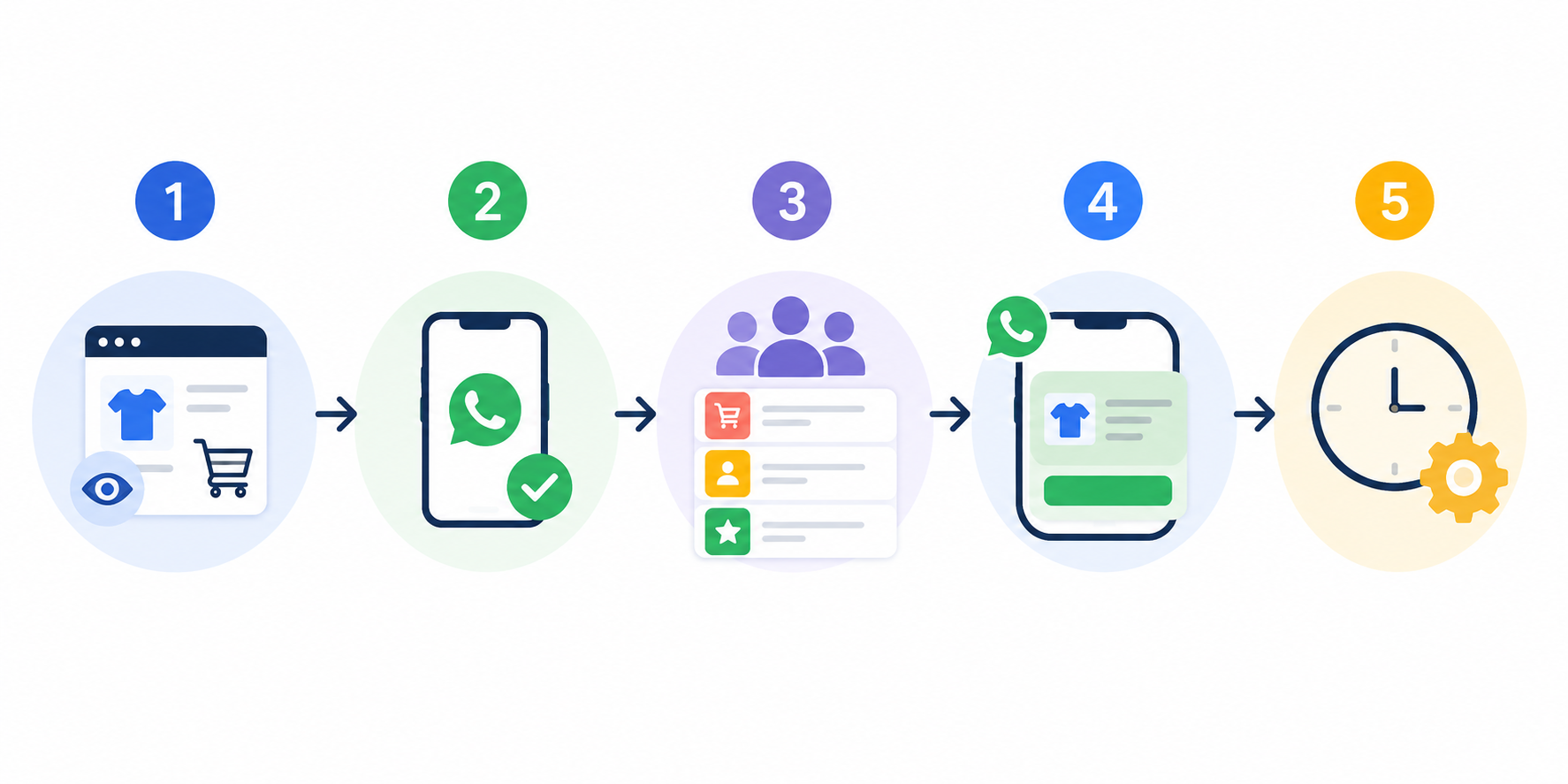
    ai social commerce flow

    Automated Product Recommendations in Instagram DMs

    Instagram serves as a primary visual storefront for modern consumer brands. However, lacking automated messaging integrations leaves Instagram Direct Messages (DMs) unaddressed during peak hours.

    Integrating AI-powered messaging engines allows post comments and DMs to receive instant catalog recommendations matching user intent, creating a frictionless shopping journey.

    Case Study: Online Store Increases Conversions by 35% with AI

    An Indonesian online fashion brand faced massive daily chat volumes across social channels. Prior to adopting automation, main friction points included delayed response times during peak hours and unaddressed buyer leads.

    After deploying an integrated AI messaging system across their core channels, key operational results achieved within weeks included:

    • 100% of inbound customer chats handled 24/7 with zero delay.
    • Automated payment reminders and lead follow-ups executed without manual intervention.
    • Precise sizing recommendations and catalog matching delivered automatically.
    • Sales conversion rates (closing ratios) increased by up to 35%.
    • Operational workload for support teams dropped substantially.

    Key Criteria for Selecting an AI Social Commerce Platform

    Selecting the right AI platform is vital for digital transformation success. Ensure your provider delivers these core capabilities:

    1. Multi-Channel Messaging Consolidation

    The platform must consolidate chats across primary sales channels—including official WhatsApp API, Instagram DM, TikTok Shop Chat, and Web Live Chat—inside a single unified inbox.

    2. Comprehensive Sales Automation Capabilities

    Verify that the system offers chat automation, dynamic catalog recommendations, automated re-engagement triggers, and checkout reminders out of the box.

    3. Seamless Marketplace & API Integrations

    Robust integrations with major e-commerce marketplaces and flexible connectivity via Open API ensure real-time inventory and order data synchronization.

    Start Automating Your Social Commerce Sales with Cekat.ai

    Social commerce has established itself as an essential revenue pillar in Indonesia, where direct conversational messaging drives the digital sales funnel. The primary challenge is no longer just generating traffic, but ensuring every buyer conversation is converted into completed sales.

    Powered by Cekat.ai, your business can respond to buyer inquiries instantly 24/7, deliver dynamic personalized product recommendations, and execute automated lead follow-ups consistently. Deep integrations with official WhatsApp API, Instagram, and marketplaces maximize sales conversions while minimizing operational support overhead.

    Accelerate your social commerce sales performance today with Cekat.ai.


    Frequently Asked Questions (FAQ)

    1. What is AI social commerce?

    AI social commerce is applying artificial intelligence to automate buyer communication, product recommendations, and order transactions across social media and messaging platforms like WhatsApp and Instagram.

    2. Is AI social commerce technology suitable for small businesses and MSMEs?

    Yes. MSMEs utilize AI as a 24/7 digital assistant to handle hundreds of daily routine queries automatically without expanding operational headcount.

    3. Can AI increase sales closing ratios?

    Yes. Instant response SLAs within seconds combined with automated follow-up sequences keep buyer intent active, boosting conversion rates by up to 35%.

    4. Does Cekat.ai integrate directly with the official WhatsApp Business API?

    Yes. Cekat.ai fully integrates with Meta’s official WhatsApp Business API, ensuring secure bulk messaging and automation without account suspension risks.


  • WhatsApp API in the Customer Journey Funnel

    WhatsApp API in the Customer Journey Funnel

    Executive Summary & Value Proposition

    • Integrated Conversational Layer: Connects lead acquisition, buyer consideration, and customer retention touchpoints into a unified flow.
    • Frictionless Buyer Conversion: Replaces long signup forms with interactive chat experiences that accelerate lead qualification.
    • 24/7 Proactive Engagement: Drives post-purchase retention and lifetime customer value via automated follow-up messaging.
    • Centralized CRM Integration: Consolidates multi-channel chat logs into a unified enterprise CRM application.

    WhatsApp has become an integral part of daily consumer life. However, many organizations still utilize it narrowly—restricted to transactional alerts or reactive customer service. This passive approach overlooks the immense potential of the WhatsApp API as a primary bridge connecting acquisition, purchase decisions, and long-term buyer retention.

    This article explores how to position the WhatsApp API strategically across your customer journey funnel. Rather than treating it as an isolated communication add-on, discover how to deploy it as an overarching conversational layer that sustains customer relationships. Explore official technical capabilities in our guide on the WhatsApp Business API for enterprise scale.

    WhatsApp API: Beyond a Basic Messaging Channel

    Meta’s official WhatsApp API is engineered specifically for deep backend integration and high-volume scalability. Consequently, it operates most effectively when connected directly to customer databases, business logic, and structured communication flows.

    Within a modern marketing funnel, the WhatsApp API functions to:

    • Unify every customer touchpoint seamlessly from initial awareness to post-sale support.
    • Maintain highly relevant, contextual, and personalized dialogue.
    • Eliminate friction and delay between customer buying intent and business response.

    Without an intentional funnel design, messaging channels quickly devolve into noisy broadcast outlets. With the right architecture, WhatsApp becomes a high-converting driver of customer experience.

    1. Acquisition Stage: From Interest to Consent-Based Contact

    WhatsApp is rarely where consumers first discover a brand. However, it is extraordinarily effective once initial interest emerges—such as after viewing a digital ad, browsing a website, or exploring an e-commerce storefront.

    During the acquisition phase, the WhatsApp API helps:

    • Convert passive interest into permission-based (opt-in) contacts securely.
    • Eliminate friction compared to cumbersome web registration forms.
    • Capture initial customer intent instantly using an intelligent AI chatbot.

    Instead of forcing users through lengthy forms, businesses open natural, lightweight conversations. The output is not just a raw lead list, but the foundation of an ongoing relationship.

    2. Consideration Stage: Maintaining Contextual Relevance

    Many sales funnels stall because follow-up communications lack context. Dispatches feel overly generic, push for immediate sales prematurely, or fail to address the prospect’s actual questions.

    By leveraging the WhatsApp API, organizations can:

    • Tailor nurturing messages based on user behavior and explicit chat responses.
    • Deliver progressive product education matched to the buyer’s stage of interest.
    • Prevent messaging fatigue that triggers opt-outs or block rates.

    At the consideration touchpoint, WhatsApp acts as an intuitive guide. Thoughtfully timed conversations make prospects feel understood rather than pressured.

    3. Conversion Stage: Assisting Buyer Decision-Making

    Purchase decisions are rarely driven by discount codes alone. Transactions occur when buyers feel confident, supported, and clear on value.

    The WhatsApp API facilitates smooth conversion mechanics through:

    • Instant order confirmations and transparent product detail breakdowns.
    • Real-time assistance from an AI Agent when buyers hesitate at checkout.
    • Seamless handoffs to human specialists via an omnichannel application for complex queries.

    This approach transforms checkout into a frictionless, supportive experience. WhatsApp evolves from a promotional medium into an active decision companion.

    4. Retention Stage: Relationships Beyond the Transaction

    A common organizational mistake is halting communication the moment a transaction completes. However, customer lifetime value (LTV) and brand advocacy are built post-purchase.

    The WhatsApp API powers long-term retention workflows including:

    Consistent, value-driven communication keeps customers engaged positively without feeling spammed.

    Real-World Comparison: Two Brands, Two Architectures

    Consider two competing companies offering comparable products at similar price points:

    Brand A: Uses WhatsApp strictly to dispatch static shipping alerts. Once the package arrives, communication ends permanently. Customers are satisfied, but hold zero brand loyalty.

    Brand B: Embeds the WhatsApp API into an integrated customer journey funnel:

    • Initiates opt-in dialogue the moment a prospect shows interest online.
    • Provides concise product guides tailored to the buyer’s preferences.
    • Offers instant 24/7 payment assistance during checkout friction.
    • Maintains post-purchase touchpoints with relevant care instructions and reorder reminders.

    Over time, Brand B achieves higher recall, superior trust, and significantly higher repeat purchase rates. The competitive edge lies not in product features, but in how the customer journey is orchestrated.

    Operational Pitfalls to Avoid

    To maximize Return on Investment (ROI) across your WhatsApp API infrastructure, avoid these common operational errors:

    • Sending unsegmented bulk messages lacking user context or relevance.
    • Disregarding user opt-in consent and explicit communication preferences.
    • Over-relying on basic automation without human quality controls or handoff paths.
    • Failing to track response SLA metrics and customer satisfaction feedback.

    The WhatsApp API serves as a powerful funnel multiplier when positioned as an integrated connective layer. Success depends not merely on technology adoption, but on deep customer journey mapping and execution discipline.

    Orchestrate Your Customer Journey with Cekat.ai

    If your organization still uses WhatsApp purely for manual replies or isolated alerts, you are leaving substantial funnel growth untapped.

    The Cekat.ai platform empowers enterprises to design and deploy the WhatsApp API across every phase of the customer journey—from intelligent lead capture and automated nurturing to long-term buyer retention.

    Transform your WhatsApp channel into a scalable revenue and retention engine with Cekat.ai.


    Frequently Asked Questions (FAQ)

    1. What is the primary role of the WhatsApp API in a customer journey?

    The WhatsApp API acts as an overarching conversational layer connecting every funnel stage—from lead capture and product education to instant checkout assistance and post-purchase retention.

    2. How do businesses capture lead opt-ins during the acquisition stage?

    Leads can be routed from Click-to-WhatsApp ads, website chat widgets, or physical QR codes. When a user initiates a chat, automated workflows request explicit opt-in consent before proceeding.

    3. Does the WhatsApp API protect accounts from phone number bans?

    Yes. The WhatsApp API operates on official Meta infrastructure, requiring strict opt-in compliance and Meta-approved message templates for outbound dispatches, virtually eliminating ban risks for compliant businesses.

    4. How does the WhatsApp API integrate with existing enterprise CRMs?

    Platforms like Cekat.ai provide Open APIs and native CRM connectors to synchronize conversation logs, deal stage updates, and contact profiles automatically in real time.