Key Advantages
- Data-Driven Pipeline Prioritization: Assigns objective numeric values to inbound inquiries, allowing sales reps to focus exclusively on high-intent opportunities.
- Marketing & Sales Alignment: Eliminates subjective disputes over contact quality by establishing standardized, quantifiable qualification benchmarks.
- Real-Time CRM Scoring Automation: Aggregates behavioral points from chat interactions, website visits, and form submissions instantly without manual data entry.
- Elevated Deal Closing Velocity: Equips sales representatives to engage high-value prospects at the exact peak of their active purchasing consideration window.
Sales representatives frequently report that a significant portion of inbound marketing contacts fail to convert into paying customers. Simultaneously, marketing teams struggle to understand why substantial lead volumes yield sluggish commercial traction. This operational friction typically stems from the absence of an objective qualification mechanism to distinguish casual browsers from verified buyers ready to purchase.
Implementing a structured lead scoring framework resolves this misalignment by assigning quantifiable weights to every prospect interaction. Combining this methodology with a centralized lead management platform ensures your commercial pipeline remains populated exclusively with sales-qualified opportunities.
What Is Lead Scoring in Modern Sales Operations?
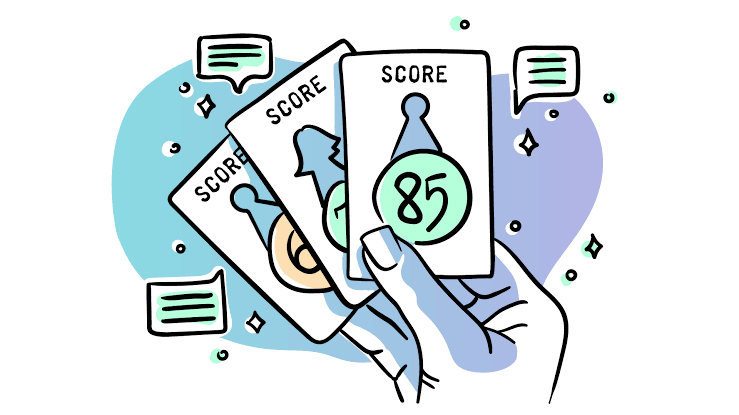
Lead scoring is a quantitative qualification methodology utilized by revenue teams to measure an inbound contact’s conversion probability based on demographic fit, company firmographics, and behavioral engagement telemetry.
In practice, the system awards positive points for high-intent actions (such as viewing commercial pricing tiers or requesting product demonstrations) and deducts points for non-commercial indicators (such as career page visits or invalid contact details). When an account’s score surpasses a predefined threshold, the contact routes automatically to frontline sales specialists for consultative closing.
Core Architectural Dimensions: Lead Scoring vs. Lead Grading
A comprehensive enterprise qualification architecture evaluates prospects across two distinct analytical dimensions:
| Qualification Dimension | Analytical Focus | Evaluative Telemetry Examples |
|---|---|---|
| Lead Scoring (Behavioral Telemetry) | Measures how interested the prospect is in your offering (Engagement Interest). | Opening outbound WhatsApp alerts, clicking pricing links, downloading whitepapers, submitting discovery forms. |
| Lead Grading (Firmographic Fit) | Measures how suitable the prospect is for your product (Ideal Customer Profile Fit). | Decision-maker seniority (C-level/Director), company headcount, annual revenue tier, industry vertical. |
Intent Segmentation: Hot vs. Warm vs. Cold Leads
Aggregating behavioral scores and firmographic grades categorizes contacts into three distinct maturity tiers:
- Cold Leads (Low Score): Early-stage contacts who downloaded top-of-funnel educational assets or casually browsed your website. These contacts require gradual education and are not ready for direct sales outreach.
- Warm Leads (Moderate Score): Prospects who repeatedly engage with product updates, review comparison sheets, or explore catalog pricing. These contacts enter structured lead nurturing workflows.
- Hot Leads (High Score): Verified decision-makers who actively request solution demos, review payment terms, or engage consultative WhatsApp prompts. These accounts require immediate sales intervention within minutes.
Step-by-Step Guide: How to Construct a Lead Scoring Model
Designing an accurate, high-performing lead qualification model involves five foundational steps:
1. Define Your Ideal Customer Profile (ICP)
Audit historical closed-won transaction records inside your CRM application to identify the shared demographic and organizational traits of your highest-retention accounts.
2. Map High-Intent Behavioral Trigger Points
Isolate key digital touchpoints that correlate strongly with successful closed deals, assigning proportional point values to each action:
- Submitting a formal consultation discovery form: +30 Points
- Replying to a sales inquiry on WhatsApp: +25 Points
- Reviewing commercial pricing tier tables: +15 Points
- Opening targeted broadcast campaign links: +5 Points
- Browsing employment or career openings: -20 Points
- Inactivity for more than 30 days: -15 Points (Score Decay)
3. Establish the Sales-Qualified Lead (SQL) Handoff Threshold
Define the explicit score benchmark where a marketing lead officially qualifies for sales engagement (e.g., reaching 75 accumulated points). Explore automated triage playbooks in our guide on automating lead qualification on WhatsApp.
4. Implement Score Decay Protocols
Buyer intent degrades over time. An account that demonstrated high activity two months ago but has since gone dormant must experience automated point deductions to ensure sales reps focus exclusively on active opportunities.
5. Execute Continuous Calibration Sprints
Conduct monthly review cadences between revenue leadership and sales teams to confirm that high-scoring contacts consistently correlate with high closed-won conversion rates.
Automating Lead Scoring in CRM with Cekat.ai AI Architecture
Tracking behavioral scores manually across hundreds of conversational interactions creates severe operational latency. Integrating qualification workflows with the official WhatsApp Business API powered by Agentic AI technology delivers an automated solution:
- Real-Time Event Tracking: Contact score properties update dynamically upon every inbound message, link engagement, or transaction milestone.
- Conversational Intent Discovery: An autonomous WhatsApp AI chatbot engages inbound inquiries conversationally, validates budget fit, and assigns numeric score values in real time.
- Automated Agent Routing: When an account crosses the Hot Lead threshold, the thread routes immediately to designated sales representatives in a WhatsApp multi-agent workspace with contextual summaries.
This automated coordination ensures sales teams strike during peak buyer interest, nurture deals using our playbook on how to follow up on WhatsApp sales to close deals, and build a scalable foundation for long-term customer retention.
Frequently Asked Questions (FAQ)
1. What is the primary commercial benefit of implementing lead scoring?
2. What does score decay mean in lead scoring architecture?
3. How do you automate lead scoring across WhatsApp messaging channels?
Scale Inbound Lead Qualification with Cekat.ai
Deploying a disciplined, automated lead scoring system is essential for accelerating sales conversion rates without expanding administrative overhead. Ensuring your sales force engages buyers at the ideal moment transforms conversational interest into predictable enterprise revenue.
The enterprise platform at Cekat.ai delivers conversational commerce infrastructure combining official WhatsApp Business API connectivity, automated CRM pipelines, and autonomous 24/7 AI Agents. Explore our plan options on our pricing and plans page or schedule a discovery consultation with our growth solutions team today.
Leave a Reply